UN Security Council losing legitimacy, 80-year-old war outcome must not define it: India
Synopsis
India's UN envoy P Harish went beyond routine reform rhetoric at the General Assembly, invoking 2.5 million Indian soldiers and 4 million Bengal famine deaths to argue that the Security Council's founding structure was built by colonial victors who deliberately excluded the colonised. The message: the UN's legitimacy crisis is not just procedural — it is historical, and overdue for reckoning.
Key Takeaways
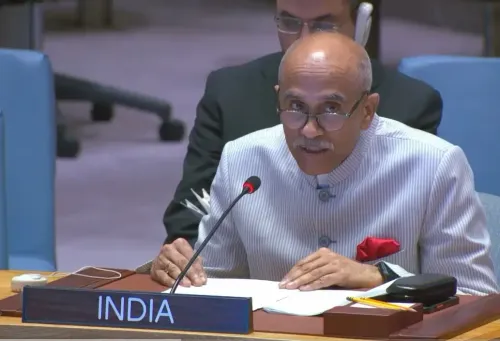
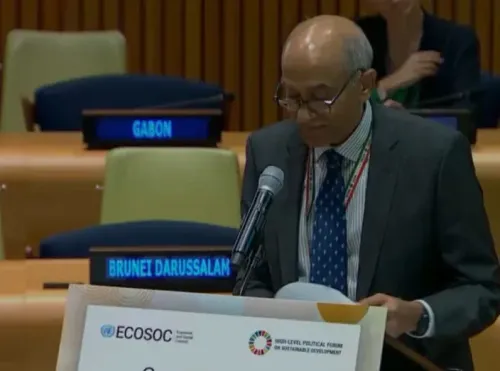
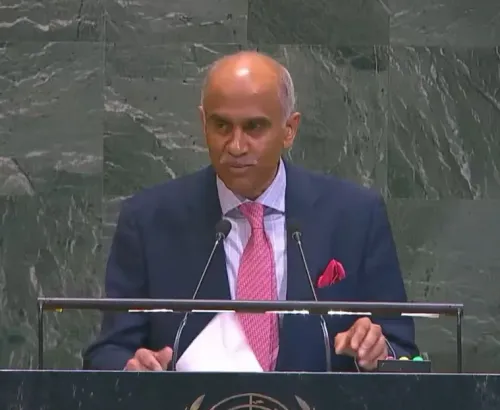
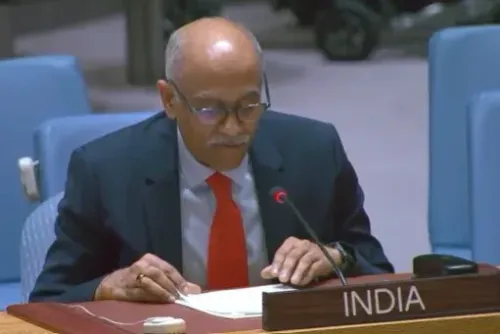
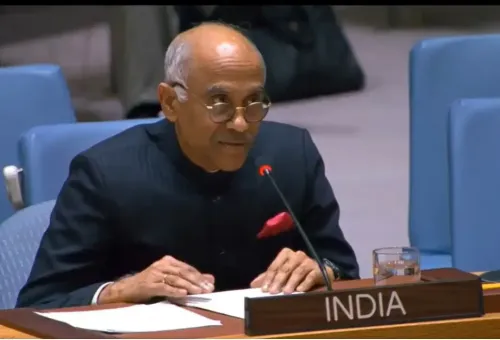
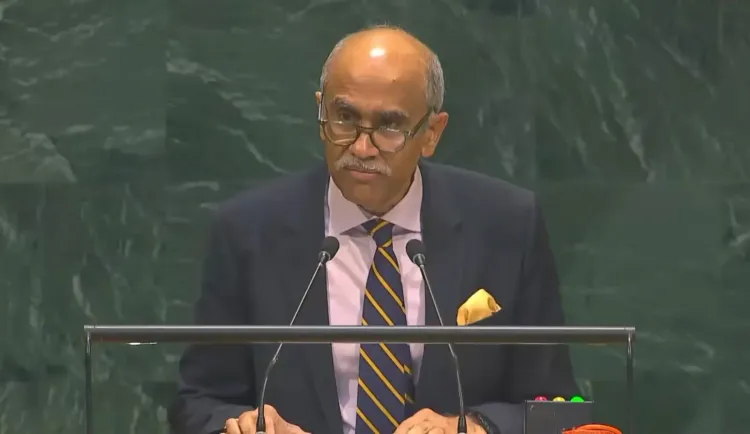
India's Permanent Representative P Harish told the UN General Assembly on 23 October 2026 that the Security Council is losing legitimacy by clinging to a structure defined by an 80-year-old war .
Harish cited 2.5 million Indian soldiers who served in World War II and 90,000 who died, alongside 4 million deaths in the Bengal famine caused by colonial war policies.
India accused the Uniting for Consensus (UfC) bloc — led by Italy and including Pakistan — of using procedural manoeuvres to block a negotiating text for Security Council reform .
Harish called the UfC's demand for consensus before a negotiating text an 'inversion of the sequence of negotiation process.' The Intergovernmental Negotiations (IGN) reform process remains deadlocked; India signalled it will continue to press for progress at upcoming UN sessions.
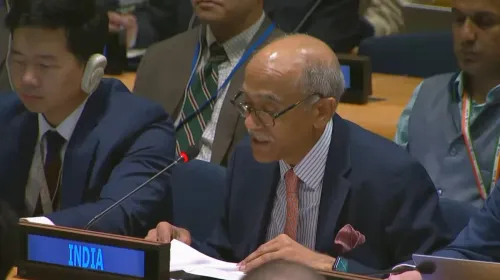
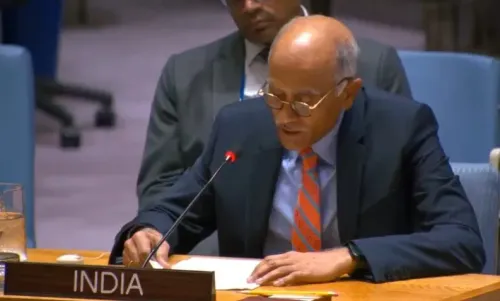
India on Thursday, 23 October 2026 delivered a sharp rebuke at the United Nations General Assembly, asserting that the world body is steadily losing legitimacy by clinging to a Security Council structure shaped by the victors of a war fought more than 80 years ago. The statement underscores New Delhi's long-standing push for comprehensive reform of the UN's most powerful organ.
India's Core Argument at the General Assembly
India's Permanent Representative P Harish told the General Assembly that no war — particularly one concluded over eight decades ago — should dictate the present-day configuration of global governance. 'No war, especially one that took place over 80 years ago, should determine today's state of the world,' Harish said.
He argued that the authority derived from a 1945 military victory cannot substitute for democratic legitimacy in a reformed world body. 'The authority derived from a victory eight decades ago cannot compensate for the deficit in legitimacy of an unrepresentative Security Council today,' he said.
India's War Contribution and Colonial Grievances
Harish highlighted India's substantial contribution to the Allied war effort — a contribution, he argued, that the founding architecture of the UN chose to overlook. 'Around 2.5 million Indians took part in the war and around 90,000 of them died in military service,' he said.
He further noted that 'over 4 million were killed in the infamous Bengal famine due to colonial war policies,' adding that some countries want to 'ignore or suppress this fact.' The remarks pointedly frame the original UN Charter as a document crafted by and for colonial victors, with the concerns of colonial subjects — and victims — excluded from its design.
'An organisation crafted of the victors, for the victors and by the victors did not, obviously, care to include the concerns of the victims,' Harish said.
Procedural Deadlock and the UfC Bloc
India singled out a specific grouping for blocking the Intergovernmental Negotiations (IGN) reform process: the Uniting for Consensus (UfC) bloc, a group led by Italy that also includes Pakistan. The UfC, according to Harish, has used procedural manoeuvres to prevent the adoption of a negotiating text — the document considered essential to advancing any structural reform of the Council.
The UfC's position, that consensus must precede a negotiating text, drew a direct rebuke. 'We remain baffled by this inversion of the sequence of negotiation process,' Harish said, noting that 'in any multilateral process, a text is the precondition to a negotiation and not its conclusion.'
He warned that the privileges written into the Charter by the 1945 victors cannot be used as a procedural shield to stall reform indefinitely.
Why This Matters for Global Governance
India's statement comes amid growing frustration among the Global South — including the G4 nations (India, Germany, Japan, and Brazil) — over the slow pace of UN reform. The five permanent members of the Security Council (P5) — the United States, United Kingdom, France, Russia, and China — each hold veto power, a structure that critics argue reflects post-World War II geopolitics rather than current global realities.
Notably, this is one of New Delhi's most direct and historically grounded challenges yet to the legitimacy of the existing Council architecture, framing the issue not just as procedural obstruction but as a continuation of colonial inequity.
What Comes Next
The IGN reform process remains stalled pending agreement on a negotiating text. India and other reform-minded nations are expected to press the issue further at upcoming UN sessions. Whether the UfC bloc's resistance can be overcome without a procedural vote in the General Assembly remains the central question going forward.
Point of View
Not just the procedural grievance. By invoking the Bengal famine alongside battlefield casualties, Harish frames Security Council reform as a matter of colonial reckoning — a framing that is harder to deflect than abstract arguments about representativeness. The UfC bloc's procedural tactic — demanding consensus before a negotiating text — is a near-perfect obstruction device, and India is right to call it out as an inversion of standard multilateral logic. The deeper problem is structural: the P5's veto gives them an absolute backstop against any reform that threatens their privilege, and no amount of General Assembly pressure changes that arithmetic. India's strongest lever remains coalition-building with the Global South, where frustration with the existing order is deep but collective action remains fragmented.
NationPress
23 Oct 2026
Frequently Asked Questions
What did India say about the UN Security Council at the General Assembly?
India's Permanent Representative P Harish told the UN General Assembly on 23 October 2026 that the Security Council is losing legitimacy because its structure is still defined by the outcome of a war fought over 80 years ago. He argued that authority derived from a 1945 victory cannot compensate for the deficit of representation in today's world body.
What is the Uniting for Consensus (UfC) bloc and why is India criticising it?
The Uniting for Consensus (UfC) is a group of countries led by Italy that also includes Pakistan, which opposes expansion of permanent Security Council membership. India criticised the bloc for using procedural tactics to block the adoption of a negotiating text in the Intergovernmental Negotiations (IGN) reform process, calling the demand for consensus before a text an 'inversion of the sequence of negotiation.'
Why did India invoke World War II casualties and the Bengal famine at the UN?
India's envoy cited 2.5 million Indian soldiers who served in World War II — of whom around 90,000 died — and over 4 million deaths in the Bengal famine caused by colonial war policies, to argue that the nations who monopolise permanent Security Council membership won that war partly on the back of colonial subjects whose interests were then excluded from the UN Charter.
What is the current status of UN Security Council reform?
The Intergovernmental Negotiations (IGN) process for Security Council reform remains stalled because the UfC bloc has prevented agreement on a negotiating text, which is the document required to formally begin structured reform discussions. India and other G4 nations continue to push for progress at the General Assembly.
Which countries currently hold permanent seats on the UN Security Council?
The five permanent members (P5) of the UN Security Council are the United States, United Kingdom, France, Russia, and China — all victorious Allied powers from World War II. Each holds veto power, a structure critics including India argue no longer reflects the realities of the 21st century.