India at UN: Security Council inaction eroding global faith in multilateralism
Synopsis
India's UN envoy didn't mince words: the Security Council's inability to stop real wars is destroying the UN's credibility with ordinary people. With IGN reform talks stuck in an 'endless cycle of prepared statements' for decades, India is now publicly calling the status quo 'untenable' — a rare, direct challenge from one of the world's most consequential aspirants to a permanent Council seat.
Key Takeaways
India's Permanent Representative P Harish told the UN on 15 July that Security Council inaction in active conflicts is causing an 'adverse' shift in global public perception of the UN.
Harish called the Intergovernmental Negotiations (IGN) process for Council reform 'an endless cycle of prepared statements,' with no structural progress.
The UN's 80-year-old post-World War II architecture is 'inadequate for contemporary global challenges,' he said.
India supported the Pact for the Future despite 'significant reservations,' but warned its Action Points 39–42 have 'largely remained on paper.' India also called for revitalisation of the General Assembly , a stronger ECOSOC , and reform of international financial institutions to better serve the Global South .
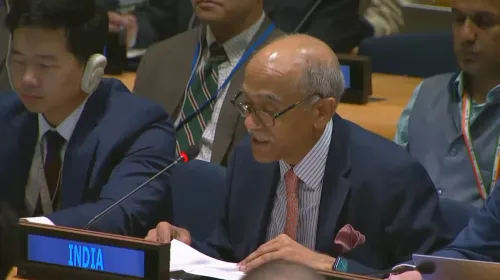
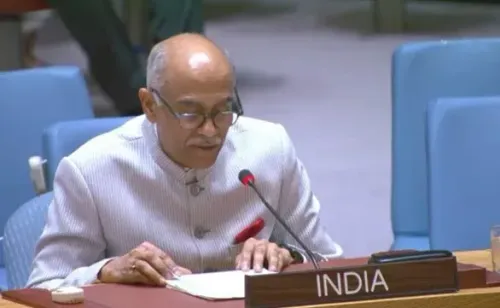
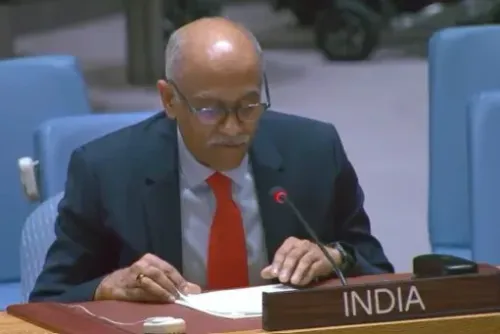
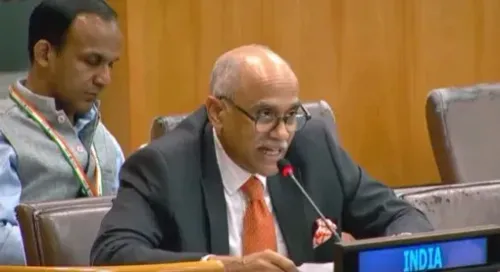
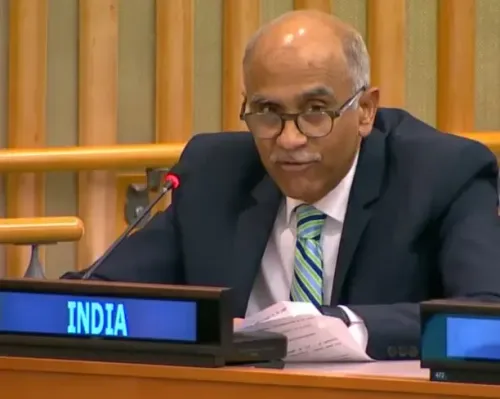
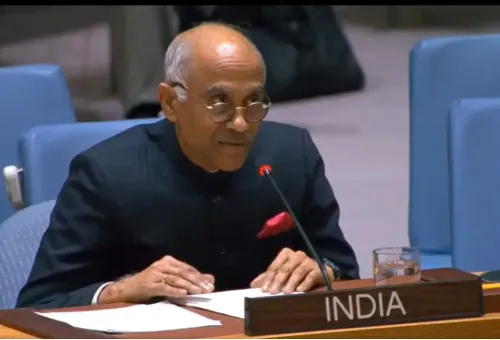
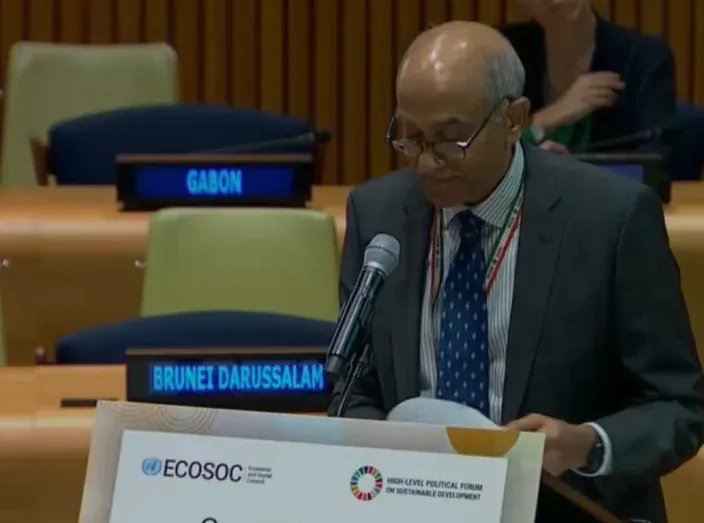
India's Permanent Representative P Harish warned the United Nations Security Council on 15 July that its repeated failure to intervene in active conflicts is driving a sharp decline in public trust in the UN as an institution. Speaking at a ministerial roundtable in New York, Harish said the Council's paralysis on reform is rendering the broader multilateral system unfit for contemporary challenges.
India's Core Indictment of the Security Council
'Public perception about the UN has changed adversely in the recent past primarily due to the Security Council's inability to meaningfully intervene in raging conflicts across different parts of the globe,' Harish said. He added that the Council 'has been ineffective in putting an end to human suffering among the affected populations,' directly challenging its foundational mandate of maintaining international peace and security.
Harish described the Intergovernmental Negotiations (IGN) process for Council reform as having been reduced to 'an endless cycle of prepared statements' — a pointed critique of a process that has dragged on for decades without structural outcomes.
The 80-Year-Old Architecture Under Scrutiny
The diplomat noted that the UN's 80-year-old post-World War II architecture is fundamentally inadequate for today's global challenges. Despite this, he said, 'as a collective, the UN has not been able to move the needle on reforming the Security Council.' The roundtable itself was convened under the theme 'Making Multilateralism Fit for the Future,' one of the stated goals of the Pact for the Future adopted at the 2024 World Leaders' Summit.
Harish acknowledged that India had 'significant reservations' regarding the Pact's Action Points 39 to 42 — which cover ending violence, combating racism and xenophobia, promoting gender equality, and building effective peacekeeping strategies — but said India's 'constructive spirit' led it to broadly support the Pact. He nonetheless conceded these action points 'have largely remained on paper,' calling the situation 'untenable.'
Beyond the Council: General Assembly and ECOSOC
India's push extends beyond Security Council reform. Harish stressed the need for the 'revitalisation of the General Assembly' and a 'stronger role for ECOSOC (the Economic and Social Council) in advancing sustainable development across its three dimensions — economic, social and environmental.' The remarks signal India's broader agenda: institutional reform across the entire UN system, not merely its most powerful body.
Global South Financing and Development Goals
On economic development, Harish reaffirmed India's commitment to the Global South, saying the country's resolve to 'leave no one behind' and 'mobilise resources where they matter most' remains 'unwavering.' He called on international financial institutions to 'evolve' and become 'more representative, responsive and development-oriented,' while preserving their core mandates.
Harish underscored that 'adequate, affordable and predictable financing remains indispensable for achieving the Sustainable Development Goals,' and grounded India's position in the civilisational principle of Vasudhaiva Kutumbakam — 'the whole world is a family.' The statement positions India as both a critic of the current order and a constructive voice for its reform, ahead of what is expected to be a contentious stretch of multilateral negotiations.
Point of View
Yet the Pact's action points are already being dismissed as paper commitments. That tension — between constructive engagement and systemic frustration — defines India's multilateral posture in 2024. What mainstream coverage misses is that Harish's remarks on ECOSOC and financial institution reform are equally significant: India is not just pushing for a seat at the high table, it is arguing for a restructuring of the entire table.
NationPress
13 Oct 2026
Frequently Asked Questions
What did India's UN envoy say about the Security Council on 15 July?
India's Permanent Representative P Harish said the Security Council's failure to intervene in ongoing conflicts has caused a sharp decline in public trust in the UN. He called the reform deadlock 'untenable' and demanded meaningful change, speaking at a ministerial roundtable on multilateralism in New York.
What is the Pact for the Future and why did India raise concerns about it?
The Pact for the Future is a multilateral agreement adopted at the 2024 World Leaders' Summit, containing action points on peace, gender equality, and sustainable development. India had 'significant reservations' about Action Points 39 to 42 but supported the Pact in a 'constructive spirit,' while warning that these commitments have 'largely remained on paper.'
Why has UN Security Council reform stalled?
According to India's envoy, the Intergovernmental Negotiations process for Council reform has been reduced to 'an endless cycle of prepared statements' with no structural outcomes. The UN's current architecture, built 80 years ago after World War II, has not been updated to reflect contemporary geopolitical realities.
What reforms is India calling for beyond the Security Council?
India is calling for the revitalisation of the UN General Assembly, a stronger role for ECOSOC in sustainable development, and reform of international financial institutions to make them more representative and development-oriented — particularly for the Global South.
What is Vasudhaiva Kutumbakam and why did India invoke it at the UN?
Vasudhaiva Kutumbakam is a Sanskrit phrase meaning 'the whole world is a family,' drawn from ancient Indian civilisational tradition. India's envoy invoked it to frame India's commitment to global development and leaving no nation behind, grounding its multilateral diplomacy in a moral and philosophical framework.