Anurag Thakur Hails Fast-Track Courts for Students
Synopsis
BJP MP Anurag Thakur on 23 July 2026 lauded PM Modi's decision to form fast-track courts for student justice and called on the opposition to engage in debate rather than use youth as a political tool, citing 12 years of government welfare schemes.
Key Takeaways
BJP MP Anurag Thakur posted from New Delhi on 23 July 2026 praising a fast-track court decision for students.
PM Modi announced the constitution of fast-track courts aimed at delivering justice to students, according to Thakur's post.
Thakur cited 12 years of the Modi government's youth welfare schemes as evidence of its commitment to young Indians.
The MP directly appealed to opposition parties to participate in debate rather than 'do politics on the shoulders of youth.' Fast-track courts in India were first introduced in 2000 and have since been used for priority case categories to reduce judicial backlog.
Specific details — jurisdiction, funding, and rollout timeline — of the new student-focused courts are yet to be formally notified.
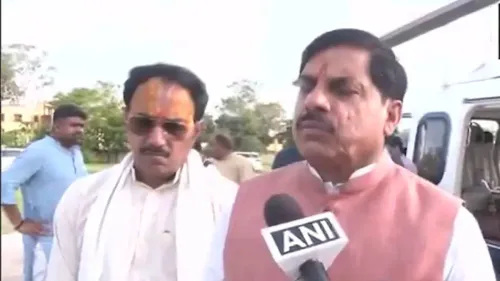
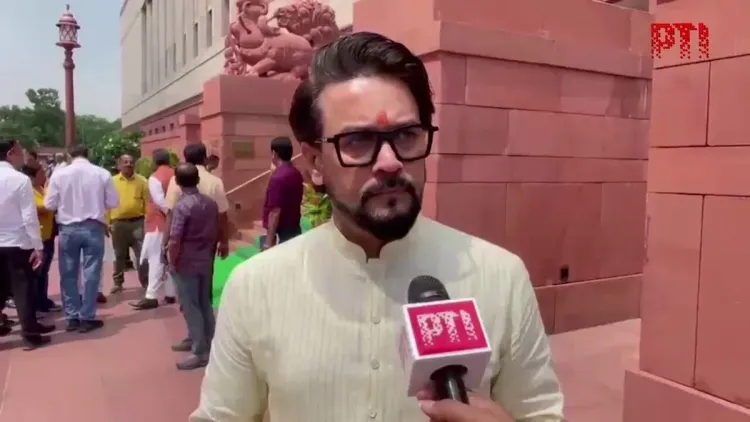
BJP MP Anurag Thakur on Thursday, 23 July 2026, praised the Modi government's decision to constitute fast-track courts aimed at delivering justice to students, posting from New Delhi. The former Union Minister called on the opposition to participate in debate rather than avoid discussion on youth-related policy, framing the judicial move as part of a broader commitment to India's young population over the past 12 years.
Context
In his post, Thakur wrote: 'मोदी जी ने छात्रों को न्याय दिलाने के लिए आज फ़ास्टट्रैक कोर्ट के गठन का अभिनंदनीय निर्णय लिया है' ('Modi ji has today taken the commendable decision to constitute a fast-track court to deliver justice to students'). He also appealed directly to opposition parties: 'Do not do your politics on the shoulders of the youth — do not run away, but participate in discussion.'
The statement positions the fast-track court formation as a response to student grievances, though the specific jurisdiction, funding structure, and rollout timeline of the announced courts are yet to be detailed publicly.
Policy Backdrop
Fast-track courts have a long lineage in India's judicial reform architecture, first introduced nationally in 2000 to reduce case pendency in priority categories, and subsequently expanded under successive Finance Commission recommendations. The mechanism has been deployed for cases involving crimes against women, children, and other vulnerable groups.
The Modi government has, since 2014, anchored its youth agenda on a cluster of flagship programmes — including the Pradhan Mantri Kaushal Vikas Yojana (launched 2015) for skill training, and the National Education Policy 2020 which introduced structural reforms in higher education. Thakur's post frames the fast-track court decision as the latest addition to this policy continuum spanning 12 years.
Stakeholders and Impact
Indian students stand as the primary intended beneficiaries of the announced judicial mechanism, with the government signalling that cases affecting their interests will receive expedited hearing. Student bodies and youth organisations across the country are expected to closely watch the scope of the court's jurisdiction once formal notification is issued.
Opposition parties have been directly addressed in Thakur's appeal, with the BJP MP urging them to engage substantively in parliamentary and public debate on youth welfare rather than, in his characterisation, using students as a political instrument. Calls for dialogue over protest are a recurring feature of legislative communication from the ruling party.
What's Next
The critical details now awaited include the formal government notification specifying which categories of student-related cases will fall under the fast-track court's remit, the funding mechanism, and the states where the courts will be operationalised first. Parliament's monsoon session, currently under way, is the likely forum where the opposition may respond to Thakur's challenge for open debate.
If the fast-track court framework is formalised and notified, it could set a precedent for using specialised judicial infrastructure as a direct instrument of student welfare policy — a linkage that would mark a notable evolution in how India's judicial reform and education policy agendas intersect.
Point of View
And it goes on the offensive against the opposition by framing any non-engagement as political opportunism at students' expense. The invocation of fast-track courts — a mechanism with bipartisan institutional history — lends the announcement a reform credibility that transcends party lines. Connecting judicial infrastructure to student welfare is a relatively novel framing, and if the courts are formally notified with a clear student-case jurisdiction, it could become a template the government deploys in future election cycles as a tangible governance deliverable for India's largest voting demographic.
NationPress
22 Oct 2026
Frequently Asked Questions
What did PM Modi announce regarding fast-track courts for students?
According to BJP MP Anurag Thakur's post on 23 July 2026, PM Modi took a decision to constitute fast-track courts specifically to deliver justice to students. The formal notification detailing jurisdiction and scope is yet to be made public.
What are fast-track courts in India?
Fast-track courts are specialised courts set up to expedite trials and reduce case pendency in priority categories. They were first introduced in India in 2000 and have since been expanded under Finance Commission recommendations for cases involving vulnerable groups.
What did Anurag Thakur say about the opposition and youth policy?
Thakur appealed to opposition parties not to 'do politics on the shoulders of youth' and urged them to participate in discussion rather than avoid debate on youth-related policy matters.
What youth welfare schemes has the Modi government launched in 12 years?
Key schemes include the Pradhan Mantri Kaushal Vikas Yojana for skill training (launched 2015) and the National Education Policy 2020 for structural education reform, among several others targeting youth employment and education.
Which student cases will the new fast-track courts handle?
The specific categories of student-related cases to be covered by the announced fast-track courts have not yet been formally notified. Details on jurisdiction, funding, and rollout are awaited.