India backs UN tribunal residual mechanism for genocide, war crimes accountability
Synopsis
At the UN General Assembly, India threw its weight behind the International Residual Mechanism for Criminal Tribunals, backing continued accountability for the Rwanda genocide and Yugoslav war crimes — while calling for a time-bound, judicially sound transition. The statement reflects India's careful balance between supporting multilateral justice and pushing for institutional efficiency.
Key Takeaways
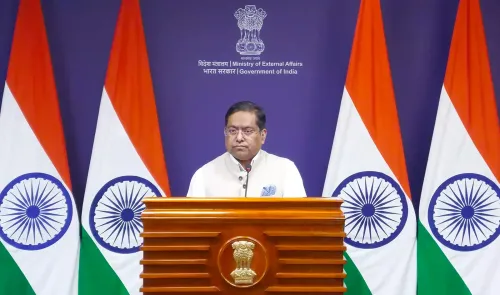
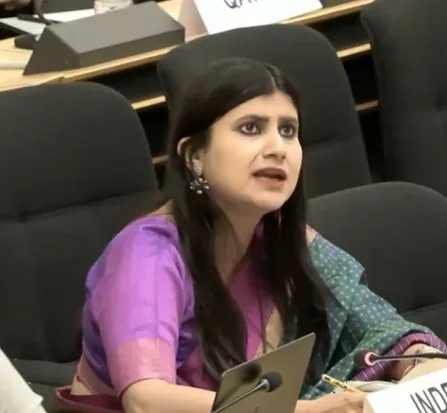
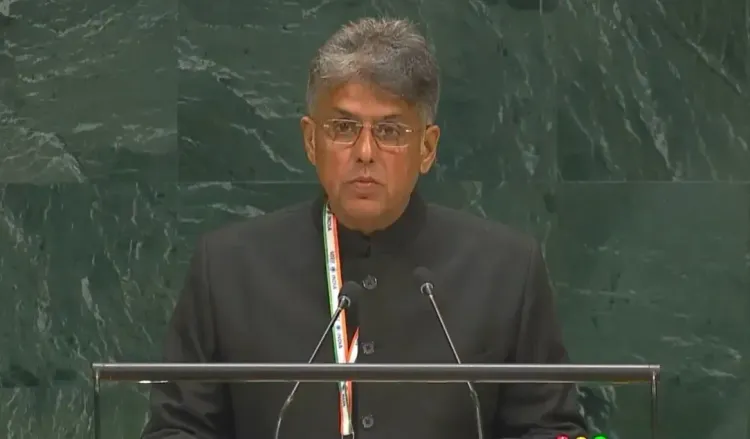
Congress MP Manish Tiwari represented India at the UN General Assembly plenary on the IRMCT on 22 October 2026 .
India backed the mechanism's residual functions: victim and witness protection, archive management, and assistance to national jurisdictions.
The ICTY held 111 trials and convicted 90 persons ; the ICTR indicted 86 persons over the genocide of approximately 800,000 Tutsis .
The IRMCT has convicted 61 people after inheriting cases from the two predecessor tribunals.
India called for an 'efficient, orderly and time-bound transition' as the IRMCT moves toward completing its mandate.
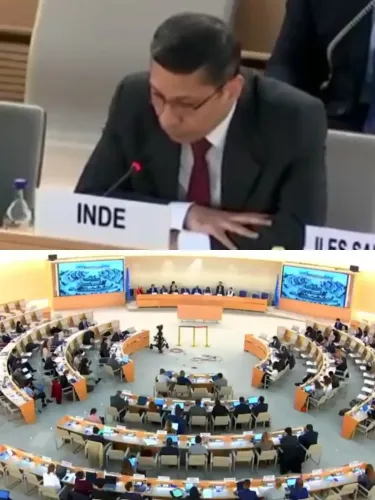
Congress MP Manish Tiwari on Wednesday reaffirmed India's support for the International Residual Mechanism for Criminal Tribunals (IRMCT) at a plenary session of the United Nations General Assembly in New York, stating that the body's continued operation is vital to ensuring accountability for genocide and war crimes committed in Rwanda and the former Yugoslavia.
What India Said at the UN
'India underscores the importance of the mechanism continuing residual functions, including the protection of victims and witnesses, assistance to national jurisdictions, and the preservation and management of the tribunal's archives,' Tiwari said. He added that 'these functions remain essential to safeguarding the legacy of the ad hoc tribunals and ensuring continued accountability.'
Tiwari also emphasised that fulfilling the IRMCT's mandate must be guided by 'the principles of justice, impartiality, fairness and due process, upholding the interests of justice and protecting the rights of victims.'
What the IRMCT Is and Why It Exists
The IRMCT was established by the UN Security Council in 2010 to absorb the unfinished work of two landmark ad hoc tribunals — the International Criminal Tribunal for Rwanda (ICTR) and the International Criminal Tribunal for the former Yugoslavia (ICTY). The Rwanda tribunal tried individuals responsible for the genocide of approximately 800,000 Tutsis and some moderate Hutus, carried out by Hutu extremists who controlled the Rwandan government. The Yugoslav tribunal addressed war crimes committed during the conflicts that accompanied the dissolution of Yugoslavia.
Notably, the ICTY held 111 trials and convicted 90 persons, one of whom still has an appeal pending before the IRMCT. The ICTR indicted 86 persons in connection with the Rwandan genocide, and the IRMCT itself went on to convict 61 people after taking over select cases from the predecessor tribunal.
India's Call for an Orderly Transition
While backing the mechanism's ongoing work, India also called for a structured wind-down. As the IRMCT 'moves towards completing its mandate,' Tiwari said India 'emphasise[s] the need for an efficient, orderly and time-bound transition without compromising judicial independence or the effective discharge of its remaining responsibilities.'
This position reflects a nuanced diplomatic stance — affirming multilateral accountability frameworks while simultaneously nudging them toward conclusion, consistent with India's broader approach to UN institutional reform.
Broader Context and Significance
India's statement comes as debates over international criminal justice have intensified globally, with the International Criminal Court (ICC) facing scrutiny over its scope and enforcement capacity. India's endorsement of the IRMCT signals continued support for rule-based accountability mechanisms, even as New Delhi has historically maintained reservations about the ICC itself. This comes amid a wider global conversation about how international institutions can balance timely closure with lasting justice for victims of mass atrocities.
Point of View
Making its vocal support for the IRMCT's accountability functions all the more notable. The call for a 'time-bound transition' is not just procedural housekeeping — it reflects India's consistent preference for sunset clauses in ad hoc multilateral bodies. Whether that posture helps or quietly accelerates the closure of mechanisms that victims' groups argue are still needed is a tension worth watching.
NationPress
22 Oct 2026
Frequently Asked Questions
What is the International Residual Mechanism for Criminal Tribunals (IRMCT)?
The IRMCT is a UN body established by the Security Council in 2010 to continue the unfinished work of the International Criminal Tribunals for Rwanda and the former Yugoslavia. It handles pending appeals, protects witnesses, manages tribunal archives, and assists national courts.
Why does India support the IRMCT?
India supports the IRMCT because it views the mechanism as essential to ensuring continued accountability for war crimes and genocide in Rwanda and the former Yugoslavia. India's representative at the UN underscored the importance of protecting victims and witnesses and preserving tribunal archives.
What did Congress MP Manish Tiwari say at the UN?
Manish Tiwari, speaking at the UN General Assembly plenary on 22 October, said India recognises the IRMCT's contribution to fighting impunity and called for an efficient, time-bound transition as the mechanism completes its mandate, without compromising judicial independence.
How many people were convicted by the Rwanda and Yugoslav tribunals?
The International Criminal Tribunal for the former Yugoslavia held 111 trials and convicted 90 persons. The IRMCT subsequently convicted 61 people after inheriting cases from both predecessor tribunals, which addressed the genocide of approximately 800,000 Tutsis and war crimes in the former Yugoslavia.
What happens to the IRMCT's work when it closes?
India has called for an orderly, time-bound transition that preserves judicial independence. Residual functions — including witness protection, archive management, and support to national jurisdictions — are expected to be handed over or preserved through successor arrangements.