India rejects UN racial discrimination committee report as 'politically motivated'
Synopsis
India's Ministry of External Affairs has used unusually sharp language — 'all the contempt it deserves' — to reject a UN racial discrimination committee report, after the panel flagged alleged large-scale violations against Dalits, tribal communities, and non-citizens. The rebuttal, led by Solicitor General Tushar Mehta at the Geneva review, signals a hardening of New Delhi's posture toward multilateral human rights scrutiny.
Key Takeaways
India on 26 August formally rejected the UN Committee on the Elimination of Racial Discrimination (CERD) report, calling it 'politically motivated' and 'highly malicious.' The MEA said India will respond through established procedures but has already rejected 'sweeping generalisations' during the review itself.
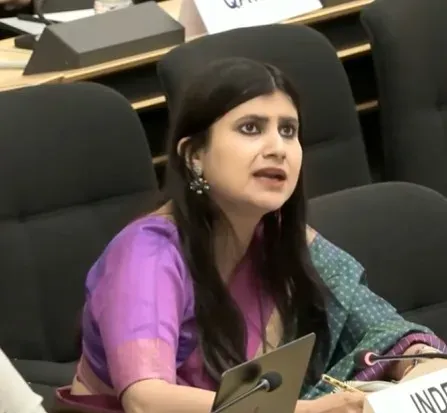
The inter-ministerial delegation was led by Solicitor General of India Tushar Mehta at the Geneva review held on 11–12 August .
CERD had expressed concern over alleged large-scale violations against Scheduled Castes , Scheduled Tribes , Dalits , and non-citizens.
India's review covered its 12th and 21st combined periodic reports submitted to CERD in 2023 .
India was involved in drafting ICERD in the 1960s , a historical credential cited by the delegation.
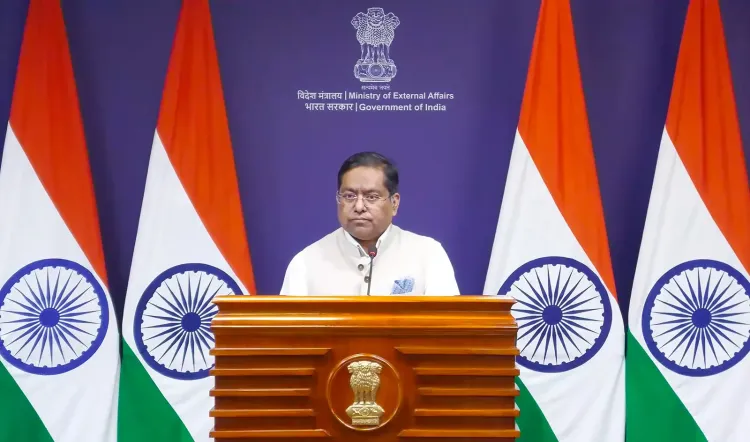
India on Wednesday, 26 August formally rejected the findings of the United Nations Committee on the Elimination of Racial Discrimination (CERD), calling the panel's remarks on the country 'politically motivated' and 'highly malicious.' The Ministry of External Affairs (MEA) issued a sharp rebuttal, asserting that India's commitment to combating racial discrimination remains unwavering.
What the UN Committee Said
The CERD — the body of independent experts that monitors implementation of the Convention on the Elimination of All Forms of Racial Discrimination (ICERD) — expressed concerns over reports of 'large-scale violations' allegedly perpetrated by law enforcement officials. The committee's observations targeted treatment of ethnic and ethno-religious groups, Indigenous and Tribal Peoples, including Scheduled Tribes, Scheduled Castes (particularly Dalits), and non-citizens. These remarks followed India's 11th periodic review under ICERD, held in Geneva on 11–12 August.
India's Official Response
The MEA stated that the review was a routine treaty-body process and that India participated in a spirit of constructive engagement. The inter-ministerial delegation — led by Solicitor General of India Tushar Mehta — had already, during the review meeting itself, rejected what it described as 'sweeping generalisations' and 'unsubstantiated allegations,' and pushed back against any tendency to exceed the Convention's mandate.
'India rejects any politically motivated highly malicious references in the report with all the contempt that it deserves,' the MEA said in its statement. The ministry added that India will formally respond to the committee's observations through established procedures.
What India Highlighted at the Review
During the 11–12 August sessions in Geneva, the Indian delegation presented its constitutional safeguards, robust legal framework, affirmative action programmes, democratic accountability mechanisms, and judicial remedies. The delegation also emphasised India's pluralism, diversity, and sustained socio-economic development as evidence of its commitment to equality and dignity for all citizens.
The review covered India's 12th and 21st combined periodic reports submitted to CERD in 2023. Notably, India was actively involved in the negotiation and drafting of ICERD in the 1960s — at a time when developing nations were confronting colonialism, apartheid, and racial discrimination — a historical credential the delegation invoked to underline the country's foundational commitment to the treaty.
Context and Broader Significance
This is not the first time India has pushed back against international human rights bodies. The government has consistently maintained that such reviews, when they stray into domestic policy characterisations, exceed the mandate of the treaty framework. Critics, however, argue that independent monitoring bodies serve precisely this function — to hold state parties accountable beyond self-reported narratives.
The MEA's unusually pointed language — 'all the contempt that it deserves' — signals a hardening of New Delhi's posture toward multilateral human rights scrutiny. As India's global profile rises, the tension between sovereign prerogatives and international accountability frameworks is likely to sharpen further.
Point of View
Not a routine rebuttal. India has long navigated UN human rights reviews with calibrated pushback, but this phrasing is notably sharper. The underlying tension is structural: CERD's mandate covers caste-based discrimination, which India contests falls outside the Convention's racial discrimination framework. That jurisdictional dispute has never been resolved, and New Delhi's refusal to concede the framing is consistent — but the combative tone risks framing India as resistant to accountability rather than as a state contesting scope. With India's global ambitions growing, how it manages multilateral human rights scrutiny will matter as much as the substance of its domestic record.
NationPress
10 Oct 2026
Frequently Asked Questions
Why did India reject the UN CERD report?
India rejected the UN Committee on the Elimination of Racial Discrimination (CERD) report, calling it 'politically motivated' and 'highly malicious.' The Ministry of External Affairs said the committee made sweeping generalisations and unsubstantiated allegations that exceed the Convention's mandate.
What did the UN racial discrimination committee say about India?
CERD expressed concern over reports of large-scale violations by law enforcement against ethnic and ethno-religious groups, Indigenous and Tribal Peoples, Scheduled Tribes, Scheduled Castes including Dalits, and non-citizens. The observations came after India's 11th periodic review under ICERD held in Geneva on 11–12 August.
Who led India's delegation at the CERD review in Geneva?
The inter-ministerial delegation was led by Solicitor General of India Tushar Mehta. The delegation highlighted India's constitutional safeguards, legal framework, affirmative action, democratic accountability, and socio-economic development record.
What is CERD and what is ICERD?
CERD is the UN Committee on the Elimination of Racial Discrimination — a body of independent experts that monitors compliance with ICERD, the International Convention on the Elimination of All Forms of Racial Discrimination. India was involved in drafting ICERD in the 1960s and is a state party to the treaty.
What happens next after India's rejection of the CERD report?
The MEA has said India will formally respond to CERD's observations through the established treaty procedure. The delegation had already made India's objections clear during the review meeting itself on 11–12 August in Geneva.