India at UN opposes use of human rights as political tool against countries
Synopsis
India pushed back at the UN General Assembly's Third Committee on Tuesday, with an MEA official warning that human rights must not become a geopolitical weapon used to selectively target nations on the basis of unverified allegations — a statement that reflects a sustained Indian effort to reshape the terms of international human rights scrutiny.
Key Takeaways
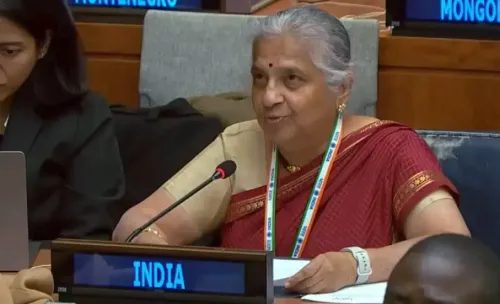
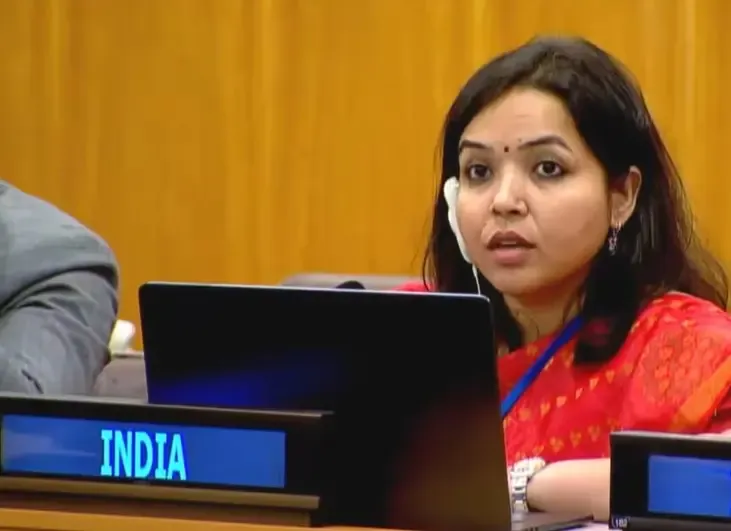
Barkha Tamrakar , Deputy Secretary at the Ministry of External Affairs , addressed the UN General Assembly's Third Committee on Tuesday, 21 October 2026 .
India stated it firmly opposes converting unverified allegations or incomplete statistics into negative characterisations of the country.
India's ground rules for human rights engagement include dialogue, non-selectivity, transparency, and cooperation .
Tamrakar cited Article 21 of the Constitution, the independent judiciary, NHRC , and the Right to Information Act as domestic safeguards.
India has signed the International Convention for the Protection of All Persons from Enforced Disappearance .
The remarks were made during an interactive dialogue with chairs of the UN Committee on Enforced Disappearances and the UN Working Group on Enforced or Involuntary Disappearances .
India on Tuesday firmly pushed back at the United Nations General Assembly, stating that it opposes the use of human rights as a political instrument to selectively target nations through unverified allegations and incomplete data. The remarks were delivered during the General Assembly's Third Committee session in New York, which handles humanitarian affairs.
India's Core Position
Barkha Tamrakar, Deputy Secretary in the Ministry of External Affairs' UN Economic Social Division, made India's stance unambiguous. 'India firmly opposes any attempt to convert unverified allegations, incomplete statistics or a report that contains no India country (-specific) observation into a negative characterisation of the world's largest democracy,' she stated.
She added that India remains open to addressing genuine concerns: 'India remains prepared to clarify specific, properly documented cases through established channels.'
Rules India Wants for Human Rights Engagement
Tamrakar outlined the principles India believes must govern engagement with international human rights mechanisms — dialogue, consultation, cooperation, non-selectivity, and transparency. She cautioned delegations against distorting reports, saying: 'We call on delegations to cite the report faithfully, not to inflate a humanitarian communication into a verdict.'
This comes amid a broader pattern at the UN where several nations, including India, have raised concerns about the methodology of certain UN rapporteurs — who work independently under the Human Rights Council and sometimes rely on submissions from unidentified, uncorroborated sources.
India's Constitutional and Institutional Safeguards Cited
Tamrakar pointed to India's domestic architecture as evidence of robust rights protections. She highlighted Article 21 of the Constitution, which guarantees the right to life and personal liberty, and noted that India's independent judiciary is 'fully empowered to issue the writs of habeas corpus, thus providing a strong and readily accessible safeguard against any alleged disappearance.'
She also cited the National Human Rights Commission, State Human Rights Commissions, the Right to Information Act, independent media, and civil society organisations as additional layers of accountability. Notably, India has also signed the International Convention for the Protection of All Persons from Enforced Disappearance, she confirmed.
Context: The UN Dialogue That Prompted India's Remarks
The statement came during an interactive dialogue with Juan Pablo Alban Alencastro, chair of the UN Committee on Enforced Disappearances, and Grazyna Baranowska, chair-rapporteur of the UN Working Group on Enforced or Involuntary Disappearances. India's intervention signals a continued effort to shape the norms around how international human rights mechanisms engage with sovereign nations, particularly when reporting is based on unverified third-party submissions.
India's position aligns with a broader pushback from several countries in the Global South, who argue that UN human rights processes are applied inconsistently and often reflect geopolitical rather than humanitarian priorities. With the Third Committee session ongoing, further exchanges on this issue are expected in the coming days.
Point of View
Uncorroborated sources used by UN rapporteurs is legitimate and widely shared, but India's emphasis on 'properly documented cases through established channels' also raises the question of who defines proper documentation. The deeper tension here is between state sovereignty and the independence of international human rights mechanisms — a debate India is increasingly positioning itself to lead on behalf of the Global South, with both principled and strategic motivations.
NationPress
21 Oct 2026
Frequently Asked Questions
What did India say at the UN about human rights on 21 October 2026?
India told the UN General Assembly's Third Committee that it opposes the use of human rights as a political tool to selectively target countries through unverified allegations and incomplete data. The remarks were made by Barkha Tamrakar, Deputy Secretary at the Ministry of External Affairs.
Who is Barkha Tamrakar and what was her role at the UN session?
Barkha Tamrakar is a Deputy Secretary in the Ministry of External Affairs' UN Economic Social Division. She represented India at the General Assembly's Third Committee during an interactive dialogue with chairs of the UN Committee on Enforced Disappearances and the UN Working Group on Enforced or Involuntary Disappearances.
Why does India object to certain UN human rights reporting methods?
India's concern centres on UN rapporteurs who reportedly rely on submissions from parties they do not identify and do not corroborate. India argues such reports should not be used to draw broad negative conclusions about a country, particularly when they contain no country-specific observations.
What safeguards does India cite against enforced disappearances?
India cited Article 21 of its Constitution, an independent judiciary empowered to issue habeas corpus writs, the National Human Rights Commission, State Human Rights Commissions, the Right to Information Act, independent media, and civil society. India has also signed the International Convention for the Protection of All Persons from Enforced Disappearance.
What are India's stated principles for engaging with international human rights bodies?
India says engagement with international human rights mechanisms must be based on dialogue, consultation, cooperation, non-selectivity, and transparency. It has called on delegations to cite reports faithfully and not 'inflate a humanitarian communication into a verdict.'