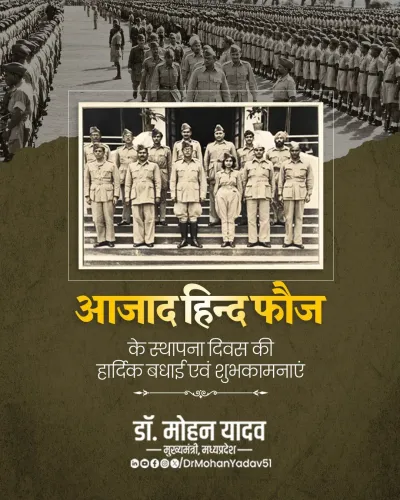
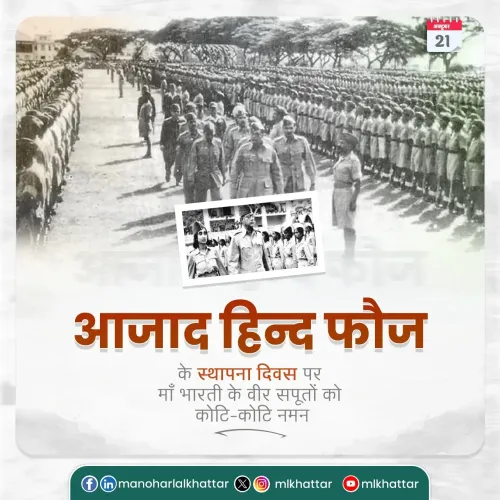
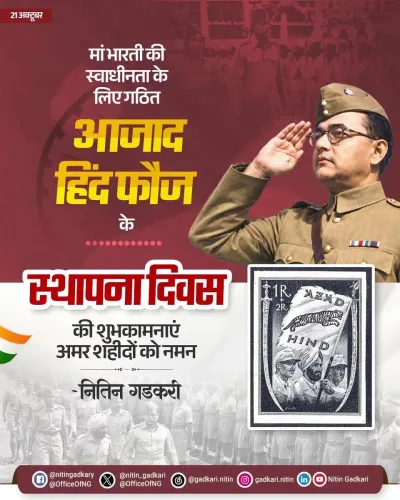
Pralhad Joshi Marks Azad Hind Govt Formation Day
Synopsis
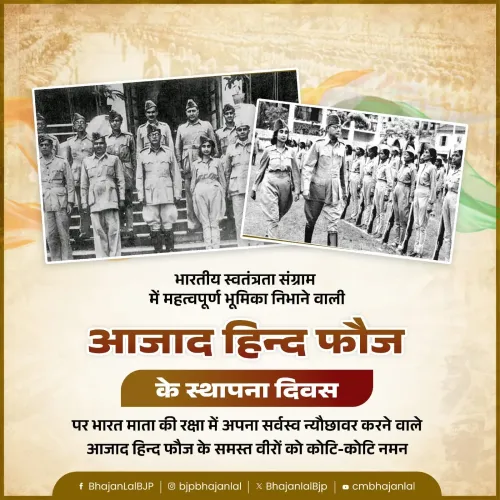
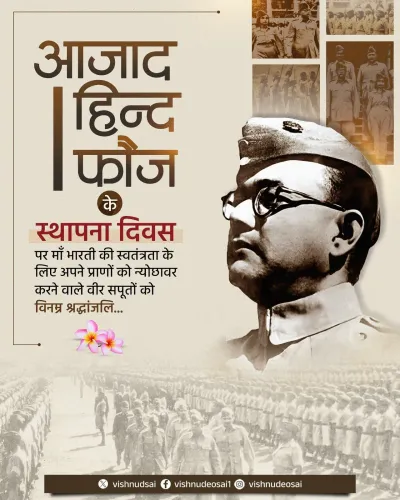
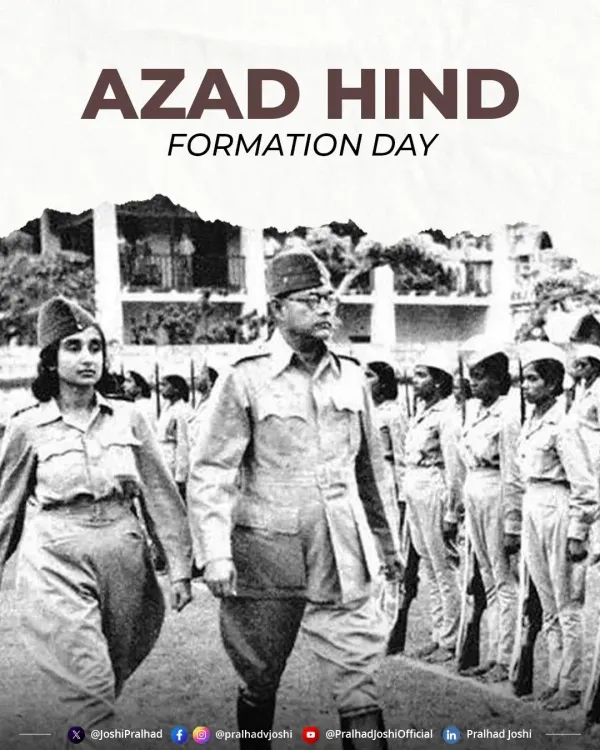
On the 83rd anniversary of the Azad Hind Government's formation, Union Minister Pralhad Joshi paid bilingual tribute to Netaji Subhas Chandra Bose and the Indian National Army, calling their sacrifices an enduring source of national pride.
Key Takeaways
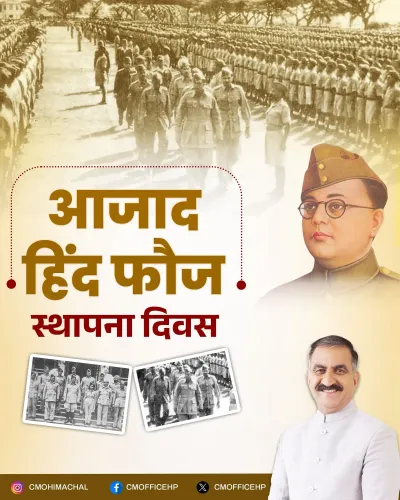
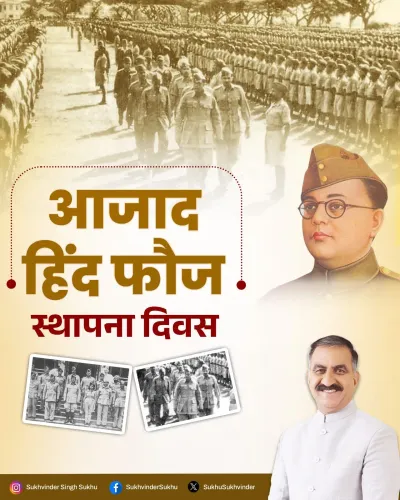
Union Minister Pralhad Joshi marked 21 October — Azad Hind Fauj Day — with a tribute to Netaji Subhas Chandra Bose and the INA.
The Azad Hind Government was proclaimed on 21 October 1943 in Singapore , with Bose as head of state, PM, and war minister simultaneously.
The government briefly administered the Andaman and Nicobar Islands as liberated Indian territory.
The INA's 1944 Imphal–Kohima campaign brought the armed fight for independence to Indian soil.
Post-war INA treason trials sparked mass outrage widely credited with hastening India's 1947 independence .
Joshi posted in both English and Kannada , honouring the INA's legacy of sacrifice and patriotism.
Eighty-three years after Netaji Subhas Chandra Bose proclaimed a provisional government in exile from Singapore on 21 October 1943, Union Consumer Affairs Minister Pralhad Joshi paid tribute to that founding act and to the soldiers of the Azad Hind Fauj who staked their lives on it.
Joshi called the formation of the Azad Hind Government 'a bold declaration of India's resolve to achieve independence,' and honoured Netaji's 'fearless leadership and the sacrifices of the #AzadHindFauj' as 'an enduring source of national pride and inspiration.'
In Kannada, he added: 'ಆಜಾದ್ ಹಿಂದ್ ಫೌಜ್ನ ವೀರ ಸೈನಿಕರನ್ನು ಗೌರವಪೂರ್ವಕವಾಗಿ ಸ್ಮರಿಸೋಣ' — 'Let us respectfully remember the brave soldiers of the Azad Hind Fauj who fought for India's freedom.'
The government Netaji built in a single day
The Azad Hind Government was formally constituted on 21 October 1943 in Singapore, with Subhas Chandra Bose simultaneously serving as head of state, prime minister, and war minister. It was recognised by the Axis powers and by a handful of allied states, and it administered the Andaman and Nicobar Islands — briefly renamed the 'Shaheed' and 'Swaraj' islands — as liberated Indian territory.
The government's military arm, the Indian National Army (INA), drew its ranks from Indian prisoners of war captured by Japan in Southeast Asia and from the Indian civilian diaspora in the region. Its campaigns in Imphal and Kohima in 1944 brought the fight for independence to the soil of India itself, even if British forces ultimately repelled the advance.
Why the INA's memory resonates across political lines
The annual commemoration on 21 October — observed as Azad Hind Fauj Day — has become a fixture across successive governments. The INA's story carries a particular charge: Indian soldiers who had served the British Crown chose to switch allegiance and march under a different flag. The British chose to try three INA officers for treason after the war; public outrage at those trials, stretching from the streets of Delhi to the decks of the Royal Indian Navy, is widely credited with accelerating the final push toward independence in 1947.
Joshi's bilingual post — in both English and Kannada, reflecting his home state of Karnataka — frames the Azad Hind Fauj's struggle as a model of 'sacrifice, valour, and unwavering patriotism' that belongs permanently to Indian history.
Point of View
But the BJP has invested particular symbolic capital in Netaji's legacy — including declassifying files on Bose and renaming Rajpath to Kartavya Path, steps that frame the saffron mainstream as heirs to armed-resistance nationalism alongside Gandhian non-violence. Joshi's bilingual tribute, reaching both a national English audience and Kannada-speaking Karnataka, reflects how the party uses historical memory as cultural consolidation. The INA story also carries a quiet anti-colonial edge that travels well across ideological lines, making it one of the safest and most resonant commemorative notes any Indian politician can strike.
NationPress
21 Oct 2026
Frequently Asked Questions
What is Azad Hind Fauj Day and when is it observed?
Azad Hind Fauj Day is observed on 21 October each year to mark the formation of the Azad Hind Government by Netaji Subhas Chandra Bose in Singapore on 21 October 1943 .
What was the Azad Hind Government?
The Azad Hind Government was a provisional Indian government-in-exile declared in Singapore by Subhas Chandra Bose on 21 October 1943, intended to administer liberated Indian territories and coordinate the Indian National Army's military campaign against British rule.
Who were the soldiers of the Azad Hind Fauj?
The Azad Hind Fauj , or Indian National Army (INA), was composed mainly of Indian prisoners of war captured by Japan in Southeast Asia and Indian civilians from the regional diaspora who chose to fight for India's independence during World War II.
Why did Pralhad Joshi post in Kannada?
Pralhad Joshi is a senior BJP leader and Union Minister from Karnataka ; he regularly posts in Kannada alongside English to communicate directly with his Kannada-speaking constituency.
What happened to INA soldiers after World War II?
After Japan's surrender, British authorities court-martialled three senior INA officers for treason; the trials sparked widespread public outrage across India, a reaction historians widely credit with accelerating the momentum that led to India's independence in 1947 .