HP CM Office Greets Kullu Dussehra Devotees, Tourists
Synopsis
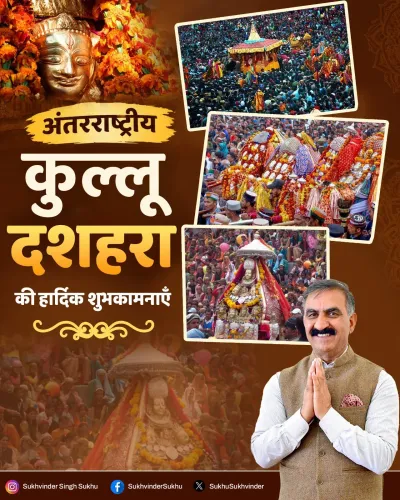
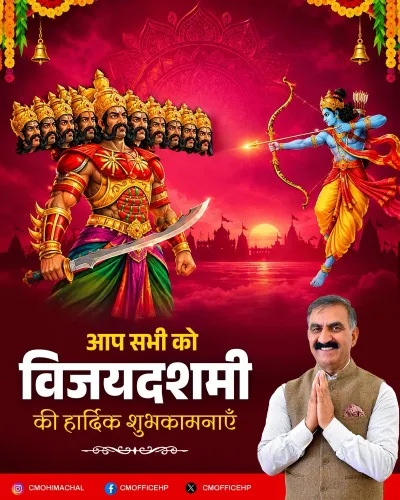
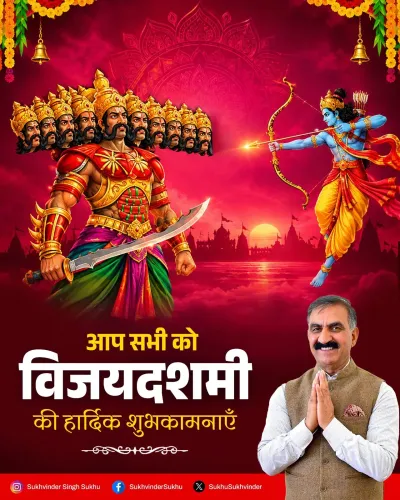
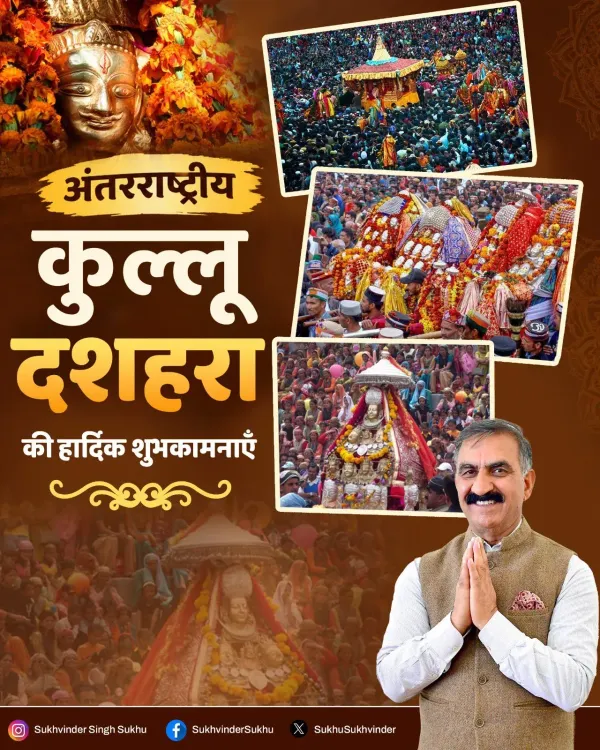
The Chief Minister's Office of Himachal Pradesh extended greetings for International Kullu Dussehra on October 21, 2026, celebrating the valley festival as an incomparable expression of divine faith and folk culture safeguarded across generations.
Key Takeaways
The Chief Minister's Office of Himachal Pradesh issued formal Kullu Dussehra greetings on October 21, 2026 .
International Kullu Dussehra begins on Vijayadashami and extends over several days in the Kullu valley , setting it apart from Dussehra celebrations elsewhere in India.
Hundreds of village deities ( devtas ) are carried in palanquins to the Dhalpur Maidan , forming the festival's iconic centrepiece.
The CMO described the event as an 'incomparable festival of divine faith and rich folk culture' that transmits Himachal Pradesh's traditions from generation to generation.
The festival is a major driver of tourism and local economic activity in the Kullu valley, underpinning the state's heritage-as-strategy approach.
In the Kullu valley, the drums are beating and the deities are descending — and the Chief Minister's Office of Himachal Pradesh marked the occasion on Wednesday, October 21, 2026, extending warm wishes to residents, pilgrims, and tourists gathering for the International Kullu Dussehra.
Posting in Hindi, the CMO called the festival 'dev aastha aur samridh lok sanskriti ka yeh anupam utsav' — 'this incomparable festival of divine faith and rich folk culture' — and noted that it has carried the state's glorious traditions forward from one generation to the next.A Festival Unlike Any Other Dussehra in India
While most of India celebrates Dussehra with the burning of Ravana effigies, Kullu Dussehra takes a radically different form. Beginning on Vijayadashami — when festivities elsewhere wind down — it stretches across several days in the heart of the Kullu valley, drawing hundreds of village deities, or devtas, carried in elaborately decorated palanquins (raths) from surrounding hills and valleys to converge on the Dhalpur Maidan. The sheer theatre of thousands of devotees accompanying their local deity in procession is a spectacle that has earned the event its 'International' prefix and a reputation as one of Himachal Pradesh's defining cultural moments.
The festival blends deep religious observance — rooted in the legend of Lord Raghunath, the presiding deity of Kullu — with a sprawling fair of handicrafts, folk music, and traditional performing arts. For the Kullu valley's economy, the annual influx of pilgrims and tourists translates directly into livelihoods for artisans, hoteliers, and small traders.
Heritage as Strategy: HP's Soft-Power Play
The CMO's greeting is more than seasonal courtesy. Himachal Pradesh has consistently positioned its deity-centric festival calendar as both cultural heritage and economic infrastructure. State governments across India deploy such messaging to signal continuity and attract tourism revenue, but Kullu Dussehra occupies a distinct tier — it is one of the few regional festivals to carry an 'International' tag backed by genuine foreign tourist interest and national recognition.
The Kullu valley's identity is inseparable from this festival. Generations of families have participated not merely as spectators but as custodians: maintaining the devta traditions, the ritual protocols, and the folk arts that travel with each village deity to the fairground. The CMO's phrasing — 'peedhi-dar-peedhi sahejta aa raha hai', 'safeguarded generation after generation' — directly invokes that custodial ethic.
As the valley fills with colour, music, and reverent processions, the festival once again makes the case that Himachal's richest tourism asset is not just its mountains — it is the living culture that inhabits them.
Point of View
The message subtly stakes a claim to continuity of governance values alongside cultural ones. The subtext — that protecting living heritage and driving tourism revenue are the same project — is the core of Himachal's cultural economy argument.
NationPress
21 Oct 2026
Frequently Asked Questions
When is Kullu Dussehra celebrated?
Kullu Dussehra begins on Vijayadashami — the same day most of India celebrates Dussehra — and continues for several days in the Kullu valley of Himachal Pradesh, typically in October.
What makes Kullu Dussehra different from other Dussehra celebrations?
Unlike most Indian celebrations that focus on burning Ravana effigies, Kullu Dussehra centres on grand processions of village deities ( devtas ) carried in decorated palanquins to the Dhalpur Maidan, accompanied by folk music and a large cultural fair.
Why is it called International Kullu Dussehra?
The festival is called International Kullu Dussehra because of its significant draw of foreign tourists and its recognition as a major cultural event beyond regional or national boundaries.
What did the Himachal Pradesh CM Office say about Kullu Dussehra 2026?
The CMO extended greetings to residents, pilgrims, and tourists on October 21, 2026, describing the festival as an incomparable celebration of divine faith and rich folk culture that has preserved the state's glorious traditions from generation to generation.
Is Kullu Dussehra a public holiday in Himachal Pradesh?
Kullu Dussehra is a celebrated state-level event and one of Himachal Pradesh's most prominent festivals, though specific holiday arrangements can vary; the state government consistently marks and promotes it as a major cultural occasion.