CM Sukhu extends greetings for Kullu Dussehra 2026
Synopsis
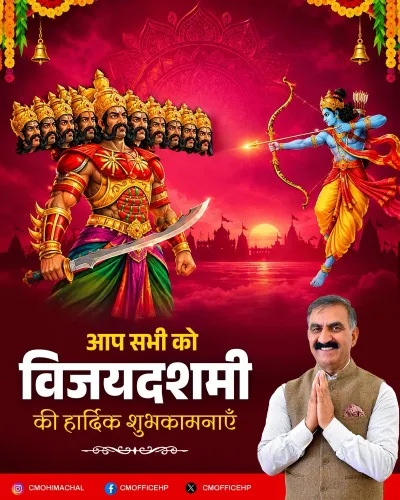
Himachal Pradesh Chief Minister Sukhvinder Singh Sukhu extended heartfelt greetings for the International Kullu Dussehra on 21 October 2026, invoking Lord Raghunath Ji's blessings and celebrating the festival as a generational custodian of the state's folk heritage.
Key Takeaways
CM Sukhvinder Singh Sukhu posted Dussehra greetings on 21 October 2026 for the International Kullu Dussehra .
The message was addressed to residents of Himachal Pradesh as well as pilgrims and tourists visiting for the festival.
Sukhu offered reverence to Lord Shri Raghunath Ji , the presiding deity of the Kullu valley's Dussehra celebrations.
He described the festival as an incomparable celebration of divine faith and folk culture preserved across generations.
Kullu Dussehra is unique in beginning on Vijayadashami and continuing for seven additional days, making it one of India's structurally distinct major festivals.
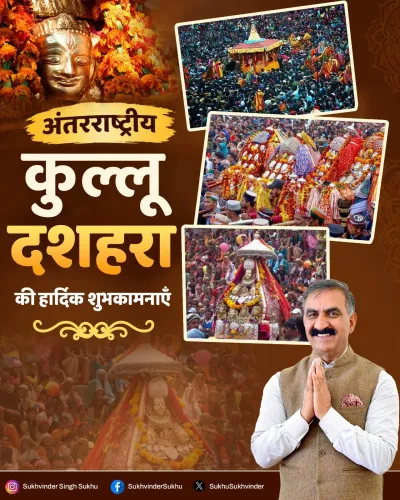
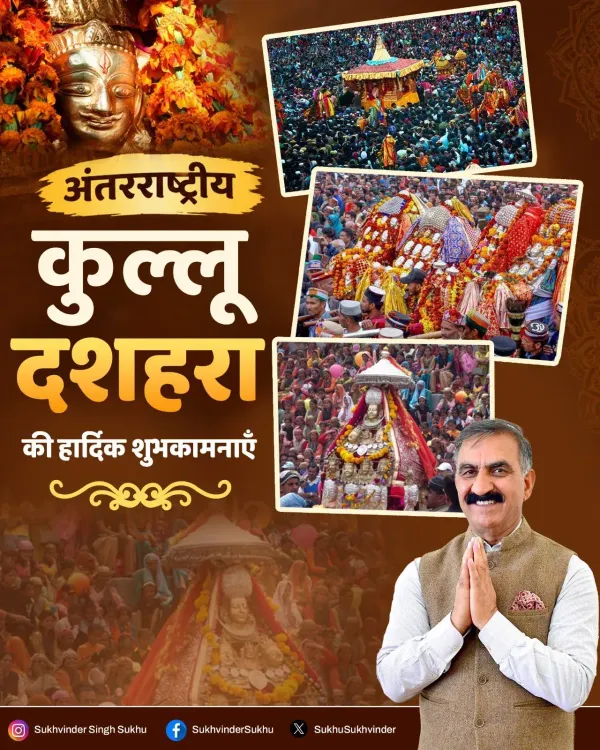
Where the Beas valley echoes with devotional chants and hundreds of deity palanquins converge in a spectacle unlike anywhere else in India, Himachal Pradesh Chief Minister Sukhvinder Singh Sukhu on Wednesday, 21 October 2026, extended warm wishes for the International Kullu Dussehra to residents of the state and to the pilgrims and tourists arriving for the festival.
In his post, CM Sukhu wrote: 'अंतरराष्ट्रीय कुल्लू दशहरा की समस्त प्रदेशवासियों एवं पधारने वाले श्रद्धालुओं एवं पर्यटकों को हार्दिक शुभकामनाएँ।' — 'Heartfelt greetings to all residents of the state and to the devotees and tourists visiting for the International Kullu Dussehra.' He offered his reverence at the feet of Lord Shri Raghunath Ji and expressed the hope that the deity's blessings remain with everyone always.
The festival that keeps a living tradition alive
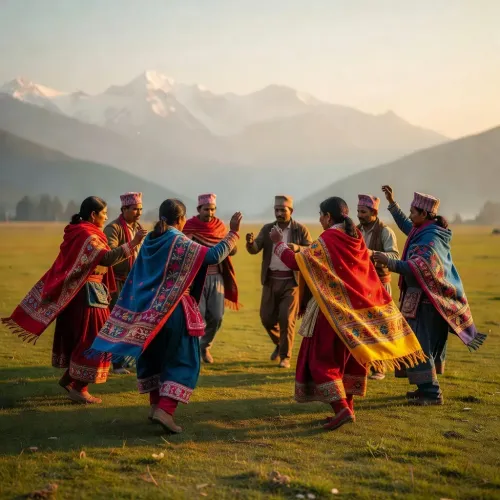
The International Kullu Dussehra is not simply a ten-day calendar event — it is a living archive of the Kullu valley's folk identity. Celebrated in the Kullu district of Himachal Pradesh, the festival draws hundreds of local deities, carried in ornate palanquins by their respective village communities, to pay homage to Lord Raghunath Ji, the presiding deity of the Kullu kingdom. The tradition stretches back centuries and was institutionalised as a state-level celebration over decades of active promotion by the Himachal government.
CM Sukhu's message captured this continuity precisely: he described the festival as an 'anupam utsav' — 'incomparable celebration' — of divine faith and rich folk culture, one that has preserved the region's glorious traditions 'peedhi-dar-peedhi', generation after generation. It is a sentiment that resonates far beyond ritual: the festival anchors community identity in an era of rapid cultural change.
Kullu Dussehra's place on India's cultural map
Kullu Dussehra begins where most of India's Dussehra celebrations end — on Vijayadashami, the tenth day of Navratri — and continues for seven days thereafter, making it structurally unique among the country's major festivals. Its recognition as an international festival reflects decades of effort to draw global attention to Himachal Pradesh's folk heritage, positioning the valley as a cultural destination alongside its more familiar identity as a mountain-tourism hub.
State leaders have consistently used such occasions to reaffirm Himachal's commitment to preserving its traditions, and CM Sukhu's greeting continues that pattern — a public acknowledgement that culture and tourism are inseparable pillars of the state's identity.
As the Kullu valley fills with the sound of drums and the colours of deity processions this week, the Chief Minister's message sets a tone of reverence, continuity, and welcome — a reminder that some celebrations are not just observed, they are carried forward.
Point of View
Reinforcing the Himachal Pradesh government's long-standing strategy of aligning political identity with the state's rich festival heritage. For a Congress-led government keen to consolidate its base in the hill state, public affirmation of religious and folk traditions serves both governance and political optics. The festival's 'international' designation also underscores the state's ongoing effort to monetise cultural tourism — a sector critical to Himachal's revenue profile. Sukhu's invocation of generational continuity signals that cultural preservation, not just infrastructure, will remain a rhetorical cornerstone of his administration.
NationPress
21 Oct 2026
Frequently Asked Questions
What is International Kullu Dussehra?
International Kullu Dussehra is a major festival held in the Kullu valley of Himachal Pradesh. Unlike most Dussehra celebrations, it begins on Vijayadashami and continues for seven additional days, featuring processions of hundreds of local deities paying homage to Lord Raghunath Ji.
Who is Lord Raghunath Ji in the context of Kullu Dussehra?
Lord Raghunath Ji is a form of Lord Rama and the presiding deity of the Kullu kingdom. He is central to the Kullu Dussehra celebrations, with local deities from across the valley gathering to pay him homage during the festival.
Why did CM Sukhu post about Kullu Dussehra?
Himachal Pradesh Chief Minister Sukhvinder Singh Sukhu extended greetings for the International Kullu Dussehra on 21 October 2026, a practice consistent with state leaders acknowledging major cultural and religious festivals to connect with residents and visitors.
When is Kullu Dussehra celebrated?
Kullu Dussehra begins on Vijayadashami, the tenth day of Navratri, when most of India's Dussehra celebrations conclude, and continues for seven days thereafter, making it a uniquely extended festival.
What makes Kullu Dussehra different from other Dussehra festivals in India?
Kullu Dussehra is distinctive because it starts where other Dussehra festivities end — on Vijayadashami — and lasts seven more days. It features hundreds of village deities carried in palanquins converging on Kullu, blending religious observance with regional folk traditions in a way that has earned it international recognition.