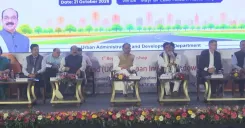
Kishan Reddy: PM Surya Ghar lights up 65,000+ Telangana homes

Synopsis
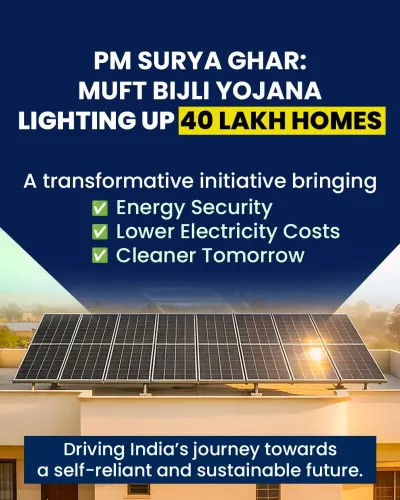
Union Minister and BJP Telangana chief G. Kishan Reddy says PM Surya Ghar Muft Bijli Yojana has powered over 65,000 homes in Telangana with rooftop solar, offering direct bank subsidies of up to ₹78,000 per household and up to 300 units of free electricity monthly.
Key Takeaways
65,000+ Telangana homes have installed rooftop solar units under PM Surya Ghar Muft Bijli Yojana, according to Union Minister G.
Eligible households can receive a direct subsidy of up to ₹78,000 transferred straight into their bank accounts.
The scheme promises up to 300 units of free electricity per month for beneficiary families.
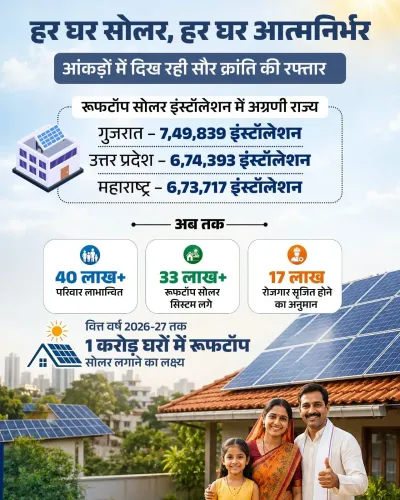
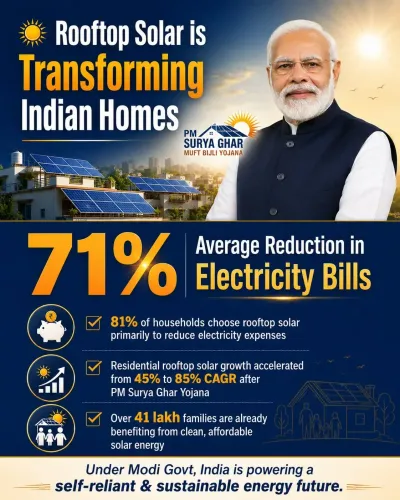
PM Surya Ghar Muft Bijli Yojana was launched in 2024 with a national target of rooftop solar for one crore households .
Kishan Reddy serves as both Union Coal and Mines Minister and BJP Telangana state president , framing the central scheme as direct welfare for state residents.
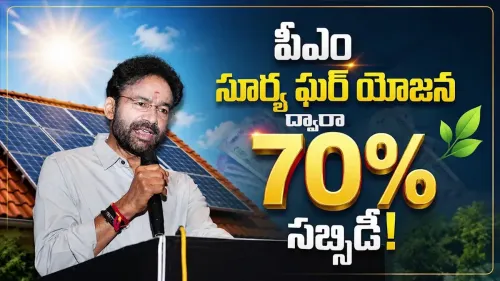
Rooftop solar is quietly rewriting electricity bills across Telangana — and Union Coal and Mines Minister G. Kishan Reddy wants every household in the state to know it. On Wednesday, October 21, 2026, the BJP Telangana state president took to X to highlight the on-ground momentum of PM Surya Ghar Muft Bijli Yojana, Prime Minister Narendra Modi's flagship rooftop solar subsidy scheme, pointing to a striking milestone: more than 65,000 homes in Telangana have already gone solar under the programme.
65,000 homes and counting: Telangana's solar milestone
Writing in Telugu, Kishan Reddy framed the scheme as direct financial relief — 'విద్యుత్ బిల్లుల నుంచి ప్రజలకు ఉపశమనం' ('relief from electricity bills for the people'). The post underscores that the subsidy — up to ₹78,000 per eligible household — is transferred directly into the beneficiary's bank account, bypassing intermediaries. He urged residents to apply immediately via the scheme's official portal.
The numbers, if borne out, mark a significant uptake in a state that has historically relied on thermal power. For Telangana's urban and peri-urban households, the proposition is simple: install a rooftop solar unit, draw up to 300 units of free electricity every month, and receive a lump-sum subsidy that offsets a large share of the capital cost.
What PM Surya Ghar actually offers — and why the subsidy design matters
PM Surya Ghar Muft Bijli Yojana was launched in 2024 with an ambitious national target of rooftop solar installations in one crore (10 million) households across India. The scheme is administered through the Ministry of New and Renewable Energy and sits within the broader canvas of the National Solar Mission. Its defining feature is direct benefit transfer: rather than routing subsidies through state electricity boards or installers, eligible families receive the support straight into verified bank accounts — a design intended to cut leakage and speed adoption.
The ₹78,000 ceiling subsidy is calibrated to system size: larger rooftop installations attract a higher absolute subsidy. For a middle-income family spending ₹2,000–₹3,000 monthly on electricity, a fully subsidised rooftop unit can turn that recurring cost close to zero within the first few years. The arithmetic is compelling — and that, clearly, is the political pitch Kishan Reddy is amplifying.
BJP's Telangana play: clean energy as a welfare message
The post arrives at a moment when the BJP is working to deepen its footprint in Telangana, a state currently governed by the Congress-led government. Kishan Reddy, simultaneously the Union minister overseeing coal policy and the state party chief, is positioning a central welfare scheme as tangible, measurable delivery — the kind that shows up not in press releases but in household savings. The choice to communicate in Telugu, and to anchor the message in a direct call to action ('apply now'), signals a constituency-facing outreach rather than a legislative announcement.
Nationally, the rooftop solar rollout is one of several distributed-energy initiatives India is scaling as it pursues its 500 GW renewable capacity target by 2030. State-level adoption rates will be a key metric in parliamentary reviews of the scheme's progress — making Telangana's reported 65,000-home figure a data point worth watching as official audits catch up.
Point of View
Since it produces visible, individual outcomes rather than diffuse infrastructure gains. At a national level, the post also signals that rooftop solar adoption is being treated as a political deliverable, not just an energy metric — a shift that could accelerate implementation pressure on state governments of all persuasions. How quickly official installation data from Telangana is independently verified will determine whether the 65,000-home claim becomes a durable campaign talking point or a contested figure.
NationPress
21 Oct 2026
Frequently Asked Questions
What is PM Surya Ghar Muft Bijli Yojana?
PM Surya Ghar Muft Bijli Yojana is a central government scheme launched in 2024 that provides direct subsidies for rooftop solar installations, offering eligible households up to 300 units of free electricity per month and a subsidy of up to ₹78,000 transferred directly into their bank accounts.
How many homes in Telangana have benefited from PM Surya Ghar Yojana?
Union Minister G. Kishan Reddy stated on October 21, 2026, that more than 65,000 homes in Telangana have installed rooftop solar panels under the scheme, though independent verification of this figure is pending.
How much subsidy can I get under PM Surya Ghar Yojana?
Eligible households can receive a direct benefit transfer subsidy of up to ₹78,000 under PM Surya Ghar Muft Bijli Yojana, with the exact amount depending on the size of the rooftop solar system installed.
How do I apply for PM Surya Ghar Muft Bijli Yojana?
Applications can be submitted through the scheme's official government portal. Kishan Reddy's post included a direct link urging Telangana residents to apply immediately to avail of the solar subsidy.
What is the national target of PM Surya Ghar Yojana?
The scheme targets rooftop solar installation in one crore (10 million) households across India, forming part of the country's broader goal of achieving 500 GW of renewable energy capacity by 2030.