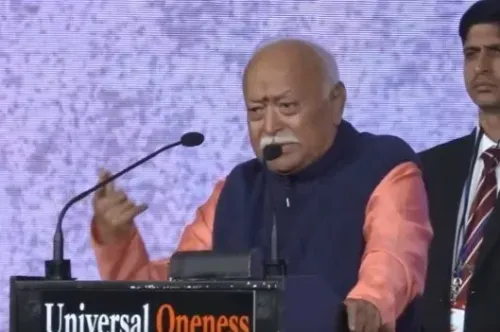
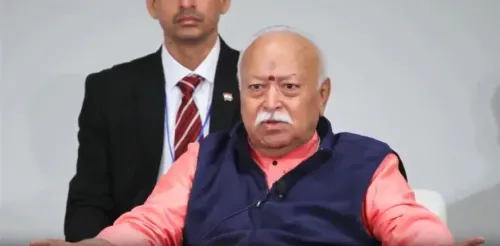
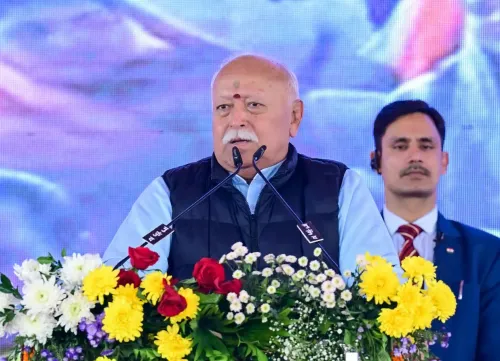
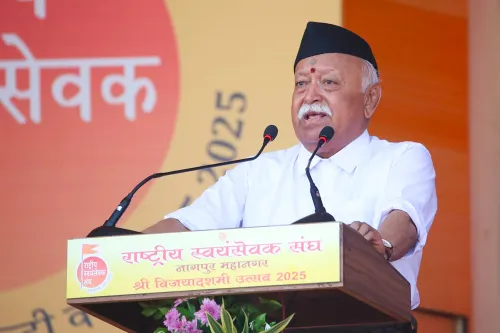
CM Rekha Gupta endorses Mohan Bhagwat's five-point social vision
Synopsis
Delhi Chief Minister Rekha Gupta publicly endorsed an article by RSS Sarsanghchalak Dr Mohan Bhagwat that outlines five social priorities — harmony, family, environment, self-awareness, and civic discipline — as the foundation for a stronger, developed India.
Key Takeaways
Delhi CM Rekha Gupta shared and endorsed an article by RSS Sarsanghchalak Dr Mohan Bhagwat on 21 October 2026 .
Bhagwat's article identifies five pillars : social harmony, family enlightenment, environmental protection, swadeshi and self-awareness, and civic discipline.
Gupta framed unity, harmony, and self-awareness as the essential path to a 'strong and developed nation.' The endorsement reflects the established ideological proximity between the BJP in government and the RSS's cultural priorities.
RSS has consistently championed social harmony and swadeshi themes in its key annual addresses since the 1990s .
Analysts will watch whether Delhi's government translates these five themes into formal programmes or public campaigns.
Five pillars — social harmony, family awakening, environmental protection, self-awareness, and civic discipline — and one clear message: Delhi Chief Minister Rekha Gupta on Wednesday, 21 October 2026, amplified a major article by RSS Sarsanghchalak Dr Mohan Bhagwat, urging citizens to read it as a blueprint for building a stronger, more developed India.
In her post, CM Gupta translated the essence of Bhagwat's argument into a single thesis: 'Ekta, sadbhav aur swabodh se hi Bharat ek mazboot aur viksit rashtra banega' — 'Only through unity, harmony, and self-awareness will India become a strong and developed nation.' The article, published in a leading Hindi daily on 21 October 2026, lays out five thematic priorities Bhagwat considers foundational to national progress.
The five themes Bhagwat outlined
According to Gupta's post, the Sarsanghchalak's article focuses on Samajik Samarasta (social harmony), Kutumb Prabodhan (family enlightenment), Paryavaran Sanrakshan (environmental protection), Swabodh evam Swadeshi (self-awareness and indigenous enterprise), and Nagrik Anushasan (civic discipline). These are not new themes for Bhagwat — or for the RSS. The organisation has woven social harmony, swadeshi advocacy, and civic order into its ideological fabric since its Vijayadashami addresses of the 1990s. What this article does is consolidate them into a single, readable framework aimed at the broadest possible audience.
Why a sitting Chief Minister amplified an RSS article
The endorsement by Delhi's Chief Minister is a textbook instance of the operational proximity between the BJP in government and the RSS's cultural agenda. For Rekha Gupta, sharing Bhagwat's framework is both an ideological alignment and a political signal — that Delhi's administration sees these social priorities as compatible with its governance direction. The overlap is deliberate: swadeshi maps onto 'Make in India' messaging; civic discipline echoes urban governance campaigns; family enlightenment aligns with welfare outreach.
What gives the post its weight is not novelty but coordination. When a Chief Minister of a major capital city tells her followers that a cultural organisation's ideological article is 'inspirational for all of us,' she is helping carry that message from the cultural sphere into the political mainstream — and directly into policy optics for Delhi.
The real story to watch: whether any of these five themes materialises in formal Delhi government programmes, public events, or coordinated RSS-BJP outreach in the weeks ahead. A social-harmony campaign launched from the CM's office citing Bhagwat's framework would mark a significant step from endorsement to governance action.
Point of View
Not just a social-media share — it positions Delhi's BJP government as an active relay point for RSS cultural messaging. The five themes Bhagwat has outlined are broad enough to absorb multiple policy directions, giving the ruling party ideological cover on issues from urban governance to economic nationalism. The move fits a broader BJP pattern of using cultural-organisation frameworks to shape the vocabulary of governance, making the RSS's social vision feel synonymous with state priorities. Whether Delhi's administration follows this endorsement with concrete programming will determine whether this is routine political alignment or the start of a coordinated agenda.
NationPress
21 Oct 2026
Frequently Asked Questions
What did Mohan Bhagwat write about in the article endorsed by Rekha Gupta?
According to Rekha Gupta's post, Bhagwat's article focuses on five themes: social harmony, family enlightenment, environmental protection, self-awareness and swadeshi, and civic discipline as pillars for national development.
Who is Mohan Bhagwat?
Dr Mohan Bhagwat is the Sarsanghchalak (chief) of the Rashtriya Swayamsevak Sangh (RSS), a post he has held since 2009. He regularly speaks and writes on social harmony and national identity.
Why did Delhi CM Rekha Gupta share an RSS article?
Gupta shared and endorsed the article as an inspirational message on social organisation and national progress, reflecting the well-established ideological alignment between the BJP and the RSS on cultural and social issues.
What is swabodh (self-awareness) in the context of Bhagwat's article?
In Bhagwat's framework as cited by Gupta, 'swabodh' refers to national self-awareness — understanding India's own cultural identity and strengths — closely linked to the concept of swadeshi, or indigenous enterprise and self-reliance.
What is the RSS's position on social harmony?
The RSS has consistently emphasised social harmony as a core priority in its annual Vijayadashami addresses and publications since the 1990s, framing it as essential to consolidating a unified national identity.