Pradhan Raises Kotia Border Dispute, Urges Cross-Party Unity
Synopsis
Union Education Minister Dharmendra Pradhan has renewed his call to resolve the Kotia border dispute between Odisha and Andhra Pradesh, citing past visits to the villages and letters to both states' former chief ministers, and urging cross-party unity to protect Odisha's territorial integrity.
Key Takeaways
Union Education Minister Dharmendra Pradhan described Kotia villages as a symbol of Odisha's sovereignty and identity on October 21, 2026 .
Pradhan disclosed visits to Kotia in April 2018, February 2019, and April 2023 .
He wrote to then-Odisha CM Naveen Patnaik on November 18, 2020 and October 31, 2022 , and to then-AP CM Y.
Jagan Mohan Reddy on September 22, 2021 .
The Kotia dispute originates from the 1950s linguistic reorganisation of states , leaving border segments between Odisha and Andhra Pradesh unresolved.
Pradhan invoked historical Odia leaders including Madhusudan Das and Gopabandhu Das to argue the dispute touches core Odia identity.
He called for cross-party dialogue to build a 'harmonious atmosphere' for a negotiated resolution.
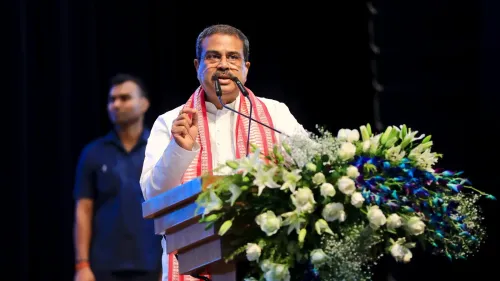
A territorial wound that has festered for decades along the Odisha-Andhra Pradesh border is back in the national conversation. Union Education Minister Dharmendra Pradhan on Wednesday, October 21, 2026, invoked the identity and sovereignty of Odisha in a pointed post on X, calling the long-running dispute over the Kotia cluster of villages 'worrying' and demanding a united, cross-party response to resolve it.
Writing in Odia, Pradhan described Kotia as 'the identity of Odisha's pride, sovereignty, and integrity' — Odishara asmita, sarbabhaumatwa o akhandatara parichaya — framing the issue not merely as an administrative boundary question but as a matter of civilisational identity for the Odia people. He called on politicians of all parties to set aside differences and work collectively in Odisha's interest.
Visits, Letters, and Years of Unanswered Requests
Pradhan disclosed a sustained personal effort to move the issue forward. He said he visited Kotia villages in April 2018, February 2019, and April 2023 to understand conditions on the ground. He also said he wrote to then-Chief Minister Naveen Patnaik on November 18, 2020 and again on October 31, 2022, urging action. A separate letter to then-Andhra Pradesh Chief Minister Y. S. Jagan Mohan Reddy followed on September 22, 2021.
That the dispute persisted across two sets of letters to two different chief ministers — over nearly two years — underscores how little formal progress has been made. Pradhan stopped short of blaming any individual but made clear that elected representatives bear the primary responsibility for a solution.
Roots in the Linguistic Reorganisation of States
The Kotia dispute is a direct inheritance of the 1950s linguistic reorganisation of Indian states, which redrew internal borders along language lines but left several segments between Odisha and Andhra Pradesh unresolved. Kotia — a cluster of villages in a hilly frontier zone — has been claimed by both states, with Andhra Pradesh periodically extending administrative reach into the area, a move Odisha consistently contests.
Inter-state border disputes of this nature have recurred across India's federal map for seven decades. They tend to flare when electoral cycles or regional sentiment bring them to the surface, and they rarely get resolved without either a formal boundary commission, Supreme Court intervention, or sustained political will from both state governments.
The Historical Sacrifices Pradhan Invoked
Pradhan's post drew on the deepest thread of Odia identity politics — the memory of leaders who fought for a separate Odisha province in 1936. He named Utkal Gourab Madhusudan Das, the lawyer-statesman who championed a distinct Odia state; Utkalmani Gopabandhu Das, the social reformer revered across Odisha; poet Vyasakabi Fakir Mohan Senapati; nature-poet Swabhakabi Gangadhar Meher; and Parla Maharaja Krushna Chandra Gajapati Narayan Deb, a key political figure of the pre-independence era.
The invocation was deliberate: by tying Kotia to those sacrifices, Pradhan raised the political cost of inaction and made any compromise on the villages' status harder to defend within Odisha's political culture.
What a Resolution Could Look Like
Pradhan called for dialogue to build 'a harmonious atmosphere' and find a path to resolution — stopping well short of demanding unilateral action or legal escalation. Analysts watching the dispute note that meaningful progress would require either a bilateral understanding between the sitting Chief Ministers of Odisha and Andhra Pradesh, a reference to a Central boundary commission, or ultimately the Supreme Court.
The fight for Odia identity, Pradhan concluded, 'will continue' — a signal that the pressure campaign is far from over, and that Kotia will remain a live political issue as long as the border stays undefined.
Point of View
Applies sustained pressure on the current Odisha and Andhra Pradesh state governments, and keeps a slow-burning inter-state dispute from fading off the agenda. By framing Kotia in the language of sovereignty and historical sacrifice — rather than administrative procedure — he raises the political cost of inaction for any leader seen as soft on the issue. The appeal for cross-party unity also subtly positions the BJP as a suprapartisan guardian of Odisha's interests, a framing with durable regional appeal.
NationPress
21 Oct 2026
Frequently Asked Questions
What is the Kotia border dispute between Odisha and Andhra Pradesh?
Kotia is a cluster of villages in a hilly frontier zone claimed by both Odisha and Andhra Pradesh. The dispute dates to the 1950s linguistic reorganisation of Indian states, which left several border segments between the two states unresolved. Andhra Pradesh has periodically extended administrative presence into the area, which Odisha contests.
Why is Dharmendra Pradhan raising the Kotia issue?
Pradhan, a senior BJP leader from Odisha, has long advocated for resolving the Kotia dispute. He says he visited the villages in 2018, 2019, and 2023 and wrote to the former chief ministers of both states seeking action. His latest post calls for cross-party dialogue to protect Odisha's territorial integrity.
Who did Dharmendra Pradhan write to about the Kotia dispute?
Pradhan wrote to then-Odisha Chief Minister Naveen Patnaik on November 18, 2020 and October 31, 2022, and to then-Andhra Pradesh Chief Minister Y. S. Jagan Mohan Reddy on September 22, 2021, requesting resolution of the border dispute.
How can the Kotia border dispute be resolved?
Resolution typically requires either a bilateral agreement between the chief ministers of Odisha and Andhra Pradesh, a reference to a Central boundary commission, or Supreme Court intervention. Pradhan has called for dialogue to create a 'harmonious atmosphere' for a negotiated settlement.
Which historical Odia figures did Pradhan mention in connection with the Kotia dispute?
Pradhan invoked Utkal Gourab Madhusudan Das, Utkalmani Gopabandhu Das, poet Fakir Mohan Senapati, poet Gangadhar Meher, and Parla Maharaja Krushna Chandra Gajapati Narayan Deb — all central figures in the movement for a separate Odisha province — to argue that Kotia's protection honours their sacrifices.