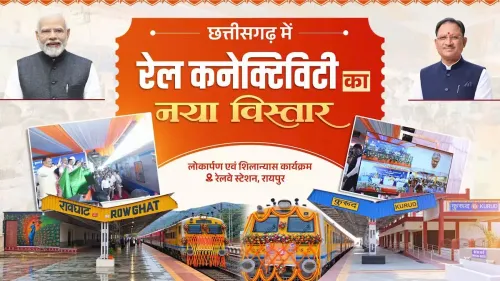
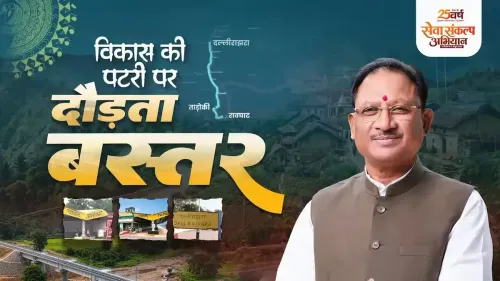
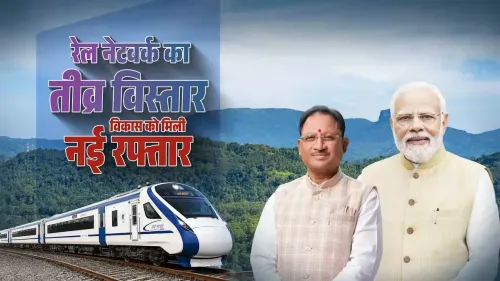
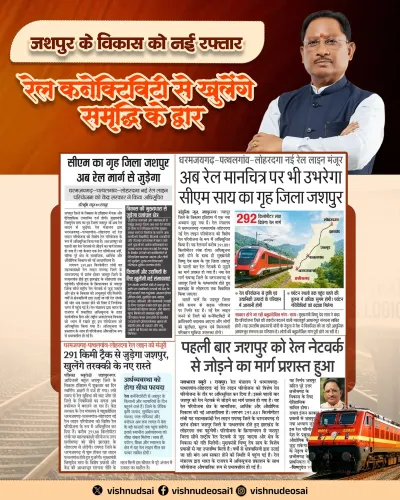
CM Vishnu Deo Sai Hails Raoghat–Raipur Rail Link as Chhattisgarh's New Lifeline
Synopsis
Chhattisgarh Chief Minister Vishnu Deo Sai has welcomed the Raoghat–Raipur rail service as a new development lifeline for the state, promising gains in trade, tourism, employment, and access to education and healthcare for remote Bastar communities.
Key Takeaways
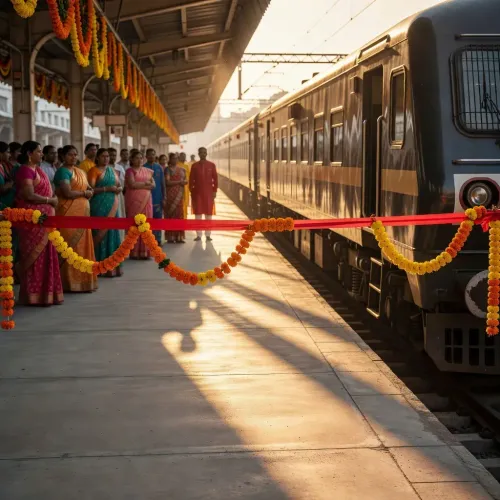
Chhattisgarh CM Vishnu Deo Sai on 21 October 2026 publicly celebrated the launch of the Raoghat–Raipur rail service .
Raoghat is located in the Bastar division , an iron-ore-rich and historically underconnected region of Chhattisgarh.
The CM cited expected benefits including trade growth, tourism promotion, new employment, and affordable access to education and healthcare in Raipur .
The project is framed under the double engine sarkar narrative, crediting aligned BJP governments at the state and central level.
Rail connectivity in Bastar serves a dual purpose: passenger and freight movement, including transport of iron ore and other minerals.
Operational statistics and project cost details remain to be independently confirmed.
A mineral-rich corner of Chhattisgarh just got a direct line to its own capital — and Chhattisgarh Chief Minister Vishnu Deo Sai is calling it a turning point. On Wednesday, 21 October 2026, the Chief Minister took to X to salute the Raoghat–Raipur rail service as a 'new lifeline of development' delivered under the double engine sarkar — the shorthand for a state and central government both run by the BJP.
In his post, CM Sai wrote that the rail link would 'promote trade, tourism and economic activity, create new employment opportunities, and give fresh momentum to regional development.' He added that affordable rail access to Raipur would ease ordinary citizens' reach to education, healthcare, and livelihood — a pointed nod to the remote, underserved populations of the Bastar division that Raoghat sits within.
Raoghat's Long Wait for a Rail Connection
Raoghat, tucked inside Chhattisgarh's iron-ore-rich Bastar region, has been on railway planners' maps since the early 2000s. The area holds some of India's most significant iron ore deposits, yet its geographic and security challenges — the Bastar belt has historically seen Naxal activity — kept broad connectivity elusive for decades. Connecting it by rail to the state capital is both a logistics win for mineral transport and a social lifeline for tribal and rural communities who previously had no affordable, direct route to Raipur.
The project fits squarely into a broader national pattern: the Union Railway Ministry has, over successive years, prioritised lines that simultaneously serve freight corridors and passenger needs in tribal, forested, and strategically sensitive zones of central India. Rail access in such regions also carries an implicit counter-insurgency dimension — connectivity tends to integrate economies and reduce the isolation that armed groups exploit.
Who Stands to Gain Most
For daily passengers, the calculus is immediate: a direct rail route to Raipur means cheaper travel than road alternatives, more reliable schedules, and safe overnight connectivity. Students sitting competitive exams in the capital, patients seeking specialist care, and traders moving goods to urban markets all figure in the Chief Minister's framing — and rightly so. Local tourism, too, could benefit; the forests and waterfalls of the Bastar hinterland remain dramatically under-visited relative to their natural richness, and easier access from Raipur changes the equation for weekend travellers.
On the freight side, the route opens a more direct corridor for iron ore and other minerals extracted around Raoghat to reach processing hubs and onward connections — a tangible economic multiplier for the region's mining sector.
The 'Double Engine' Branding at Work
CM Sai's phrasing is deliberate. The double engine sarkar narrative — that a BJP state government and a BJP-led centre accelerate development in tandem — has become a standard electoral and governance talking point in BJP-governed states. Attributing a rail project to that alignment is as much political communication as administrative announcement. Whether the credit genuinely belongs to the state's own lobbying or to broader railway expansion plans is a distinction the post does not draw. What is clear: Chhattisgarh now has a rail link that did not exist before, and that is a concrete, measurable change for the people of Raoghat.
With operational details and passenger numbers yet to be independently reported, the real test of the line's impact will come in its daily ridership — the quiet metric that will determine whether this lifeline truly flows.
Point of View
With implications well beyond passenger convenience. BJP's deliberate framing of the project as a 'double engine' dividend is a politically calculated move ahead of future electoral cycles in Chhattisgarh, seeking to translate concrete infrastructure delivery into durable voter credit. The line's real test will be freight utilisation from Bastar's mineral belt — if ore movement scales, it becomes a revenue-generating corridor that justifies the investment far beyond the symbolic. Broader connectivity in Naxal-affected Bastar also carries a long-term security dimension that neither the post nor its political framing fully articulates.
NationPress
21 Oct 2026
Frequently Asked Questions
What is the Raoghat–Raipur rail service in Chhattisgarh?
The Raoghat–Raipur rail service is a new railway connection linking Raoghat in the Bastar division of Chhattisgarh to the state capital Raipur , aimed at improving passenger travel, freight movement, and economic development in the region.
Why is the Raoghat rail link significant for Bastar?
Bastar is a remote, forested, and mineral-rich region that has historically lacked reliable rail connectivity. The new line gives residents affordable access to Raipur for education, healthcare, and trade, and opens a direct corridor for mineral transport.
What did Chhattisgarh CM Vishnu Deo Sai say about the rail project?
CM Vishnu Deo Sai called the Raoghat–Raipur rail service a 'new lifeline of development' delivered under the double engine sarkar , saying it would boost trade, tourism, employment, and common citizens' access to essential services.
What is 'double engine sarkar' in the context of Chhattisgarh?
'Double engine sarkar' refers to the political alignment of a BJP -led state government in Chhattisgarh and a BJP-led Union government, which BJP leaders argue accelerates infrastructure delivery and development funding for the state.
Will the Raoghat rail line also benefit freight and mining?
Yes. Raoghat is known for significant iron ore deposits, and a direct rail link to Raipur is expected to ease mineral transport to processing and distribution hubs, adding a major freight dimension to the route's economic value.