Pradhan Flags Odisha Fisheries Gap, Calls for Cooperative Push
Synopsis
Union Education Minister Dharmendra Pradhan flagged that Odisha produces significantly less fish than Andhra Pradesh despite comparable natural resources, citing 11.92 lakh metric tons of output, and called for special schemes for fishery cooperatives and stronger rural infrastructure to close the gap.
Key Takeaways
Union Education Minister Dharmendra Pradhan posted on 9 July 2026 highlighting Odisha's fisheries underperformance relative to Andhra Pradesh.
Odisha's coastline is roughly half that of Andhra Pradesh, yet the river-canal water body coverage is comparable between the two states.
Odisha's current fish production stands at 11.92 lakh metric tons , while Andhra Pradesh produces significantly more despite comparable inland water resources.
Pradhan called for special schemes for fish producer organisations and greater emphasis on the cooperative sector to bridge the output gap.
Central programmes including Pradhan Mantri Matsya Sampada Yojana (2020) and the Blue Revolution scheme (2015-16) already target fisheries modernisation in coastal states like Odisha.
The statement points to a potential push for new state-level interventions in cold-chain logistics, cooperative credit, and rural fisheries infrastructure in Odisha.
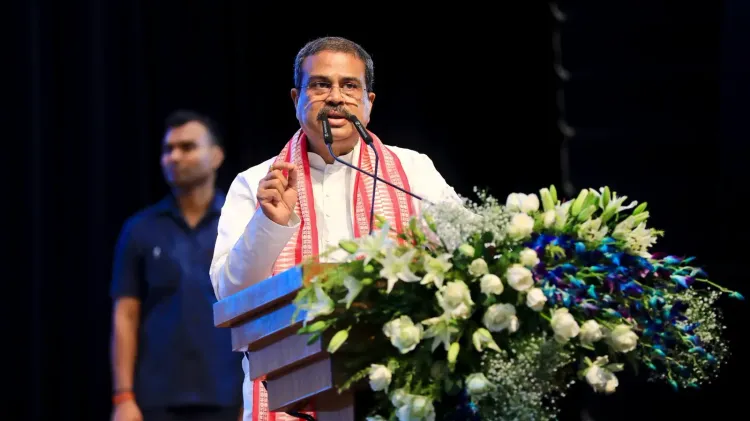
Union Education Minister Dharmendra Pradhan on Thursday, 9 July 2026, highlighted a significant fisheries output gap between Odisha and Andhra Pradesh, calling it both a challenge and an opportunity for his home state. Replying to a post by @CPR_VP on X, Pradhan urged the strengthening of cooperative institutions and rural infrastructure to scale up fish production in Odisha.
Context
In his post, written in Odia, Pradhan noted that despite Odisha having roughly half the coastline of Andhra Pradesh and comparable river-canal water body coverage, Andhra Pradesh produces significantly more fish than Odisha's 11.92 lakh metric tons. He described this disparity as 'ଏକ ବଡ଼ ଆହ୍ୱାନ ଏବଂ ସମ୍ଭାବନା' — 'a major challenge as well as an opportunity.' The remark signals a rare public acknowledgement from a senior central minister of a structural underperformance in his own state's allied agriculture sector.
Policy Backdrop
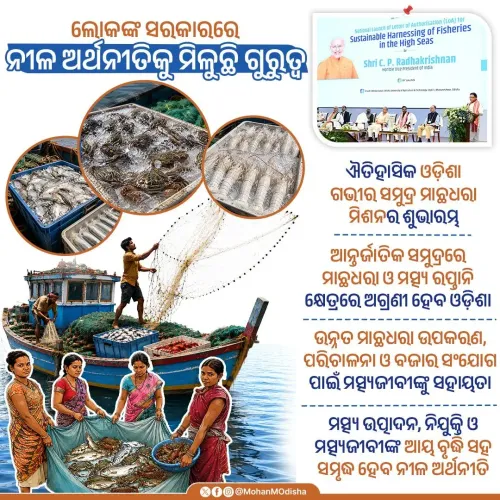
The fisheries sector has been a focus of central policy for over a decade. The Blue Revolution scheme, launched in 2015-16, aimed at a sustainable increase in fish production through better management of water bodies and cooperative networks. It was followed by the Pradhan Mantri Matsya Sampada Yojana (PMMSY), launched in 2020, which channelled funds to modernise the sector, build cold-chain infrastructure, and support fish farmer producer organisations across coastal and inland states. Odisha has been a beneficiary of both programmes, yet the production gap with Andhra Pradesh persists, pointing to implementation and structural challenges at the state level.
Stakeholders and Impact
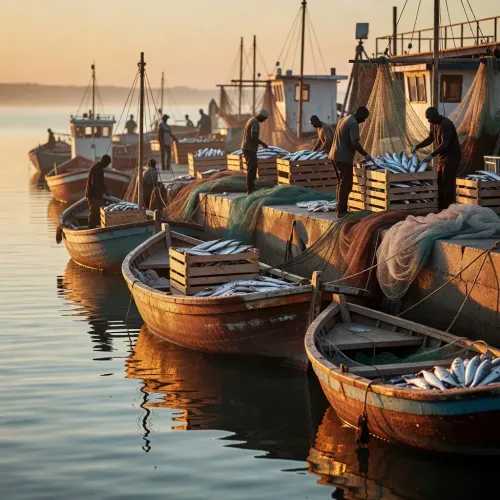
Odisha has an extensive network of small-scale fishermen, artisanal boat operators, and fishery cooperatives spread across its coastal districts and inland river belts. Andhra Pradesh's lead in production is widely attributed to its aggressive aquaculture expansion — particularly shrimp and brackish-water farming — and a well-organised cooperative and private-sector supply chain. Pradhan's call to 'give importance to the cooperative sector' and 'prepare special schemes for fish producer organisations' directly addresses this institutional gap. If translated into state-level policy action, it could benefit lakhs of fishing-community households dependent on the sector for their primary income.
What's Next
Pradhan's statement is likely to prompt discussion within the Odisha state government and among central fisheries planners about targeted interventions — particularly around cooperative credit, cold-chain logistics, and producer-organisation capacity building. Observers will watch for any formal scheme announcements by the Odisha Fisheries Department or a revision of state targets under PMMSY. The next annual fish production statistics from the state will be a key benchmark against which this call to action is measured. Bridging even a fraction of the gap with Andhra Pradesh could meaningfully raise rural incomes across Odisha's coastal and riverine districts.
Point of View
Coming at a time when allied agriculture sectors are central to the party's rural outreach. By invoking the cooperative model and producer organisations, he is aligning with a broader national policy thrust that has gained momentum since the formation of the Union Ministry of Cooperation. The comparison with Andhra Pradesh is a standard benchmarking tool in Indian fisheries policy circles, but its use by a cabinet minister lends it political weight that could accelerate state-level budget allocations. Whether this translates into concrete scheme announcements or remains aspirational rhetoric will be the real test of its policy significance.
NationPress
8 Oct 2026
Frequently Asked Questions
Why is Odisha's fish production lower than Andhra Pradesh despite similar water resources?
Andhra Pradesh has a more developed aquaculture sector — particularly brackish-water and shrimp farming — along with stronger cooperative networks and private supply chains, giving it a structural advantage over Odisha despite comparable inland water body coverage.
What is the Pradhan Mantri Matsya Sampada Yojana?
The Pradhan Mantri Matsya Sampada Yojana (PMMSY) is a central government scheme launched in 2020 to modernise India's fisheries sector by funding infrastructure, cold-chain logistics, and support for fish farmer producer organisations across coastal and inland states.
What did Dharmendra Pradhan say about Odisha fisheries?
Pradhan noted that Odisha produces 11.92 lakh metric tons of fish — significantly less than Andhra Pradesh — despite having roughly half the coastline and comparable river-canal water bodies, and called for special schemes for fishery cooperatives and stronger rural infrastructure.
What is Odisha's current fish production figure?
According to Dharmendra Pradhan's post on X dated 9 July 2026 , Odisha's fish production stands at 11.92 lakh metric tons .
What schemes exist to boost fisheries in Odisha?
Odisha benefits from central schemes including the Pradhan Mantri Matsya Sampada Yojana (2020) and the earlier Blue Revolution scheme (2015-16) , both of which target sustainable fish production growth through cooperative strengthening and rural infrastructure investment.