CM Siddaramaiah Backs SIR, Vows No Voter Left Behind
Synopsis
The Chief Minister's Office of Karnataka on 9 July 2026 called for zero politicisation of the Election Commission's Special Intensive Revision, directing Booth Level Officers to visit every household three times and opening ward-level help desks to protect every eligible voter's right to remain on the electoral roll.
Key Takeaways
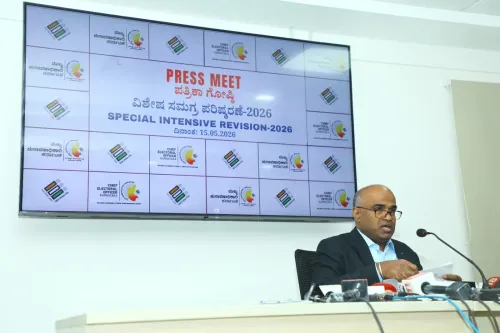
The Chief Minister's Office of Karnataka posted on 9 July 2026 pledging full cooperation with the Election Commission of India's Special Intensive Revision (SIR) of electoral rolls.
The CMO called for no politicisation of the SIR process, saying state officials must focus on protecting every eligible voter's right.
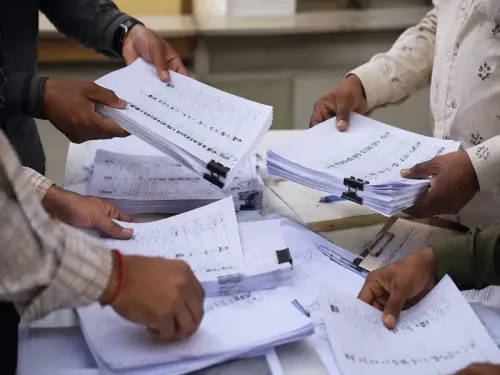
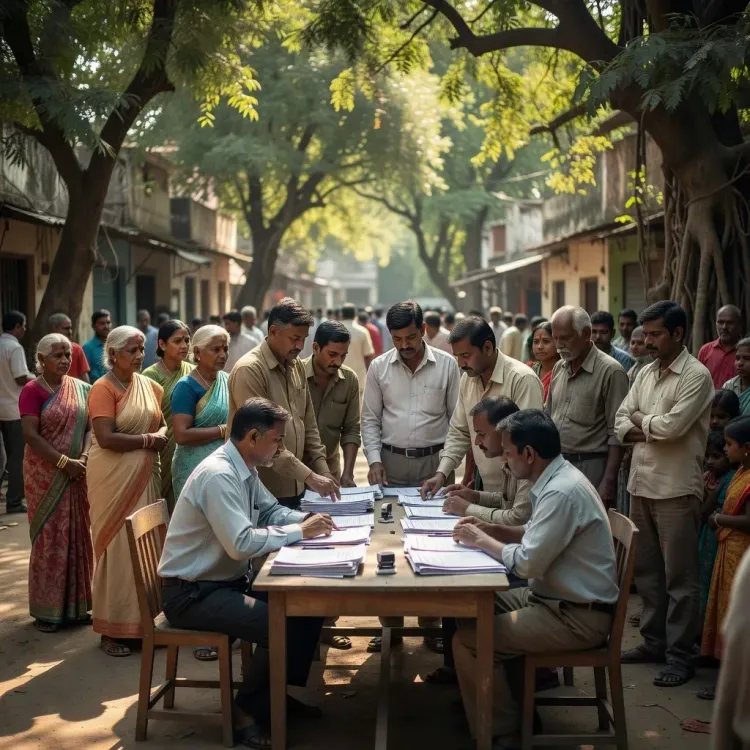
Booth Level Officers (BLOs) have been directed to visit every household three times and provide application forms to residents.
Help desks are being set up in every ward and area across Karnataka to assist citizens in submitting required documents.
The government linked voter registration to access to state welfare benefits, creating a direct incentive for citizens to complete the verification process.
State officials have been put on notice to monitor field-level implementation of these directives.
The Chief Minister's Office of Karnataka posted on 9 July 2026 that the state government will extend full support to the Election Commission of India's Special Intensive Revision (SIR) of electoral rolls, directing officials to ensure no eligible voter loses their right to vote.
Context
The post, part of a thread (7/9), carries a direct statement from the Chief Minister's Office in Kannada: 'ಎಸ್ಐಆರ್ ವಿಚಾರದಲ್ಲಿ ನಾವು ರಾಜಕಾರಣ ಮಾಡಬಾರದು' ('We should not play politics on the matter of SIR'). It adds that the State Election Officers have communicated all details clearly, and the state is acting in alignment with the Election Commission's programme. The message is an explicit call for administrative cooperation over partisan posturing.
The statement further declares: 'Every person's right to vote must be preserved. Our government must provide whatever documents are required by whoever needs them.' This framing positions the SIR exercise not as a threat to any community but as a rights-protection drive backed by state machinery.
Policy Backdrop
The Election Commission of India (ECI) periodically conducts Special Intensive Revisions of electoral rolls under the Representation of the People Act, deploying Booth Level Officers (BLOs) for house-to-house verification. Similar exercises were carried out ahead of the 2019 and 2024 Lok Sabha elections to update voter lists and remove bogus entries.
The Karnataka government's role in such exercises is logistical: deploying BLOs, setting up local help desks, and facilitating document access for citizens who lack the paperwork needed to verify their voter registration. The CMO's post makes this support explicit and public.
Stakeholders and Impact
The CMO's statement directly addresses two groups: eligible voters at risk of being dropped from rolls, and citizens who lack documents. The post instructs that BLOs must visit every household three times and provide application forms, ensuring residents have multiple opportunities to participate in the revision.
Crucially, the statement links voter registration to access to government welfare schemes: 'Those whose voting rights are preserved will receive government benefits. Those who are not voters will not receive benefits.' This creates a direct incentive for citizens to complete the verification process. Help desks are being opened in every ward and area to assist residents in submitting the necessary documentation.
What's Next
Officials have been put on notice to monitor implementation closely. The CMO's instruction for three mandatory BLO visits per household sets a measurable benchmark for field-level compliance. The broader watch point is the completion of the current SIR cycle and the Election Commission of India's subsequent publication of the revised electoral rolls, which will determine how many voters were added, retained, or removed across Karnataka.
The Karnataka government's public commitment to facilitate documentation access could set a template for how state administrations engage with future ECI revision exercises — framing administrative cooperation as a voter-rights obligation rather than a discretionary political choice.
Point of View
The government shifts the political narrative from exclusion to inclusion. The linkage of voter registration to welfare benefit eligibility is a notable policy signal: it transforms the abstract right to vote into a tangible economic stake, potentially driving higher compliance among populations that might otherwise be indifferent to the revision process. How rigorously BLOs execute the three-visit mandate will be the real test of whether this commitment translates beyond a social-media statement.
NationPress
9 Jul 2026
Frequently Asked Questions
What is the Special Intensive Revision (SIR) of electoral rolls in Karnataka?
The Special Intensive Revision is an exercise ordered by the Election Commission of India to update and verify voter lists through house-to-house checks by Booth Level Officers. The Karnataka government has pledged to support the current SIR drive by facilitating documents and setting up help desks.
What are Booth Level Officers (BLOs) and what is their role in the SIR?
Booth Level Officers are ground-level election officials assigned to specific polling booths. During the SIR, the Karnataka CMO has directed BLOs to visit every household three times and distribute application forms to ensure eligible voters can complete the verification process.
How can Karnataka residents get help with voter registration documents during the SIR?
The Karnataka government is opening help desks in every ward and area across the state. Residents who need assistance with documentation for voter registration can visit these desks or wait for BLO visits to their homes.
Will not being on the electoral roll affect access to government schemes in Karnataka?
According to the Chief Minister's Office statement on 9 July 2026, only registered voters will be eligible to receive government welfare benefits. Citizens not on the electoral roll may lose access to state schemes, making timely voter registration important.
Is the SIR voter revision exercise political in Karnataka?
The Chief Minister's Office of Karnataka explicitly stated on 9 July 2026 that 'we should not play politics on the matter of SIR,' positioning the exercise as a neutral, rights-based administrative drive aligned with the Election Commission of India's programme.