Karnataka SIR exercise: Parameshwara urges protection of every voter's rights
Synopsis
Karnataka's Home Minister G. Parameshwara has put officials and party workers on notice: the Special Intensive Revision of electoral rolls must not cost a single eligible voter their franchise. With assembly elections looming and the SIR process drawing national scrutiny, his Belagavi address doubles as both an administrative directive and a political signal — protect the voter base, or risk losing it.
Key Takeaways
Parameshwara on 1 July urged that no eligible voter be removed from rolls during Karnataka's Special Intensive Revision (SIR) exercise.
BLOs , Deputy Commissioners , and Tahsildars have been empowered to issue residence certificates to simplify voter verification.
Parameshwara flagged delays in Central funding for schemes including Jal Jeevan Mission and MGNREGA , citing Centre-State friction.
Nearly 75 per cent of the country is reportedly facing drought-like conditions; Parameshwara said he will convene a meeting with DCs of seven water-stressed districts .
The Bharat Jodo building was constructed at a cost of nearly ₹20 crore ; the Belagavi District Congress office land was acquired after ₹25 lakh was sanctioned.
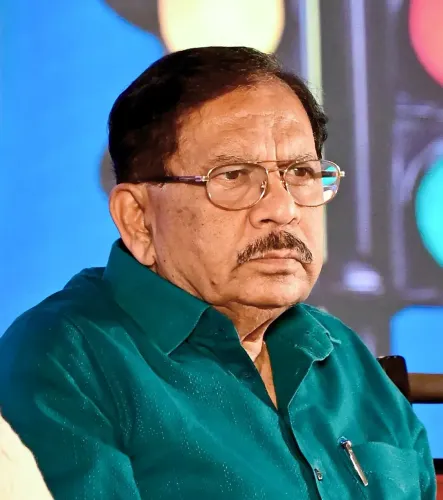
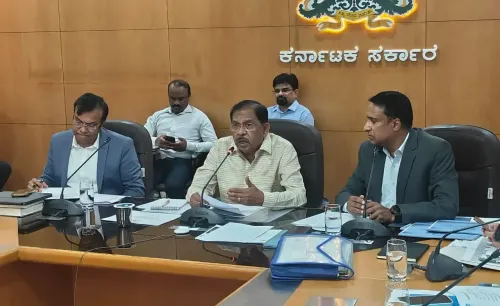
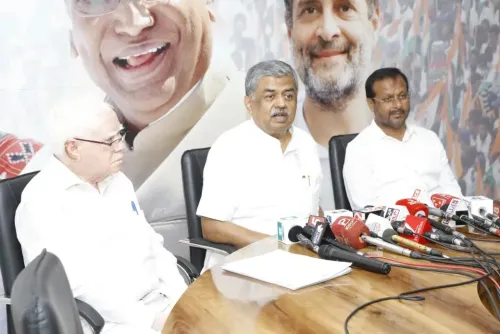
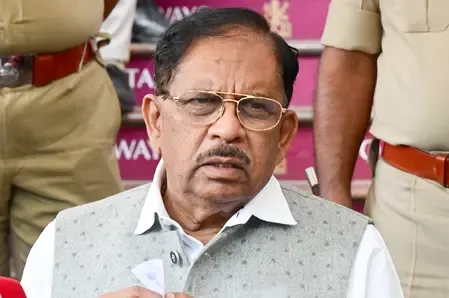
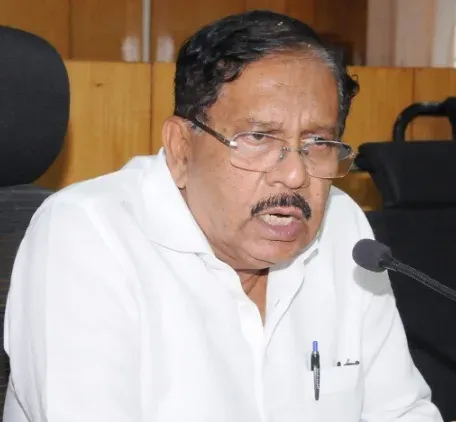
Karnataka Home and Revenue Minister G. Parameshwara on Wednesday, 1 July called for strict safeguards during the ongoing Special Intensive Revision (SIR) of electoral rolls in the state, asserting that no eligible voter should be stripped of the right to vote. Speaking at the Belagavi District Congress office during a visit to the district, Parameshwara directed officials and party workers to treat the SIR process with the utmost seriousness.
Key Directives on the SIR Process
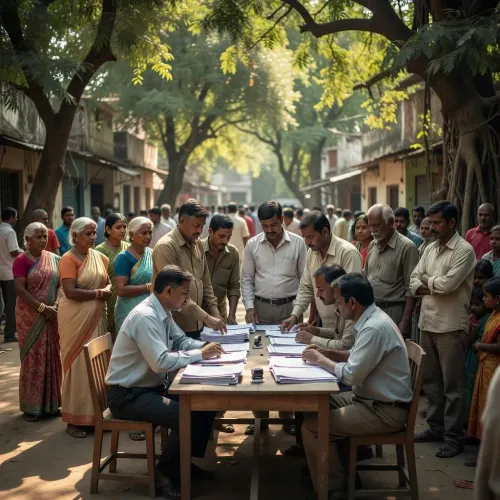
Parameshwara said the SIR exercise has triggered debate across the country over its merits and shortcomings, and Karnataka must learn from challenges witnessed in other states. He stressed that Booth Level Officers (BLOs) and other concerned officials must coordinate to prevent the unnecessary deletion of eligible voters' names from electoral rolls.
He added that Deputy Commissioners and Tahsildars have been empowered to issue residence certificates, a step he said would simplify the verification process and reduce inconvenience to the public. 'Wherever irregularities are noticed, they will be monitored, and appropriate action will be taken,' he said.
Centre-State Tensions Over Funds
Parameshwara used the occasion to flag what he described as persistent financial friction between the Karnataka state government and the Centre. He cited delays in the release of Central grants and inadequate support for welfare schemes including the Jal Jeevan Mission and MGNREGA. 'We know from experience how the lack of cooperation from the Central government affects development works,' he said.
He noted that the Congress government's pro-people schemes would require a fresh mandate beyond 2028, making voter roll integrity a political as well as administrative priority.
Monsoon Deficit and Drinking Water Concerns
Speaking in his capacity as Revenue Minister, Parameshwara expressed concern over a deficient monsoon, saying nearly 75 per cent of the country is facing drought-like conditions with no immediate forecast of substantial rainfall. He said he would convene a meeting with Deputy Commissioners of seven districts likely to face water shortages and issue instructions to prevent any disruption to drinking water supply.
Party Organisation and Leadership Transition
On internal Congress matters, Parameshwara said changes in office-bearers following the appointment of a new Karnataka Pradesh Congress Committee (KPCC) president are natural and expected. He called on ministers, MLAs, and district Congress presidents to jointly recommend names for party posts, which would be reviewed before being placed before the KPCC president.
He credited former Minister Lakshmi Hebbalkar and Minister Satish Jarkiholi for their role in establishing the Belagavi District Congress office, and recalled that Deputy Chief Minister D.K. Shivakumar had strongly advocated acquiring a suitable site when serving as a minister. A foundation stone was laid after ₹25 lakh was sanctioned for purchasing the land. Parameshwara also noted that the Bharat Jodo building was constructed at a cost of nearly ₹20 crore, though he left office before its inauguration.
With the SIR process under national scrutiny and assembly elections on the horizon, how Karnataka manages voter roll integrity over the coming weeks will be closely watched.
Point of View
Which has already sparked controversy in other states over alleged deletion of minority and marginalised voters, is a live electoral risk for the Congress in Karnataka — a state where its welfare schemes are its primary re-election pitch. By publicly directing officials to safeguard voter rolls and tying the issue to the 2028 mandate, Parameshwara is signalling that the party views SIR not as a neutral bureaucratic exercise but as contested ground. The Centre-State funding grievance, woven into the same speech, reinforces the Congress's broader anti-BJP narrative ahead of the electoral cycle — but without a verifiable accountability mechanism for BLO conduct, the directive risks remaining rhetorical.
NationPress
30 Sept 2026
Frequently Asked Questions
What is the Special Intensive Revision (SIR) of electoral rolls in Karnataka?
The Special Intensive Revision (SIR) is a periodic exercise conducted by election authorities to update and clean up voter rolls by adding new eligible voters and removing those who are deceased, relocated, or ineligible. In Karnataka, the current SIR round has drawn political attention over concerns that eligible voters — particularly from marginalised communities — could be wrongfully deleted.
What did G. Parameshwara say about the SIR exercise?
Parameshwara directed Booth Level Officers, Deputy Commissioners, and Tahsildars to ensure no eligible voter's name is deleted unnecessarily. He said residence certificates — now issuable by Deputy Commissioners and Tahsildars — would ease the verification process, and warned that irregularities would be monitored and acted upon.
Why is the SIR process politically sensitive in Karnataka?
The SIR exercise has triggered debate nationwide, with concerns that it could disenfranchise voters from minority, Dalit, and backward-class communities — constituencies that form a core part of the Congress voter base in Karnataka. With assembly elections due beyond 2028, protecting voter rolls is both an administrative and electoral priority for the ruling party.
What did Parameshwara say about the monsoon and water shortage?
Parameshwara said nearly 75 per cent of the country is facing drought-like conditions with no immediate forecast of significant rainfall. He said he would hold a meeting with Deputy Commissioners of seven districts likely to face water shortages to ensure uninterrupted drinking water supply.
What organisational changes did Parameshwara announce for the Karnataka Congress?
Parameshwara said changes in party office-bearers following a new KPCC president's appointment are routine. He called on ministers, MLAs, and district Congress presidents to jointly submit names for party posts, which would be reviewed before being placed before the KPCC president for a final decision.