Akhilesh Yadav demands judicial probe into Ram Temple trust land deals

Synopsis
Samajwadi Party president Akhilesh Yadav on 9 July 2026 demanded a judicial probe into Ram Temple trust land transactions, travel bans on the accused, and full dissolution of the trust, accusing the BJP of shielding wrongdoers and calling resignations an insufficient escape route.
Key Takeaways
Akhilesh Yadav posted a multi-point demand list on 9 July 2026 targeting alleged irregularities linked to the Shri Ram Janmabhoomi Teerth Kshetra Trust .
He demanded a judicial inquiry into all land deals and official actions signed by those who have resigned from their positions.
Yadav called for travel bans on accused individuals and monitoring of their future movements.
He alleged that Call Detail Records (CDR) would reveal heavy phone contact from BJP members seeking to switch to the Samajwadi Party.
He declared that resignations must not serve as a means of escape, and that the entire trust framework should be dissolved.
The post was addressed to 'aggrieved Sanatanis across the world and the honest media,' and closed with a promise of further disclosures.
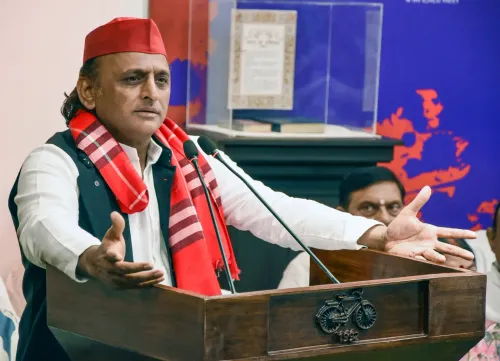
Samajwadi Party president Akhilesh Yadav on Thursday, 9 July 2026 launched a sharp attack on the Bharatiya Janata Party and the management of the Shri Ram Janmabhoomi Teerth Kshetra Trust, demanding a full judicial inquiry into land transactions signed by officials who have since resigned, and calling for travel bans on those accused of wrongdoing.
Context
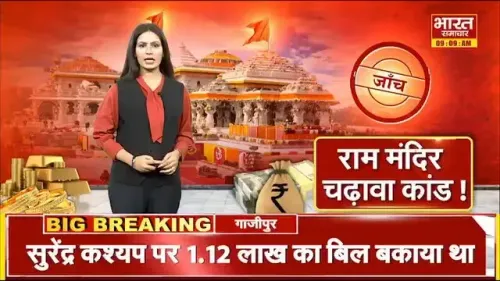
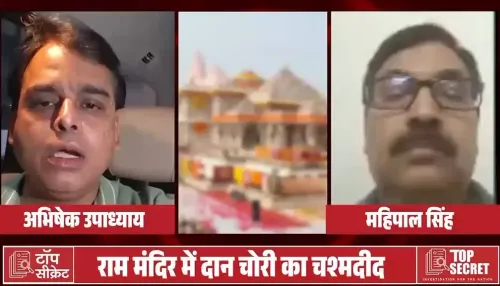
Addressing what he called 'vishwabhar ke aahat hue Sanataaniyon evam sachche media ke sangyanaartH' ('the notice of aggrieved Sanatanis across the world and the honest media'), Akhilesh Yadav posted a pointed list of demands on X. The post comes in the backdrop of swirling allegations of irregularities in land acquisitions around the Ayodhya temple complex, a controversy that has drawn opposition scrutiny for several months.
Yadav questioned the credibility of an interim investigation report, saying: 'One whose name does not appear in the interim report — how will it appear in the final one?' He also alleged that accused individuals were being welcomed rather than detained, remarking that 'the police are opening the door to receive the accused.'
Policy Backdrop
The Shri Ram Janmabhoomi Teerth Kshetra Trust was constituted by the central government in 2020 following the landmark 2019 Supreme Court verdict, to oversee construction of the Ram Temple and related activities in Ayodhya, Uttar Pradesh. Since 2019, multiple phases of land acquisition around the temple site have been executed by the Uttar Pradesh government, periodically attracting allegations of price inflation and procedural violations.
Yadav invoked the analogy of a horse-carriage to spread accountability upward: 'Punishment must not be only for the horse or the reins — the coachman must also be held accountable. Responsibility must be fixed not just on the one who was given the charge, but also on the one who gave it.' He insisted that resignations alone cannot serve as an escape route, and demanded judicial scrutiny of all land deals and official actions bearing the signatures of those who have stepped down.
Stakeholders and Impact
Yadav's post is directed at multiple audiences simultaneously: Hindu devotees whose religious sentiments are tied to the temple project, BJP functionaries he accuses of complicity, and voters in Uttar Pradesh ahead of future electoral cycles. He claimed that if Call Detail Records (CDR) were examined, they would show that the highest volume of calls came from BJP members 'who want to leave the BJP and come here,' a charge that, if substantiated, would suggest internal dissent within the ruling party.
He further alleged that critics 'sitting far away and levelling accusations' are themselves stakeholders in what he called the 'mahakand' (mega-scandal), and that their agitation stems from a disruption to their 'income channel.' He called for the entire trust to be dissolved — 'not just the structure, but the entire framework must change' — and for the future movements of the accused to be monitored and their foreign travel banned.
What's Next
Yadav ended his post with the phrase 'Shesh agle ank mein…' ('To be continued in the next edition…'), signalling that further disclosures or demands are forthcoming. The BJP and trust office-bearers are yet to formally respond to the specific allegations raised in the post.
The key pressure points to watch are whether any court takes cognisance of demands for a judicial probe into land transactions, and whether the Uttar Pradesh government or the trust issues a formal rebuttal. With 140 crore Indians' trust in public institutions invoked by Yadav, the controversy is set to intensify in the coming days.
Point of View
He attempts to shift the debate from temple politics to institutional integrity. The 'coachman' metaphor is designed to implicate senior BJP leadership beyond the officials who have already resigned. The promise of a sequel post suggests a drip-feed strategy aimed at sustaining media and public attention ahead of the next electoral cycle.
NationPress
10 Oct 2026
Frequently Asked Questions
What has Akhilesh Yadav demanded regarding the Ram Temple trust?
Akhilesh Yadav has demanded a judicial inquiry into all land deals and official actions signed by trust or government functionaries who have since resigned, dissolution of the entire trust, travel bans on the accused, and monitoring of their future movements.
What is the Shri Ram Janmabhoomi Teerth Kshetra Trust?
The Shri Ram Janmabhoomi Teerth Kshetra Trust was set up by the central government in 2020 following the 2019 Supreme Court verdict to oversee the construction of the Ram Temple in Ayodhya and manage related activities and land.
What did Akhilesh Yadav say about CDR records and BJP members?
Yadav alleged that if Call Detail Records were examined, they would show the highest volume of calls came from BJP members who want to leave the party and join the Samajwadi Party, implying internal dissent within the BJP.
Why did Akhilesh Yadav say resignations are not enough?
Yadav argued that resignations allow the accused to escape accountability; he insisted that all land deals and official decisions bearing the signatures of those who resigned must face independent judicial scrutiny.
What did Akhilesh Yadav mean by 'the coachman must also be punished'?
The metaphor was used to argue that accountability must extend beyond lower-level officials to senior leaders who appointed them, holding those who delegated responsibility equally liable for the alleged wrongdoing.