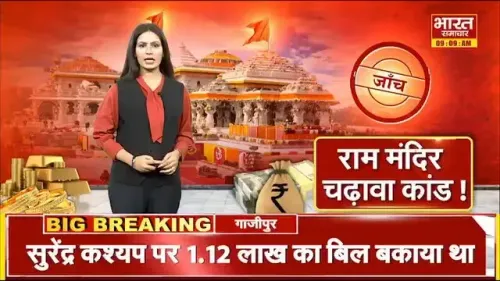
Akhilesh Yadav demands judicial probe into temple trust fraud
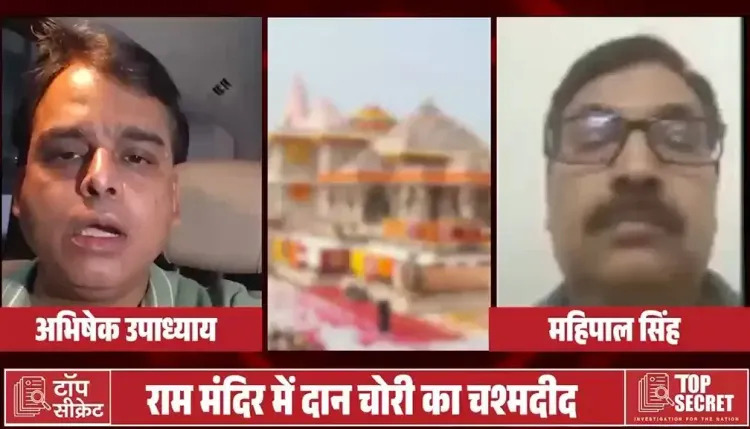
Synopsis
Samajwadi Party president Akhilesh Yadav on 9 June 2026 called out alleged long-running financial fraud in a religious trust, demanding a high judicial inquiry, recovery of misappropriated offerings and precious metals, and asking why the government has stayed silent.
Key Takeaways
Akhilesh Yadav on 9 June 2026 publicly demanded a high judicial inquiry into alleged financial fraud in a religious trust.
He alleged that the wrongdoing — involving devotee offerings and precious metals — has been ongoing for years and was known to some top-level trustees.
Yadav questioned why no FIR was ever registered despite trustees being aware of the alleged misconduct.
He called on the trust to demand its own probe, ensure punishment of the guilty, and recover misappropriated funds and valuables to restore public confidence.
He directly challenged the government's silence , asking whether powerful figures are shielding themselves from scrutiny.
The post fits a broader opposition pattern of demanding accountability in religious endowment management across India.
Samajwadi Party president Akhilesh Yadav on Tuesday, 9 June 2026, sharply attacked what he called a long-running racket in religious trusts, demanding a high-level judicial inquiry into alleged misappropriation of devotees' offerings and precious metals, and questioning why the government has remained silent on the matter.
Context
Yadav's post, written in Hindi, opens with a couplet: 'जिसको दुनिया ने आज जाना है, सच में ये किस्सा बड़ा पुराना है' — 'What the world has come to know today is, in truth, a very old story.' He labels the alleged wrongdoing as both irreligious (adharmic) and criminal, carried out in the name of faith and sentiment.
He pointedly asks why the matter was suppressed even though some top-level trustees were reportedly aware of it, and why no FIR was ever filed after informing all trustees. The post does not name the specific trust or incident, but the framing — misuse of donations, precious metals, and institutional cover-up — is unmistakably directed at a religious endowment body.
Policy Backdrop
Allegations of financial irregularities in temple administrations and religious trusts have periodically surfaced in Indian public discourse. Critics have long argued that the absence of standardised audit frameworks for large religious endowments creates conditions for misuse of chadhawa (offerings) and donated valuables.
Opposition leaders have consistently called for independent judicial oversight of such bodies, arguing that state governments are reluctant to act when politically influential trustees are implicated. Yadav's demand for a high judicial inquiry fits squarely within this pattern of accountability advocacy.
Stakeholders and Impact
The central concern Yadav raises is that ordinary devotees who contribute money and precious metals in good faith are left outraged when they suspect those offerings have been misappropriated. He calls on the trust itself to recognise the gravity of the situation and demand its own probe — noting that the word 'trust' itself means vishwas, or faith.
He urges the trust to pursue recovery of misappropriated offerings and precious metals, ensure punishment of the guilty without fear, and restore public confidence. His closing questions — 'Why is the government silent? Are powerful people afraid of the heat of an investigation?' — are a direct challenge to the ruling establishment in the state.
What's Next
Yadav's post is likely to intensify pressure on both the concerned religious trust and the Uttar Pradesh government to respond publicly. If the trust or state authorities do not act, opposition parties may escalate the demand to the courts or raise it in Parliament.
Any formal judicial inquiry, if ordered, could set a precedent for greater transparency in how large religious endowments across India account for donations and valuables — a debate that intersects with ongoing legislative discussions on religious endowment regulation.
Point of View
He is targeting institutional complicity rather than just individual wrongdoing, a sharper legal-political argument. The rhetorical question about government silence is a direct attempt to tie the ruling dispensation to the alleged cover-up ahead of any formal inquiry. This fits a broader opposition pattern of using religious-institution accountability as a wedge issue in Uttar Pradesh's politically charged landscape.
NationPress
23 Oct 2026
Frequently Asked Questions
What is Akhilesh Yadav demanding regarding the temple trust?
Akhilesh Yadav is demanding a high-level judicial inquiry into alleged misappropriation of devotee offerings and precious metals by a religious trust, along with recovery of those assets and punishment of those responsible.
Which temple trust is Akhilesh Yadav talking about?
Yadav's post does not name the specific trust or incident. He refers broadly to a religious trust where top-level trustees allegedly knew about financial wrongdoing but no FIR was filed.
Why is Akhilesh Yadav questioning the government's silence?
He is suggesting that the government's inaction may be because powerful individuals connected to the trust could be implicated, asking whether those at the top are afraid of what an investigation might uncover.
What does Akhilesh Yadav say about the role of the trust itself?
He calls on the trust to voluntarily demand a judicial probe, recover misappropriated offerings and precious metals, and restore public faith — noting that 'trust' itself means 'vishwas' (faith) in Hindi.
What broader issue does this controversy relate to in India?
It relates to the long-standing debate over financial transparency and accountability in India's large religious endowments, where critics argue the absence of standardised audits enables misuse of donations and valuables.