Dharmendra Pradhan Marks Jan Sangh's 75th Founding Day

Synopsis
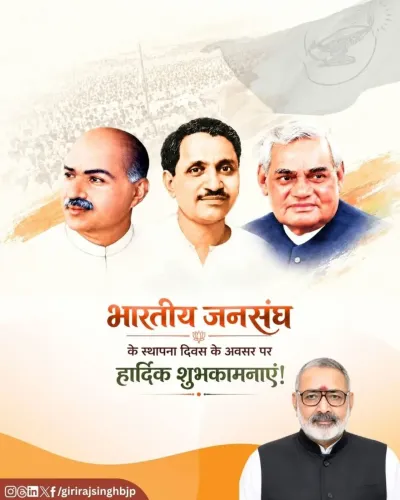
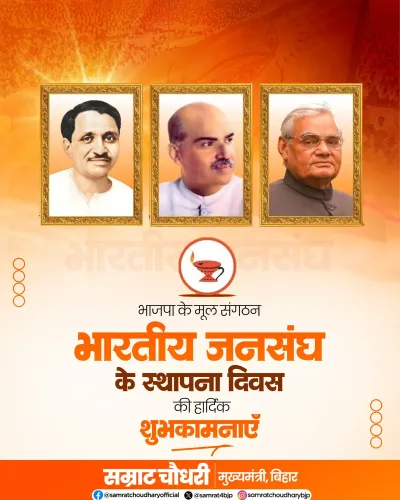
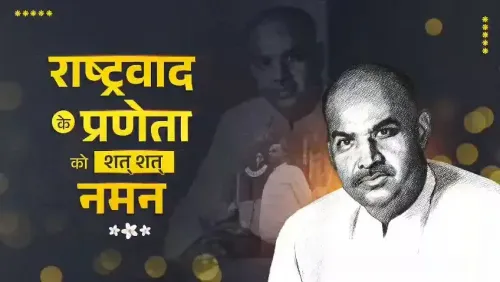
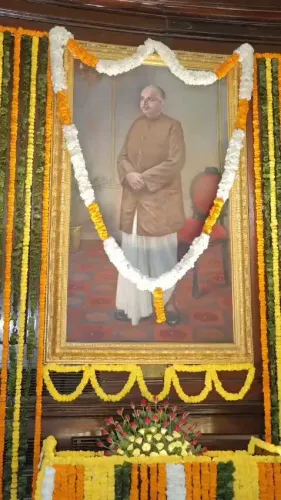
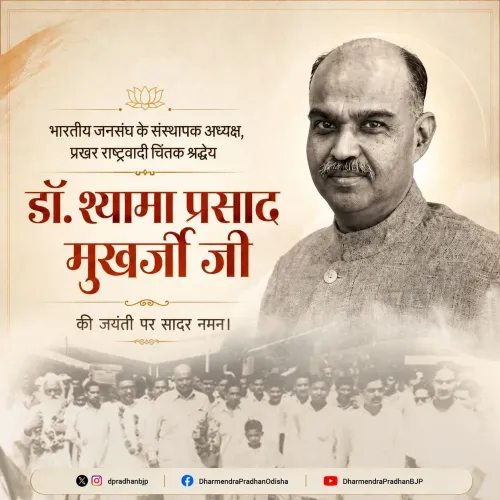
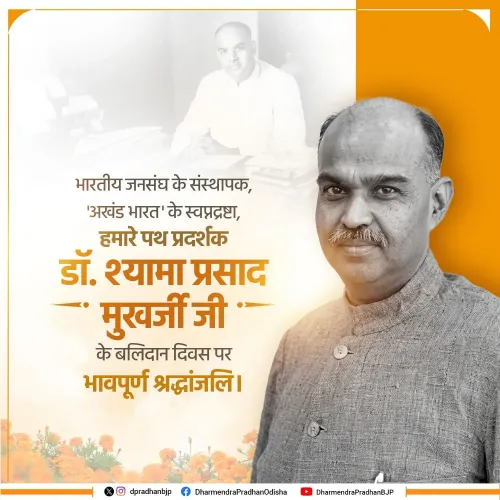
Union Education Minister Dharmendra Pradhan marked the 75th founding anniversary of the Bharatiya Jan Sangh on 21 October, honouring its founder Syama Prasad Mookerjee and calling the party's ideology an enduring inspiration for nationalist workers — a lineage the BJP claims as its own.
Key Takeaways
Union Education Minister Dharmendra Pradhan posted a tribute on 21 October 2026 for the 75th founding anniversary of the Bharatiya Jan Sangh.
The Jan Sangh was founded on 21 October 1951 by Dr.
Syama Prasad Mookerjee to promote nationalism and public service.
The Jan Sangh merged into the Janata Party in 1977 and re-emerged as the BJP in 1980 , which frames itself as the ideological successor.
Pradhan emphasised the Jan Sangh's role in inspiring 'countless workers' who treat national service as life's purpose.
The commemoration reflects the BJP's ongoing effort to anchor its present electoral identity in a seven-decade ideological heritage.
Seventy-five years after Dr. Syama Prasad Mookerjee planted a flag for nationalist politics in post-independence India, Union Education Minister Dharmendra Pradhan marked the occasion with a tribute that traces a direct line from the Bharatiya Jan Sangh's founding on 21 October 1951 to the BJP's present-day ideology.
In his post, Pradhan wrote — 'राष्ट्रहित को सर्वोपरि रखते हुए भारतीय जनसंघ ने राष्ट्रवाद और जनसेवा के मूल्यों को जन जन तक पहुँचाने में ऐतिहासिक भूमिका निभाई' — ('Placing national interest above all, the Bharatiya Jan Sangh played a historic role in carrying the values of nationalism and public service to every person.') He added that the Jan Sangh's ideology has 'continuously inspired countless workers who regard national service as the purpose of life.'
From Mookerjee's founding idea to BJP's ruling mandate
Syama Prasad Mookerjee established the Bharatiya Jan Sangh on 21 October 1951 as a vehicle for Hindu nationalist and culturally integrationist politics at a time when the Congress party dominated Indian public life. The party built a grassroots network of cadres committed to the principle of rashtra pratham — nation first — a slogan that resonates loudly in BJP political messaging today.
The Jan Sangh's journey was not linear. It merged into the broad Janata Party coalition in 1977, rode the anti-Emergency wave, and then re-emerged as the Bharatiya Janata Party in 1980 — carrying forward the organisational culture and ideological core that Mookerjee had seeded three decades earlier. The BJP frames that continuity not as inheritance but as living commitment.
Why the 75th anniversary resonates inside BJP ranks
Anniversary commemorations like this one serve a dual purpose in Indian party politics: they honour a founding legacy and they reinvigorate the rank-and-file. For the BJP's millions of karyakartas (grassroots workers), the Jan Sangh story is foundational — a reminder that electoral dominance was built on decades of unglamorous ground-level service before a single government was formed.
Pradhan's framing — that the ideology 'continuously inspired countless workers' — is a pointed nod to that cadre culture. It is not merely historical nostalgia; it is a call to continuity, delivered by a senior Union Minister who himself represents the organisational discipline the Jan Sangh tradition prizes.
Seventy-five years on, the organisation that once contested elections from the margins of Indian democracy now commands a parliamentary majority. The founding anniversary is the BJP's reminder — to itself and to the country — of how long that road was, and what values it insists were carried every step of the way.
Point of View
Not just electoral arithmetic. By stressing that the ideology inspired 'countless workers,' Pradhan foregrounds cadre culture at a moment when opposition parties are trying to frame the BJP as a top-down, leader-centric outfit. The 75th anniversary is a strategically useful milestone: old enough to claim historical gravitas, recent enough to feel like living memory for senior party veterans. Watch for similar statements from other senior BJP leaders through the day, as the party typically uses such anniversaries for coordinated messaging across its national network.
NationPress
21 Oct 2026
Frequently Asked Questions
When was the Bharatiya Jan Sangh founded?
The Bharatiya Jan Sangh was founded on 21 October 1951 by Dr. Syama Prasad Mookerjee as a nationalist political party in post-independence India.
What is the connection between Jan Sangh and BJP?
The Jan Sangh merged into the Janata Party in 1977 . After that government dissolved, its former Jan Sangh members formed the Bharatiya Janata Party in 1980 , which considers itself the Jan Sangh's ideological successor.
Who founded the Bharatiya Jan Sangh?
Dr. Syama Prasad Mookerjee , a prominent advocate for Hindu nationalism and national integration, founded the Bharatiya Jan Sangh in 1951.
Why did Dharmendra Pradhan post about Jan Sangh today?
21 October 2026 marks the 75th founding anniversary of the Bharatiya Jan Sangh. Pradhan, a senior BJP leader, posted a tribute honouring the party's nationalist legacy.
What were the core values of the Bharatiya Jan Sangh?
The Jan Sangh was built on the values of nationalism (rashtravaad) and public service (janseva) , placing national interest above all else — values the BJP explicitly carries forward in its political identity.