CM Rekha Gupta shares Mohan Bhagwat's warning on 'regime change' plots
Synopsis
On RSS Foundation Day, Delhi CM Rekha Gupta amplified RSS Sarsanghchalak Mohan Bhagwat's assertion that global 'regime change' operations by foreign powers — aided by self-serving local leaders — target India, Hindu society, and the RSS, while India's firm policies and resurgent youth nationalism remain the strongest counter.
Key Takeaways
Delhi CM Rekha Gupta shared a quote by RSS Sarsanghchalak Mohan Bhagwat on 20 October 2026 , coinciding with RSS Foundation Day .
Bhagwat alleged that global 'regime change' upheaval is driven by foreign powers seeking to install puppet governments and serve their own interests.
He specifically named 'power-hungry, self-serving local leaders' as collaborators in a conspiracy to weaken and 'dismantle' India, Hindu society, and the RSS.
Bhagwat identified India's firm national policies, strong leadership, and rising youth patriotism as the 'biggest obstacle' to this foreign agenda.
The RSS has used its annual Foundation Day platform since the 1920s to address threats to national sovereignty and cultural integrity.
Opposition parties have historically rejected this framing, arguing it is used to delegitimise legitimate domestic dissent.
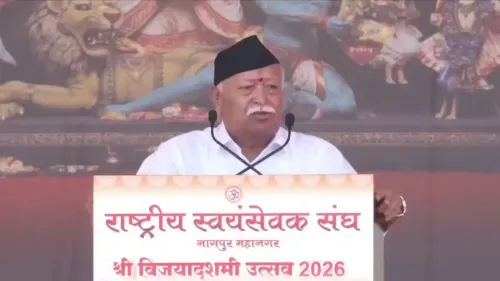
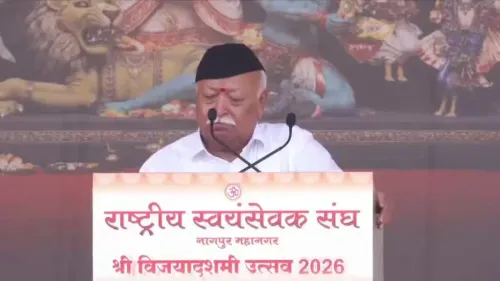
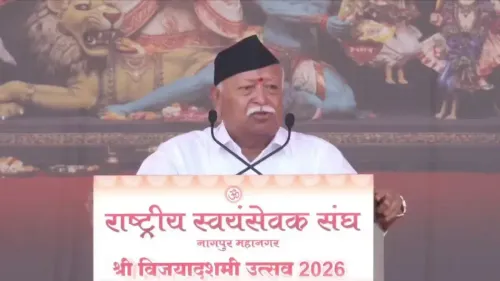
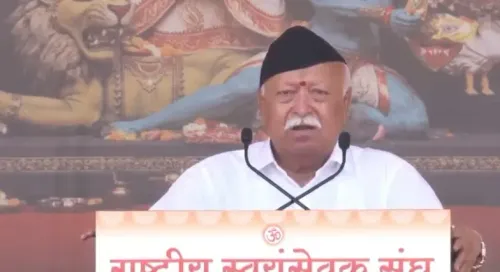
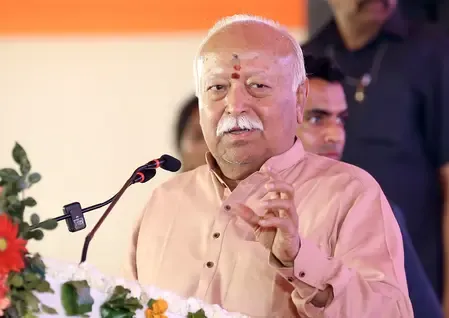
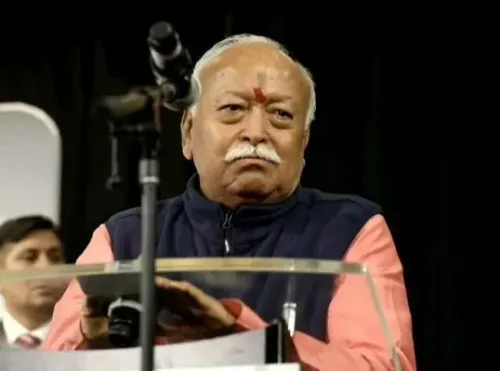
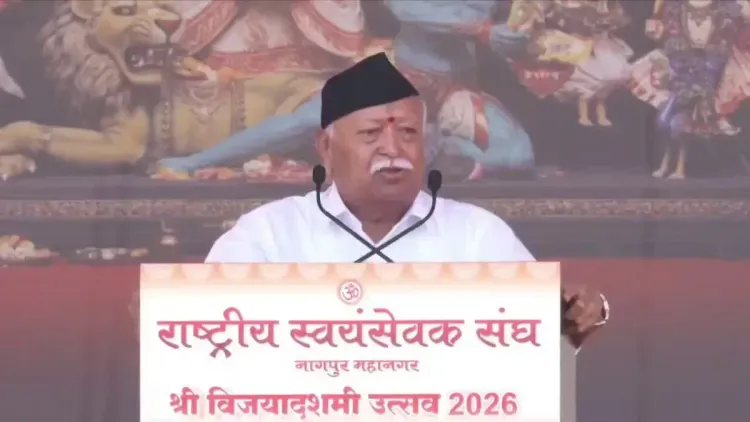
Foreign powers engineering 'regime change' to install puppet governments — that was the stark warning RSS Sarsanghchalak Mohan Bhagwat delivered on the occasion of RSS Foundation Day, and Delhi Chief Minister Rekha Gupta amplified it to her followers on Tuesday, 20 October 2026, calling it a message every Indian must hear.
Bhagwat's charge: puppet regimes and local collaborators
Sharing the quote directly attributed to Dr Mohan Bhagwat, CM Gupta's post carries his unambiguous assertion: 'दुनिया भर में रिजीम चेंज के नाम पर हो रही उथल-पुथल' — 'the upheaval happening across the world in the name of regime change' — is, in his framing, a project by foreign forces to seat compliant governments and serve their own interests. Critically, Bhagwat named a domestic dimension too: 'power-hungry and self-serving local leaders' are, he argued, complicit in a sustained conspiracy to weaken and 'dismantle' India, Hindu society, and the RSS.
The language is deliberate and pointed. 'Dismantling' — the English word used verbatim inside the Hindi text — signals that Bhagwat was responding to a specific discourse, one where critics of the current national direction have used precisely that framing.
India's 'firmest obstacle' to the foreign agenda
Bhagwat's statement did not stop at diagnosis. He offered a counter-argument: India's firm policies, strong leadership, and the patriotism awakening among its youth are, in his words, 'the biggest obstacle' standing in the way of this foreign agenda. The framing positions domestic nationalism — embodied by RSS cadres and a BJP-led government — as the primary shield against external interference.
This is a long-running strand of RSS oratory. Since the organisation's founding in 1925, its Foundation Day addresses have been used to articulate threats to national sovereignty and cultural integrity. Bhagwat, who has led the organisation since 2019, has consistently elevated the sovereignty narrative in high-profile public appearances.
The 'regime change' frame in Indian political discourse
The invocation of 'regime change' connects to a broader pattern visible across BJP and RSS public statements over recent years — from debates over foreign-funded NGOs to international media coverage of domestic social movements. In each instance, the argument runs in the same direction: external actors, aided by internal sympathisers, are attempting to redirect Indian politics away from its current nationalist course.
Opposition parties have consistently rejected this framing, arguing it is deployed to delegitimise dissent by labelling it as foreign-sponsored. Their response to this particular Foundation Day address is likely to follow that template — making it a fresh front in an argument neither side is close to concluding.
What Bhagwat named on Foundation Day, and what CM Gupta chose to amplify on the same afternoon, is more than organisational messaging — it is a direct claim about the nature of political conflict in India today. The battle lines, at least on this side, are drawn in public and on the record.
Point of View
Delhi CM Rekha Gupta signals that this is not just organisational messaging but active BJP political positioning. The framing serves a dual purpose: it places the ruling dispensation on the side of national defence while casting domestic critics as, at minimum, unwitting instruments of foreign interference. How opposition parties and civil society respond will determine whether this becomes a defining narrative heading into upcoming state-level political cycles.
NationPress
20 Oct 2026
Frequently Asked Questions
What did Mohan Bhagwat say about regime change on RSS Foundation Day 2026?
Bhagwat stated that global upheaval in the name of 'regime change' is actually a project by foreign powers to install puppet governments; he also alleged that self-serving local leaders are complicit in a conspiracy to weaken and dismantle India, Hindu society, and the RSS.
Why did Delhi CM Rekha Gupta share Mohan Bhagwat's post?
CM Gupta shared the quote on 20 October 2026 to amplify Bhagwat's RSS Foundation Day address, aligning her public platform with the RSS and BJP's broader sovereignty narrative.
What is RSS Foundation Day and why does it matter?
RSS Foundation Day marks the founding of the Rashtriya Swayamsevak Sangh in 1925 . Since its earliest years, the day has been used by the organisation's top leadership to make major public statements on national sovereignty, cultural integrity, and ideological direction.
What does 'regime change' mean in the context of Bhagwat's statement?
In Bhagwat's framing, 'regime change' refers to alleged efforts by foreign powers to destabilise or redirect governments in various countries — including India — to serve external geopolitical and economic interests, aided by cooperative local political actors.
How have opposition parties responded to the RSS 'foreign interference' narrative?
Opposition parties have consistently rejected this framing, arguing that labelling domestic dissent or criticism as foreign-sponsored is a tactic to delegitimise legitimate political opposition inside India.