RSS chief Bhagwat: Efforts to dismantle India will fail, regime change no fix
Synopsis
At the RSS's 101st foundation day gathering in Nagpur, Mohan Bhagwat fired a pointed broadside: regime change is no solution, and the forces attempting to dismantle India — inside and outside the country — will not prevail. His remarks landed directly amid live protests over electoral roll irregularities, making this far more than a ceremonial Dussehra address.
Key Takeaways
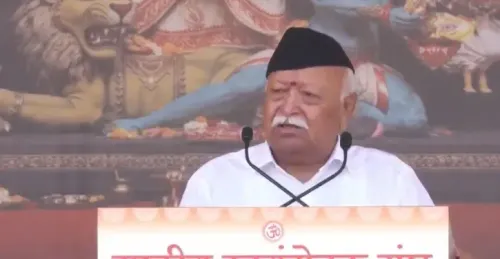
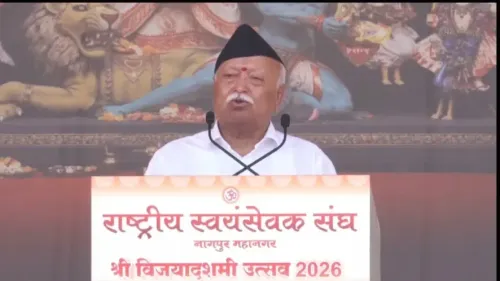
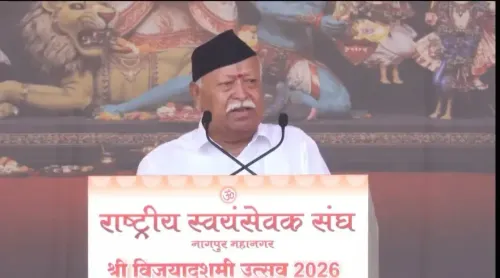
RSS chief Mohan Bhagwat delivered his annual Vijayadashami address in Nagpur on 20 October 2026 , coinciding with the organisation's 101st foundation day .
Bhagwat said attempts to 'dismantle' India would not succeed, and that a regime change alone would not transform the country's situation.
He cited conditions in France, Albania, Bangladesh and Nepal as evidence of a global 'storm' threatening cultural and social order.
He cautioned that all actors — protesters, law enforcement, and political leaders — must stay within the limits of the Constitution, law and civil decorum .
Remarks came amid protests over alleged irregularities in the Special Intensive Revision (SIR) of electoral rolls and demands regarding Chief Election Commissioner Gyanesh Kumar .
Senior Supreme Court lawyer Prashant Bhushan had reportedly described the Delhi protests as 'really a fight for regime change' days earlier.
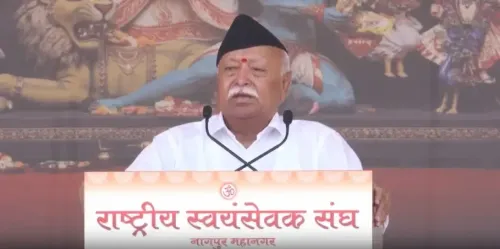
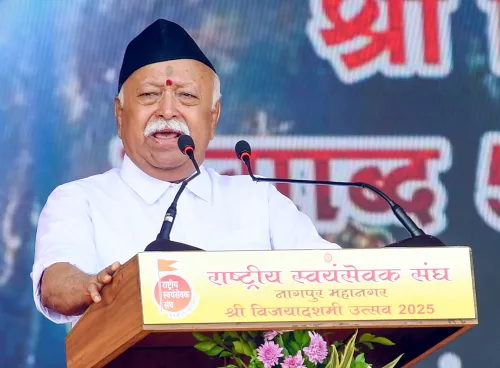
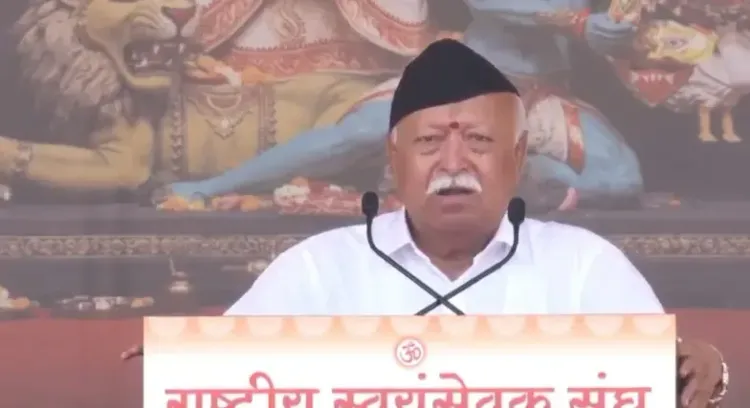
Rashtriya Swayamsevak Sangh (RSS) chief Mohan Bhagwat on Tuesday, 20 October declared that attempts to 'dismantle' India would not succeed, and cautioned that a change in government alone would not resolve the nation's deep-rooted challenges. He was speaking at the RSS's annual Vijayadashami address in Nagpur, which this year doubled as the organisation's 101st foundation day.
Key Declarations at the Vijayadashami Address
Delivering his signature annual speech before the Dussehra gathering, Bhagwat squarely rejected the idea that electoral outcomes held the key to the country's transformation. 'They said that a regime change would change the situation, but it did not happen. It did not happen earlier, and it will not happen today either,' he said, in remarks widely read as a response to opposition-linked protest narratives.
Bhagwat also flagged what he described as a globally spreading ideological current hostile to established order. 'A storm has blown in from the West that opposes every form of order, propriety, auspiciousness, culture and human values, seeking to destroy, corrupt and ruin them. Even developed nations are affected by it,' he said, citing conditions in France, Albania, Bangladesh and Nepal as illustrations of this wider challenge.
On Protests, Democracy and Constitutional Limits
Acknowledging that public grievances were legitimate and protests an inherent part of democracy, Bhagwat nonetheless drew a sharp distinction between genuine dissent and politically instigated agitation. He warned that the latter could generate hatred, bitterness and social fractures.
'Whether it is protesting groups, authorities enforcing law and order, or political leaders, no actions should create conflict, hatred, bitterness or division within our united society. No matter how strong emotions run, our actions must stay within the boundaries of the Constitution, the law and civil decorum,' he said.
His remarks came amid active protests over alleged irregularities in the Special Intensive Revision (SIR) of electoral rolls and demands directed at Chief Election Commissioner Gyanesh Kumar. Days earlier, senior Supreme Court advocate Prashant Bhushan had reportedly described the Delhi protests as having become 'really a fight for regime change.'
India as a Target, According to Bhagwat
Bhagwat alleged that certain external and internal forces were specifically targeting India because of its progress and the policy direction it had pursued over recent decades. 'India is their main target because India is progressing. These evil forces know that they cannot disrupt India the way it has moved ahead with decisive policies in the last few decades. They are trying to dismantle India and the Sangh,' he said.
He further alleged that some domestic actors, including political leaders, were lending support to such efforts — a charge that is likely to sharpen already polarised political discourse ahead of several state assembly cycles.
RSS at 101: Centenary Reflections and Future Direction
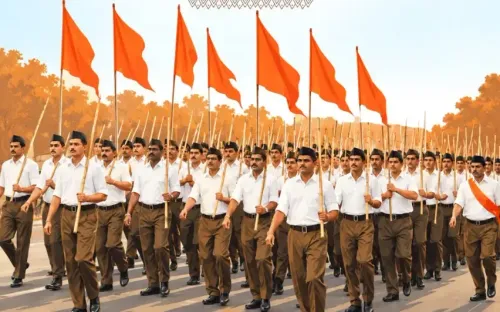
The address also served as a stocktaking moment for the RSS, with Bhagwat highlighting the organisation's activities during its centenary year. Founded in 1925, the RSS turned 100 last year and used the occasion to project continuity of purpose alongside a defence of India's cultural and institutional fabric.
How the political establishment and civil society respond to Bhagwat's framing of protests and 'dismantling' forces is likely to set the tone for the next phase of public debate around electoral roll reforms and democratic accountability.
Point of View
Including by Prashant Bhushan, as a proxy battle for regime change. By directly rebutting that framing from the RSS's most watched annual platform, Bhagwat effectively entered the electoral-roll controversy without naming it, lending ideological ballast to a government under pressure. The tension worth watching is this: his call for constitutional decorum applies equally to protest movements and to the law-enforcement responses he bundled alongside them — a symmetry that his critics will argue is not matched by equal-handed accountability in practice. Whether this speech accelerates or dampens the electoral-roll protests may tell us more about the RSS's real-time political influence than any formal policy statement.
NationPress
20 Oct 2026
Frequently Asked Questions
What did RSS chief Mohan Bhagwat say at Vijayadashami 2026?
Bhagwat declared at the annual Vijayadashami gathering in Nagpur on 20 October 2026 that attempts to 'dismantle' India would fail and that a change in government would not automatically resolve the country's problems. He also warned against protests that create social division and alleged that certain external and internal forces were targeting India because of its progress.
Why are Bhagwat's remarks politically significant right now?
The speech came amid active protests over alleged irregularities in the Special Intensive Revision (SIR) of electoral rolls, with senior Supreme Court lawyer Prashant Bhushan having reportedly described those protests as 'really a fight for regime change.' Bhagwat's direct rebuttal of the regime-change framing from a high-profile national platform makes the address a political intervention, not just a ceremonial one.
What did Bhagwat say about protests and democracy?
Bhagwat said protests are an inherent part of democracy and that public grievances are legitimate. However, he cautioned that politically motivated or instigated agitation could generate tensions and disorder, and he called on all actors — protesters, law enforcement, and political leaders — to remain within the boundaries of the Constitution, law and civil decorum.
What is the RSS's 101st foundation day and why does it matter?
The Rashtriya Swayamsevak Sangh was founded in 1925 and marked its 100th year in 2025. The 101st foundation day, observed on 20 October 2026, is the first anniversary following the centenary and came with Bhagwat using the platform to both reflect on the organisation's activities and address what he called existential challenges facing India.
Which countries did Bhagwat cite as examples of challenges facing societies?
Bhagwat referenced France, Albania, Bangladesh and Nepal as countries whose recent developments illustrated a wider global challenge — what he described as a 'storm from the West' opposing order, culture and human values. He argued that even developed nations were not immune to this trend.