RSS chief Bhagwat warns of forces working against India's Vishwaguru goal
Synopsis
On India's 80th Independence Day, RSS chief Mohan Bhagwat named internal and external forces as active obstacles to India's Vishwaguru ambition — and called it every citizen's duty to push back. The warning, delivered from the RSS's Nagpur stronghold, signals the organisation's intent to frame national purpose around civilisational leadership, not just economic growth.
Key Takeaways
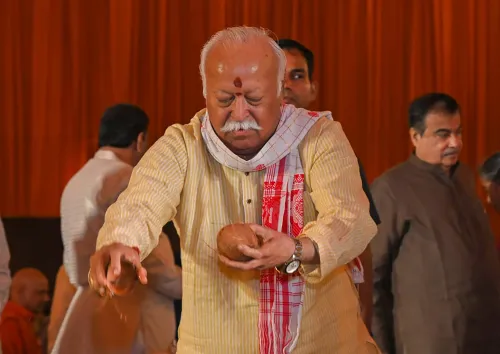
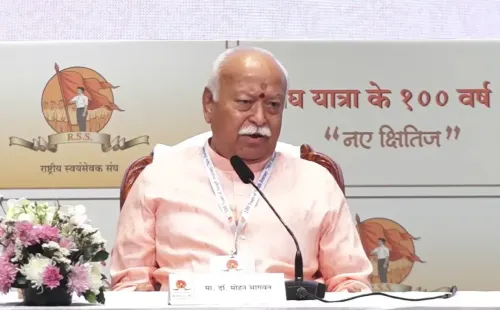
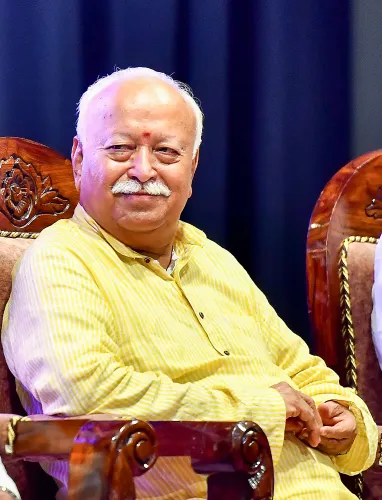
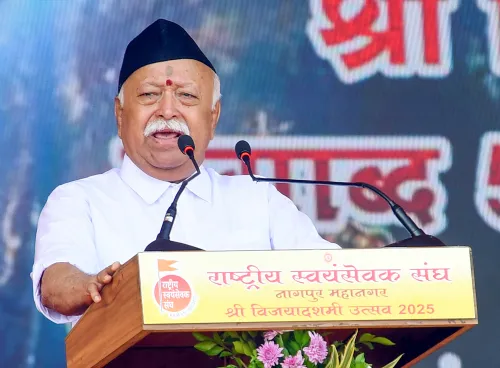
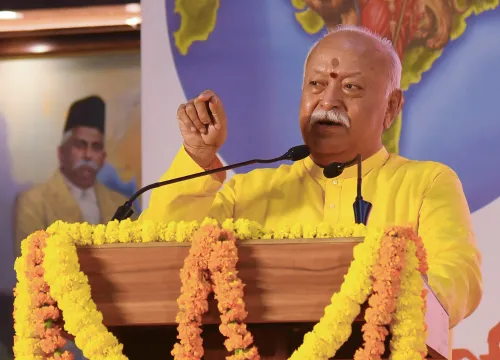
RSS chief Mohan Bhagwat addressed a gathering at RSS headquarters, Nagpur on 15 August 2025 , India's 80th Independence Day .
Bhagwat warned that internal and external forces are actively working to obstruct India's goal of becoming a Vishwaguru — a global moral and intellectual guide.
He invoked freedom fighter and Hindutva ideologue V.D.
Savarkar , calling preservation of freedom a fundamental duty of every citizen.
Bhagwat traced India's freedom struggle to 1857 and paid homage to those who sacrificed their lives for independence.
He offered a cultural reading of the National Flag's three colours, linking saffron to sacrifice, white to purity and duty, and green to national prosperity.
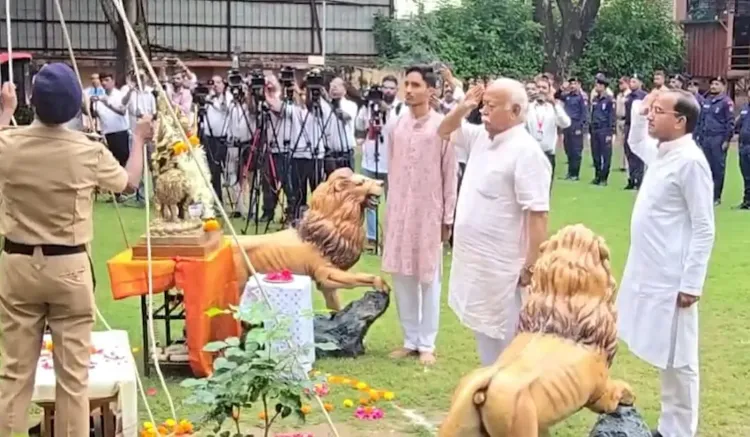
Rashtriya Swayamsevak Sangh (RSS) chief Mohan Bhagwat on Saturday, 15 August 2025 declared that numerous individuals and both internal and external forces are actively obstructing India's ambition of becoming a Vishwaguru — a global teacher and moral guide to humanity. Speaking at the RSS headquarters in Nagpur after hoisting the Tricolour on the occasion of India's 80th Independence Day, Bhagwat called on citizens to confront these challenges head-on without abandoning the nation's foundational principles.
Key Remarks at the Nagpur Address
Bhagwat acknowledged that India has secured its independence and will continue to remain free, but stressed that the real and ongoing task is to make the nation happy, prosperous, and secure. He argued that India's path to global leadership must be anchored in its core values, warning against any deviation that could undermine the country's civilisational identity.
He called on citizens to integrate the progressive values of the freedom movement into everyday life, invoking Hindutva ideologue V.D. Savarkar to underscore that preserving hard-won freedom is a fundamental duty of every Indian.
Homage to the Freedom Struggle
Bhagwat traced India's independence movement back to 1857, paying tribute to those who sacrificed their lives for the nation's liberation. He reminded the gathering that freedom is not self-sustaining — it demands continuous dedication from each generation. Notably, this framing positions the RSS as a custodian of that sacrificial legacy, a recurring theme in the organisation's Independence Day messaging.
Symbolism of the National Flag
The RSS chief also offered an interpretation of the National Flag's colours: the saffron represents action, knowledge, dutifulness, and the willingness to sacrifice for national security and prosperity; white denotes purity of mind, peace, and a life guided by duty and sacrifice; and green symbolises the nation's overall prosperity. This reading, while not the official constitutional interpretation, reflects the RSS's cultural framing of national symbols.
Unity in Diversity and the Road Ahead
Bhagwat acknowledged that citizens naturally hold differing viewpoints, describing this diversity as a genuine expression of national unity rather than a source of division. He urged all Indians to face modern challenges directly, ensuring that India fulfils its role as a guiding light to the world. The address comes as India marks eight decades of independence amid ongoing debates about the country's global positioning, internal cohesion, and the forces — domestic and foreign — that critics and RSS leaders alike argue work against national progress.
Point of View
The RSS positions itself as the vigilant guardian against threats that mainstream political discourse is, in its telling, too cautious to name. What the address does not do is identify these forces with any specificity, which leaves the charge rhetorically potent but analytically empty. The invocation of Savarkar alongside the Tricolour is also notable: it continues the RSS's long-running effort to reclaim the symbols of the constitutional republic for its own civilisational narrative. As India debates its global role at 80, the RSS is clearly staking a claim to define what 'Vishwaguru' means — and who qualifies to lead that project.
NationPress
29 Sept 2026
Frequently Asked Questions
What did Mohan Bhagwat say on Independence Day 2025?
RSS chief Mohan Bhagwat, speaking at the RSS headquarters in Nagpur on 15 August 2025, warned that internal and external forces are actively working against India's goal of becoming a Vishwaguru — a global teacher and guide. He called on citizens to confront these challenges without compromising the nation's foundational principles.
What is the Vishwaguru concept Bhagwat referred to?
Vishwaguru literally means 'teacher of the world' and refers to the idea of India serving as a moral, spiritual, and intellectual guide to humanity. Bhagwat has repeatedly used this framework to argue that India's global rise must be rooted in its civilisational values rather than purely economic or military power.
Why did Bhagwat invoke V.D. Savarkar in his speech?
Bhagwat cited Hindutva ideologue V.D. Savarkar to reinforce the argument that preserving India's freedom is a fundamental duty of every citizen, not just a political achievement. The invocation is consistent with the RSS's broader effort to position Savarkar as a central figure in India's independence narrative.
Where did Bhagwat deliver the Independence Day address?
Bhagwat spoke at the RSS headquarters in Nagpur, Maharashtra, after hoisting the Tricolour on the occasion of India's 80th Independence Day on 15 August 2025.
What did Bhagwat say about the National Flag?
Bhagwat offered a cultural reading of the Tricolour: saffron represents action, knowledge, dutifulness, and sacrifice; white denotes purity of mind, peace, and duty-driven living; and green symbolises the nation's overall prosperity. This interpretation reflects the RSS's framing of national symbols within a civilisational context.