Amit Shah hails RSS chief Mohan Bhagwat's centenary address on Sanatan culture, national unity
Synopsis
With the RSS completing 100 years, Union Home Minister Amit Shah took to X to amplify Mohan Bhagwat's centenary Vijayadashami address in Nagpur — a speech that called for vigilance against divisive forces, cited global examples from France to Bangladesh, and demanded constitutional conduct from protesters and politicians alike. The public endorsement from India's Home Minister underlines how tightly the BJP-led government has woven its messaging around the RSS centenary milestone.
Key Takeaways
Union Home Minister Amit Shah shared Mohan Bhagwat's centenary address on X on 20 October 2026 , urging citizens to watch it.
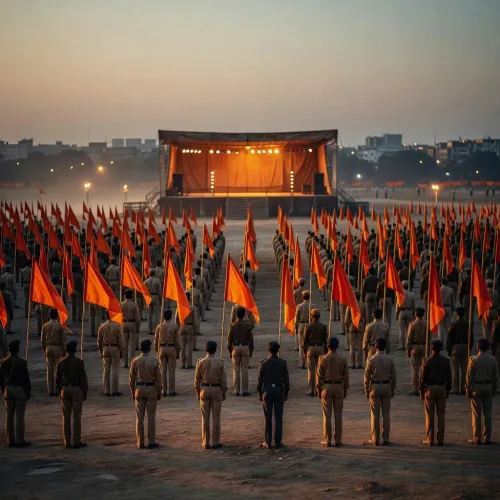
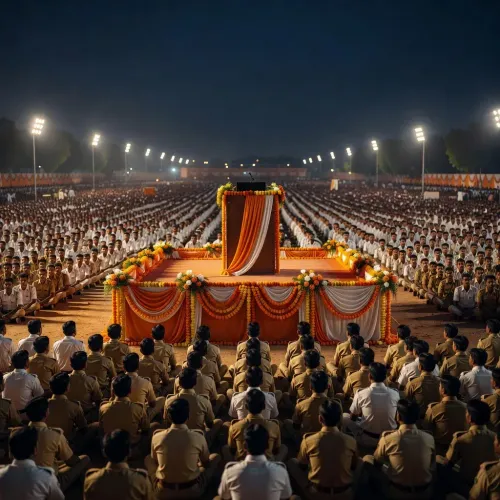
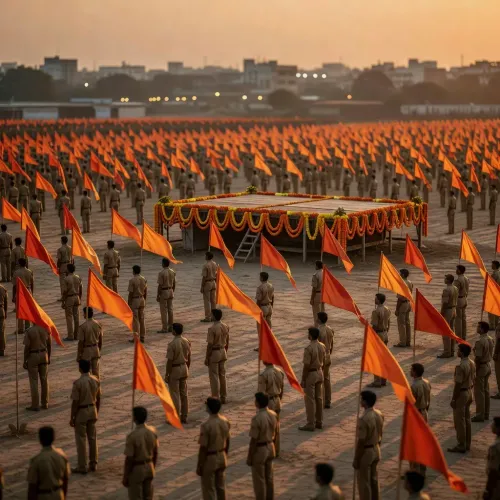
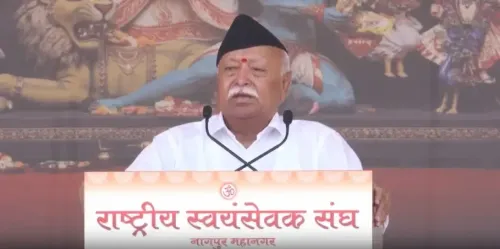
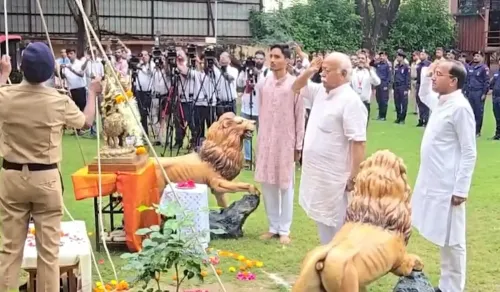
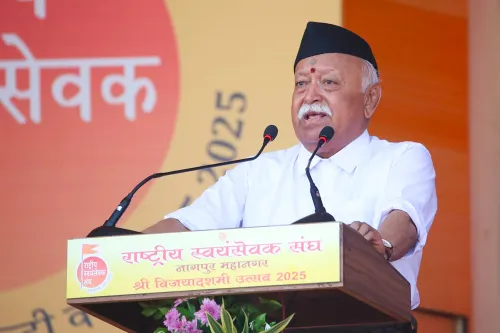
The address was delivered at the RSS Vijayadashami rally in Nagpur , marking the organisation's 100th Foundation Day .
Bhagwat called for vigilance against forces seeking to divide the country and spread anarchy, and urged a united, organised society .
The RSS chief cited developments in France, Albania, Bangladesh and Nepal to contextualise broader global challenges to social cohesion.
Bhagwat stressed that all actors — protesters, law enforcement, and politicians — must remain within the bounds of the Constitution , law, and civil decorum.
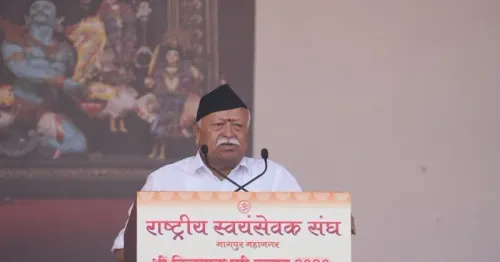
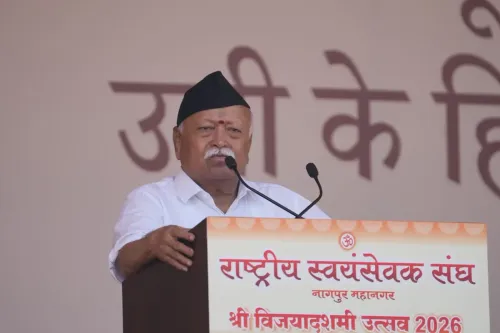
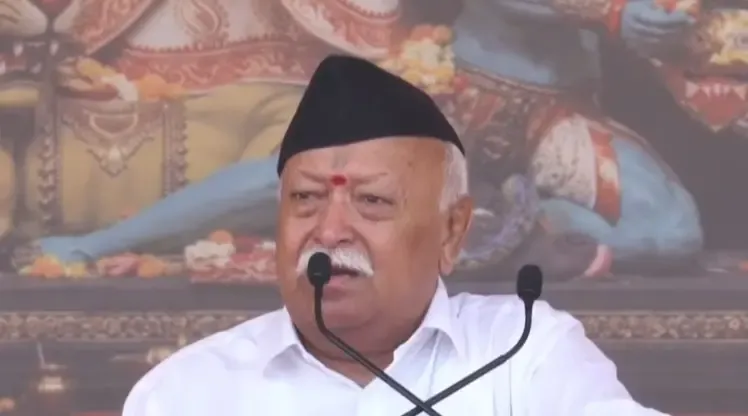
Union Home Minister Amit Shah on Tuesday, 20 October 2026, publicly endorsed Rashtriya Swayamsevak Sangh (RSS) chief Mohan Bhagwat's address at the concluding ceremony of the organisation's centenary year in Nagpur, sharing a video of the speech on X and urging citizens to listen to the RSS chief's message on national unity, social harmony, and Sanatan culture. The endorsement from one of the government's most senior figures underscored the continued alignment between the Bharatiya Janata Party (BJP)-led administration and the ideological parent organisation.
What Shah Said on X
Posting in Hindi on X (formerly Twitter), Shah described Bhagwat's address as a message dedicated to preserving India's cultural heritage and reinforcing unity across society. 'At the concluding ceremony of the centenary year of the Rashtriya Swayamsevak Sangh held in Nagpur, the revered Sarsanghchalak Dr Mohan Bhagwat Ji delivered a powerful message on Sanatan culture, national unity, and social harmony. He urged the nation to remain vigilant against forces seeking to divide the country and spread anarchy in society, and called for the creation of a united, organised, and empowered society,' Shah wrote.
Shah further urged citizens to watch the video of the address, calling it indispensable. 'This inspiring speech by the revered Mohan Bhagwat Ji, dedicated to the unity, integrity, and glorious future of the nation, must be heard,' he added.
Key Themes in Bhagwat's Address
Mohan Bhagwat delivered the address at the RSS's annual Vijayadashami rally in Nagpur on the organisation's Foundation Day — a date that carries symbolic weight as the RSS was founded on Vijayadashami in 1925, making this year the completion of its centenary. Bhagwat spoke about challenges facing India's social cohesion and stressed the importance of upholding constitutional and cultural values.
The RSS chief specifically warned against forces that, in his view, oppose established institutions, cultural values, and social order. Notably, Bhagwat drew on international examples — citing developments in France, Albania, Bangladesh, and Nepal — to argue that societal discord was a broader global challenge rather than an India-specific phenomenon.
The Call for Constitutional Conduct
Addressing divisions that can arise from political and social activism, Bhagwat called on protesters, law enforcement, and political leaders alike to exercise restraint. 'Whether it is protesting groups, authorities enforcing law and order, or political leaders, no actions should create conflict, hatred, bitterness or division within our united society. No matter how strong emotions run, our actions must stay within the boundaries of the Constitution, the law and civil decorum,' he said.
Bhagwat acknowledged that India, as a vast and still-developing nation, faces multiple challenges, but argued that these must be met without allowing them to generate hatred or social fragmentation. This comes amid an ongoing national conversation about the limits of protest, state responses to demonstrations, and the role of religious and cultural identity in public life.
Significance of the Centenary Milestone
The RSS centenary is a landmark moment for the world's largest volunteer organisation. Founded on 27 September 1925 in Nagpur by K.B. Hedgewar, the RSS has grown into a network of lakhs of active members and tens of thousands of shakhas across India. Shah's public amplification of Bhagwat's message signals the government's intent to associate its political messaging closely with the RSS centenary narrative as the country heads into a politically active period.
The RSS and BJP's relationship — ideologically intertwined yet formally separate — has remained one of the defining dynamics of Indian politics over the past decade, and Bhagwat's centenary address is expected to shape the ideological framing for months to come.
Point of View
France, Albania, Nepal — is a rhetorical move that globalises the RSS's domestic concerns and implies that India's cultural and institutional challenges are part of a wider civilisational contest. What mainstream coverage often misses is the constitutional framing Bhagwat deployed: by calling on all sides to stay within constitutional limits, he positioned the RSS not as an instigator but as a moderating force — a narrative that complicates easy characterisations of the organisation and deserves scrutiny on its own terms.
NationPress
20 Oct 2026
Frequently Asked Questions
What did Amit Shah say about Mohan Bhagwat's RSS centenary speech?
Amit Shah shared a video of Bhagwat's address on X, describing it as a powerful message on Sanatan culture, national unity, and social harmony. He urged citizens to watch the speech, calling it dedicated to the unity, integrity, and glorious future of the nation.
What was the occasion for Mohan Bhagwat's address in Nagpur?
Bhagwat spoke at the RSS's annual Vijayadashami rally in Nagpur, which this year also served as the concluding ceremony of the organisation's centenary year. The RSS was founded on Vijayadashami in 1925, making 2025–26 its 100th year.
What were the main themes of Bhagwat's address?
Bhagwat focused on preserving Sanatan culture and constitutional values, warned against forces seeking to divide the country, and called for a united, organised, and empowered society. He also cited developments in France, Albania, Bangladesh, and Nepal to illustrate challenges to social cohesion globally.
What did Bhagwat say about protests and political leaders?
Bhagwat urged that no actions by protesters, law enforcement, or political leaders should create conflict, hatred, or division. He stressed that regardless of how strongly emotions run, all conduct must stay within the boundaries of the Constitution, the law, and civil decorum.
Why is the RSS centenary significant?
The RSS, founded on 27 September 1925 in Nagpur by K.B. Hedgewar, completed 100 years in 2025–26, making it a landmark milestone for the world's largest volunteer organisation. The centenary has provided a major platform for the RSS to articulate its vision for India's social and cultural direction.