Giriraj Singh Hails India-New Zealand FTA as Export Milestone
Synopsis
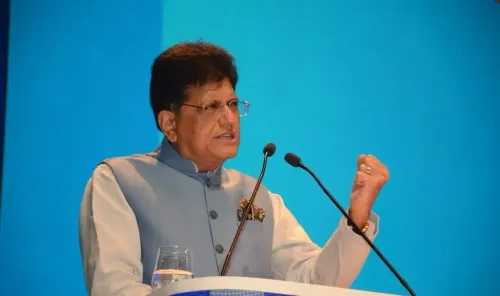
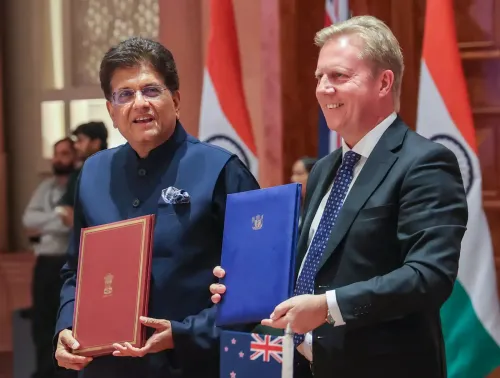
Union Textiles Minister Giriraj Singh has welcomed the implementation of the India-New Zealand Free Trade Agreement, saying duty-free access for Indian products in New Zealand opens fresh opportunities for exporters and advances PM Modi's goal of expanding India's global trade reach.
Key Takeaways
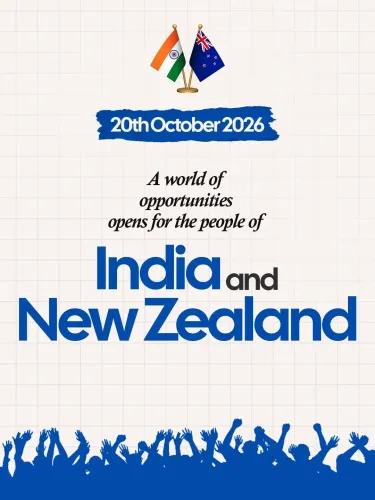
Union Textiles Minister Giriraj Singh hailed the India-New Zealand Free Trade Agreement on October 20, 2026 .
The FTA grants duty-free access for Indian products in the New Zealand market.
Singh credited PM Narendra Modi with driving India's push to expand its global trade footprint.
The deal follows earlier bilateral agreements with Australia (2022) and the UAE , part of a broader FTA strategy.
Key sectors to watch include textiles, garments , and other labour-intensive export categories.
Sector-specific tariff schedules will determine the actual depth of market benefit for Indian exporters.
Duty-free access to a new market — that is what Union Textiles Minister Giriraj Singh says the India-New Zealand Free Trade Agreement delivers for Indian exporters, calling its implementation a significant step toward giving the country's trade a 'new momentum' on Tuesday, October 20, 2026.
Posting in Hindi on X, the minister wrote: 'The implementation of the India-New Zealand Free Trade Agreement is an important step in the direction of giving Indian exports a new momentum. With duty-free access for Indian products in the New Zealand market, new opportunities will open up for the country's exporters and businesspersons.'
He credited Prime Minister Narendra Modi with steering India toward expanding its global trade footprint — 'vaishvik vyapar mein apni pahunch badhane' [expanding its reach in global trade] — and taking exports to 'new heights.'
FTA in a Pattern of Bilateral Trade Deals
The agreement fits squarely into a strategy New Delhi has pursued over the past several years: negotiate bilateral pacts to pry open new markets and reduce dependence on any single export corridor. The India-Australia Economic Cooperation and Trade Agreement, signed in 2022, was a landmark in that effort, cutting tariffs across hundreds of goods lines and serving as a template for subsequent negotiations.
The UAE pact followed a similar logic — fast-tracked, commercially targeted, and aimed at getting Indian goods into a hub market quickly. New Zealand, though smaller in scale, adds another node to that network, and for Giriraj Singh's own portfolio, the significance is direct: textiles consistently rank among India's top export categories where even marginal tariff advantages can shift order books.
What Duty-Free Access Means for Indian Exporters
The practical stakes are straightforward. Where Indian exporters previously faced customs duties on goods entering New Zealand, an FTA framework eliminates or phases out those levies — making Indian products price-competitive against rivals from countries that already hold preferential access. For labour-intensive sectors like textiles, garments, leather, and processed foods, the margin difference between paying and not paying a tariff can be the difference between winning and losing a contract.
Sector-specific tariff schedules will ultimately determine the depth of the benefit. Analysts will watch closely to see which product lines get immediate zero-duty treatment and which face longer phase-in periods — details that will shape the real-world uplift for Indian businesses.
Point of View
Where global demand is fiercely contested and tariff arbitrage matters enormously, a new duty-free corridor is genuinely significant. The announcement also serves a domestic political purpose: framing trade diplomacy as a visible, tangible delivery for exporters and small businesses ahead of continued economic messaging. The real test, however, will come when detailed tariff schedules are released and industry can quantify which product lines gain the most.
NationPress
20 Oct 2026
Frequently Asked Questions
What is the India-New Zealand Free Trade Agreement?
The India-New Zealand Free Trade Agreement is a bilateral trade pact that grants duty-free or reduced-tariff access for Indian goods in the New Zealand market, aiming to boost Indian exports across multiple product categories.
What did Giriraj Singh say about the India-New Zealand FTA?
Union Textiles Minister Giriraj Singh said the FTA's implementation is a significant step toward giving Indian exports new momentum, and that it opens fresh opportunities for Indian exporters and businesspersons in the New Zealand market.
Which sectors benefit most from duty-free access in the India-New Zealand FTA?
Labour-intensive sectors such as textiles, garments, leather goods, and processed foods are expected to benefit most, as even small tariff differences can determine the competitiveness of Indian products abroad.
How does the India-New Zealand FTA fit into India's broader trade strategy?
It is part of a wider push by the Modi government to secure bilateral free trade agreements with multiple partners — including Australia in 2022 and the UAE — to diversify India's export destinations and reduce tariff barriers globally.
What should Indian exporters watch for after the India-New Zealand FTA?
Exporters should watch for the publication of sector-specific tariff schedules, which will clarify which product lines receive immediate zero-duty treatment and which face phased reductions over time.