Assam CM Office Backs Students via Nijut Moina, Nijut Babu

Synopsis
The Chief Minister's Office of Assam spotlighted Nijut Moina and Nijut Babu, two financial assistance schemes targeting female and male students respectively, to reduce dropout risk and boost higher education enrolment across the state.
Key Takeaways
Nijut Moina is an Assam government financial assistance scheme supporting female students in higher education.
Nijut Babu is a parallel scheme providing financial support to male students pursuing higher education.
The schemes are designed to address dropout risks caused by household financial constraints .
The CM Office of Assam promoted the schemes on 20 October 2026 , framing them as tools of student confidence and potential.
Assam's broader education policy aims to raise the state's gross enrolment ratio in higher education.
Details on eligibility, benefit amounts, and application timelines are to be watched via official government notifications.
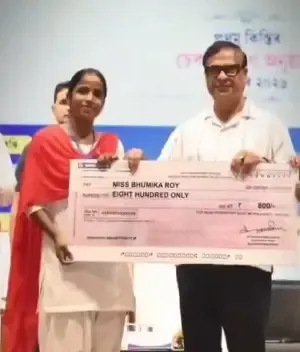
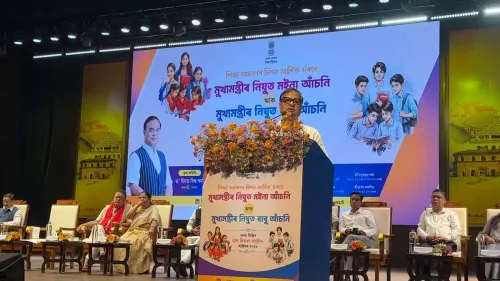
Financial barriers between a student and a degree just got a formal challenge in Assam. The Chief Minister's Office of Assam on Tuesday, 20 October 2026 highlighted two state-run financial assistance schemes — Nijut Moina for female students and Nijut Babu for male students — as pillars of the government's push to ensure higher education remains within reach for every aspiring young person in the state.
Two Schemes, One Shared Goal: No Dropout for Want of Money
Nijut Moina and Nijut Babu are Assam government programmes designed to provide financial assistance to students pursuing higher education. The names themselves carry weight: 'Nijut' in Assamese evokes a sense of abundance and liberation, a signal of the state's intent to free students from the grip of household financial stress. Together, the twin schemes represent a gender-inclusive architecture — one scheme for young women, one for young men — so that no student is left out of the net.
The CM Office's post framed the message in terms of confidence and potential: 'students can pursue their aspirations with greater confidence, knowing that financial constraints need not stand in the way of their potential.' That is not just rhetoric — it is a policy statement about where the Assam government has placed its bets on human capital.
Assam's Enrolment Push and Why These Schemes Matter
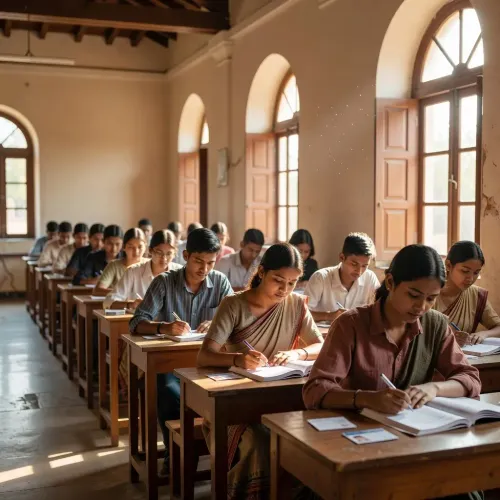
Assam has in recent years expanded targeted scholarship and fee-support measures specifically to address the dropout risks that shadow students from low-income families the moment higher education costs mount. The state's stated priority is raising the gross enrolment ratio in higher education — the share of the eligible age group that actually makes it into colleges and universities — and schemes like these are the operational instruments of that ambition.
The twin-scheme approach also signals awareness that financial distress does not discriminate by gender: both young women navigating family expectations and young men shouldering early economic responsibilities face structural barriers to staying enrolled. Addressing both cohorts simultaneously is a deliberate design choice.
What Students and Families Should Watch For
Official notifications detailing eligibility criteria, benefit amounts, and application timelines for both Nijut Moina and Nijut Babu remain the critical next step. Students and families across Assam would do well to monitor official government channels for these details as the schemes move from announcement to implementation.
Every student who stays enrolled because a scheme covered the gap is a statistic that eventually shows up in Assam's workforce, in its institutions, and in its long-term growth story. That is the compounding return the government is banking on.
Point of View
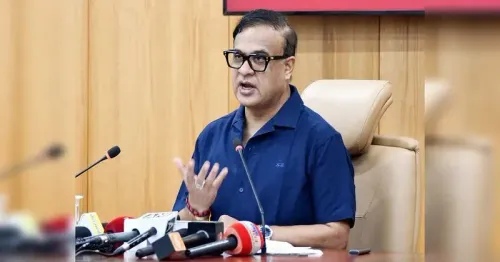
Targeted financial support that tries to close enrolment gaps at the household level. Chief Minister Himanta Biswa Sarma's administration has consistently framed human capital investment as central to Assam's development narrative, and these schemes fit that arc. The political calculus is also transparent: students and their families represent a vast, aspirational voter base across a state where higher education access remains uneven. Whether the schemes deliver at scale will depend entirely on the implementation detail — eligibility thresholds, disbursement efficiency, and outreach to the most underserved districts — which official notifications have yet to confirm.
NationPress
20 Oct 2026
Frequently Asked Questions
What is the Nijut Moina scheme in Assam?
Nijut Moina is an Assam government financial assistance programme designed to support female students in pursuing higher education by reducing the burden of financial constraints.
What is the Nijut Babu scheme in Assam?
Nijut Babu is a parallel Assam government scheme that provides financial assistance to male students seeking to continue their higher education.
Who is eligible for Nijut Moina and Nijut Babu?
Official eligibility criteria have not yet been publicly confirmed. Students and families should watch for official government notifications detailing income limits, course eligibility, and application processes.
How do Nijut Moina and Nijut Babu help reduce student dropout in Assam?
Both schemes aim to provide direct financial support to students from low-income families, removing the financial pressure that often forces students to abandon higher education mid-course.
How can students apply for Nijut Moina or Nijut Babu in Assam?
Application timelines and processes are expected to be detailed in official government notifications. Students should monitor the Assam government's official channels for updates.