Assam CM Office backs students with Nijut Moina, Nijut Babu

Synopsis
The Chief Minister's Office of Assam has spotlighted Nijut Moina and Nijut Babu, two financial assistance schemes for students, pledging that economic barriers will not block academic potential in the state.
Key Takeaways
The Chief Minister's Office of Assam promoted Nijut Moina and Nijut Babu on 20 October 2026 as student financial support schemes.
Both schemes are designed to remove economic barriers to education for Assam's students.
The Assamese-language branding signals cultural and regional ownership of the welfare initiative.
Exact eligibility criteria, disbursement timelines, and budget allocations are yet to be officially notified.
The move continues Assam's pattern of targeted, state-specific education welfare interventions aimed at student retention.
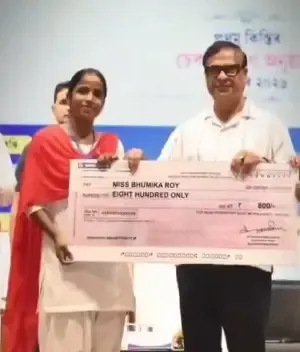
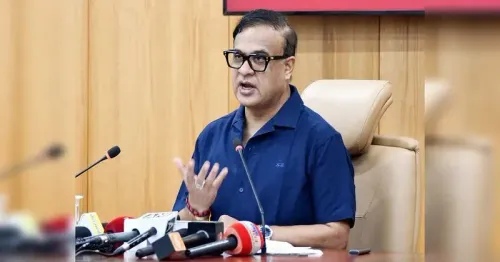
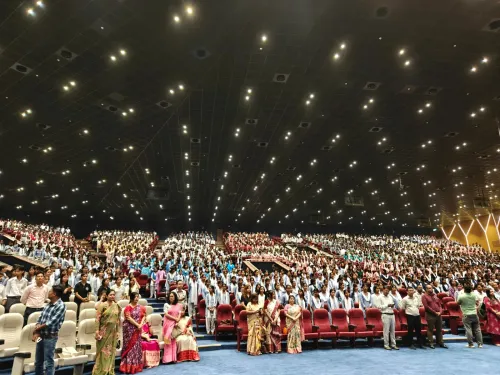
For students in Assam whose academic dreams have long collided with empty pockets, the state government is making a pointed promise: financial constraints should not decide who gets to learn. The Chief Minister's Office of Assam on Tuesday, 20 October 2026 highlighted two flagship student-support schemes — Nijut Moina and Nijut Babu — as instruments designed to keep aspiration alive regardless of a family's economic standing.
Two schemes, one mission: removing the money barrier
The post frames both schemes as a direct answer to the oldest obstacle in Indian education: the cost. Nijut Moina and Nijut Babu are state-run financial assistance programmes targeted at Assam's student population, built on the principle that economic hardship need not be a ceiling on potential. While exact eligibility criteria and disbursement figures remain subject to official notification, the government's messaging positions both schemes as confidence-builders — telling students, in effect, that the state has their back.
Assam's pattern of targeted student welfare
The announcement fits squarely into a broader arc of welfare-driven education policy that successive Assam governments have pursued. Targeted state schemes addressing dropout rates, gender parity in schooling, and higher-education access have formed a recurring feature of governance in the Northeast, where geography and household income can both work against a student. By branding these programmes with Assamese-language names — Nijut Moina (meaning, roughly, 'ten thousand girls') and Nijut Babu — the government signals cultural ownership of the initiative, not just administrative intent.
The wider national context matters too. India's higher-education gross enrolment ratio has been rising steadily, but first-generation learners from lower-income households still face the sharpest dropout pressure at the transition from school to college. State-level stipend and scholarship schemes have repeatedly proven more agile than central programmes at reaching that exact cohort — and Assam appears to be doubling down on that playbook.
Official notifications detailing eligibility windows, application processes, and budget allocations for both schemes are awaited and will determine the real reach of this commitment.
Point of View
Culturally rooted welfare branding — a strategy that makes state patronage visible and politically legible to beneficiary communities. In a state where tribal and rural enrolment gaps remain wide, financial confidence-building for students is both social policy and electoral optics. The real test will come with the official notification: the size of the beneficiary pool and the disbursement mechanism will determine whether these schemes shift outcomes or remain aspirational messaging. Nationally, this fits a trend of state governments stepping into gaps that central scholarship frameworks have not fully closed.
NationPress
20 Oct 2026
Frequently Asked Questions
What is the Nijut Moina scheme in Assam?
Nijut Moina is a financial assistance scheme launched by the Assam government to support students — particularly girls — in pursuing higher education by easing economic burdens. Exact eligibility and funding details are subject to official notification.
What is the Nijut Babu scheme in Assam?
Nijut Babu is a companion financial support scheme by the Assam government aimed at helping students overcome financial constraints in their academic journey. Full details including eligibility and disbursement are awaited from official notifications.
Who benefits from Nijut Moina and Nijut Babu?
Both schemes target students in Assam facing financial barriers to education. The government has positioned them as tools to support aspirations regardless of a student's economic background.
When were Nijut Moina and Nijut Babu announced?
The Chief Minister's Office of Assam highlighted both schemes on 20 October 2026, though the schemes are part of the state government's ongoing education welfare framework.
How can Assam students apply for Nijut Moina or Nijut Babu?
Official application procedures, eligibility criteria, and disbursement details for both schemes are yet to be formally notified. Students should watch for announcements from the Assam government's education department.