Kanpur's Dashanan Temple opens once a year on Dussehra to worship Ravana
Synopsis
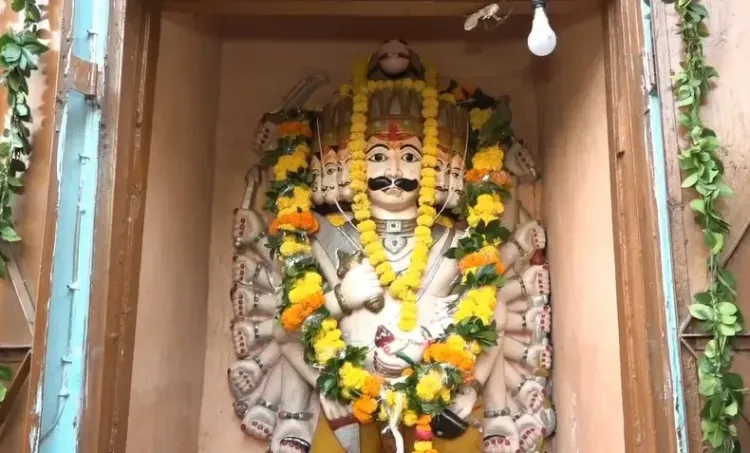
While India burns Ravana's effigies on Dussehra, a 157-year-old temple in Kanpur's Shiwala area opens its doors just once a year — to worship him. The Dashanan Temple venerates Ravana as a scholar and Shiva devotee, keeping alive a counter-tradition that quietly challenges the festival's dominant narrative.
Key Takeaways
The Dashanan Temple in Kanpur's Shiwala area opens its doors only on Vijayadashami (Dussehra) , remaining shut the remaining 364 days .
The temple was built in 1868 by Maharaj Guru Prasad Shukla and is dedicated to worshipping Ravana .
Rituals include ceremonially bathing Ravana's idol with milk and holy water , followed by prayers and aarti, according to priest Pandit Ram Bajpai .
Devotees venerate Ravana as a learned scholar , an intelligent ruler, and a devoted follower of Lord Shiva .
A parallel tradition exists in Ravan village , Vidisha district, Madhya Pradesh , where a 12-foot idol of Ravana receives daily prayers and Dussehra is marked with feasts, not effigy-burning.
While Vijayadashami is observed across India with the burning of Ravana's effigies, a temple in Kanpur, Uttar Pradesh, upholds a strikingly different tradition — opening its doors once a year to offer prayers to the ten-headed king rather than mark his defeat.
The Temple and Its Rare Tradition
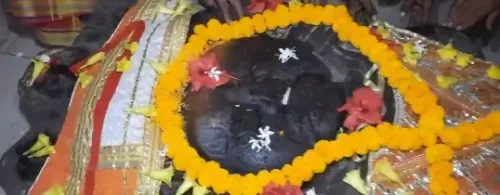
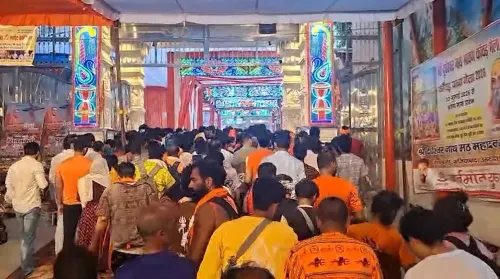
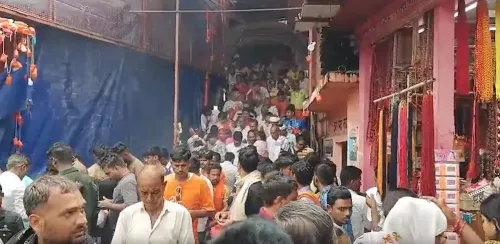
The Dashanan Temple, situated within the Kailash Temple complex in the Shiwala area of Kanpur, remains shut for 364 days of the year, welcoming devotees exclusively on Dussehra. The shrine, according to temple records, was established in 1868 by Maharaj Guru Prasad Shukla.
Temple priest Pandit Ram Bajpai described the annual rituals: 'The temple doors are opened in the morning, following which the idol of Ravana is ceremonially bathed with milk and holy water. The rituals are then performed according to traditional customs, followed by prayers and aarti.'
The Belief Behind the Worship
The temple's unusual custom is rooted in a theological perspective that refuses to reduce Ravana to a one-dimensional villain. Devotees here venerate him as a highly learned scholar, an intelligent ruler, and a devoted follower of Lord Shiva. On Vijayadashami, worshippers visit to offer flowers, oil lamps, and prayers — seeking blessings connected to Ravana's scholarly and spiritual attributes.
This reading of Ravana as a figure worthy of reverence exists alongside — not in opposition to — the broader festival narrative of good over evil. For the devotees of the Dashanan Temple, the day is less about destruction and more about honouring complexity.
A Parallel Tradition in Madhya Pradesh
The Kanpur temple is not alone in this outlook. In the Nateran tehsil of Vidisha district, Madhya Pradesh, lies a small village also called Ravana, where the demon king is venerated as the presiding deity — affectionately referred to as 'Ravan Baba'.
The village is home to an ancient temple believed to date to the Parmar era, housing a 12-foot idol of Ravana in a reclining posture. Daily prayers and aarti are performed here year-round. On Dussehra, the community organises Ramayana recitations, devotional singing, and a grand community feast, drawing worshippers from Vidisha, Bhopal, and neighbouring areas — with no effigy in sight.
Why These Traditions Matter
These sites represent a living counter-narrative within Hindu practice, one that acknowledges Ravana's erudition, his mastery of the Vedas, and his status as one of the greatest devotees of Shiva in classical texts. Notably, similar Ravana-worship traditions have been documented in parts of Rajasthan, Andhra Pradesh, and Sri Lanka, suggesting the practice is geographically wider than mainstream festival coverage typically reflects.
As Dussehra draws crowds to effigy-burning grounds nationwide, the Dashanan Temple in Kanpur quietly offers a different lens on the same mythological figure — one that has endured, year after year, since the nineteenth century.
Point of View
But it deserves a more serious read. These counter-traditions — in Kanpur, Vidisha, and elsewhere — reveal that the 'victory of good over evil' framing has never been universal within Hindu practice itself. Ravana's portrayal as polymath, Shiva-devotee, and Vedic scholar has deep scriptural grounding, yet mainstream festival coverage reduces him annually to a burning prop. The longevity of the Dashanan Temple, now in its 157th year, is evidence that local theological pluralism is more durable than the dominant narrative acknowledges.
NationPress
20 Oct 2026
Frequently Asked Questions
Which temple in Kanpur worships Ravana on Dussehra?
The Dashanan Temple, located within the Kailash Temple complex in the Shiwala area of Kanpur, worships Ravana on Dussehra. It is the only day the temple opens each year, having maintained this tradition since its founding in 1868.
Why is Ravana worshipped at the Dashanan Temple instead of being burned?
Devotees at the Dashanan Temple view Ravana not merely as a symbol of evil but as a highly learned scholar, an intelligent ruler, and a devoted follower of Lord Shiva. The temple's tradition honours these attributes rather than his defeat.
Who built the Dashanan Temple in Kanpur and when?
The Dashanan Temple was built in 1868 by Maharaj Guru Prasad Shukla. It is housed within the Kailash Temple complex in Kanpur's Shiwala area.
Are there other places in India where Ravana is worshipped on Dussehra?
Yes. In Ravan village in Vidisha district, Madhya Pradesh, Ravana is venerated as the presiding deity, known as 'Ravan Baba'. The village's ancient temple houses a 12-foot reclining idol of Ravana, and Dussehra is marked with Ramayana recitations and a community feast rather than effigy-burning.
What rituals are performed at the Dashanan Temple on Vijayadashami?
According to temple priest Pandit Ram Bajpai, the temple doors open in the morning and Ravana's idol is ceremonially bathed with milk and holy water. This is followed by traditional rituals, prayers, and aarti. Devotees also offer flowers and oil lamps.