CM Bhajan Lal Launches Atal Gyan Kendras in Every Panchayat
Synopsis
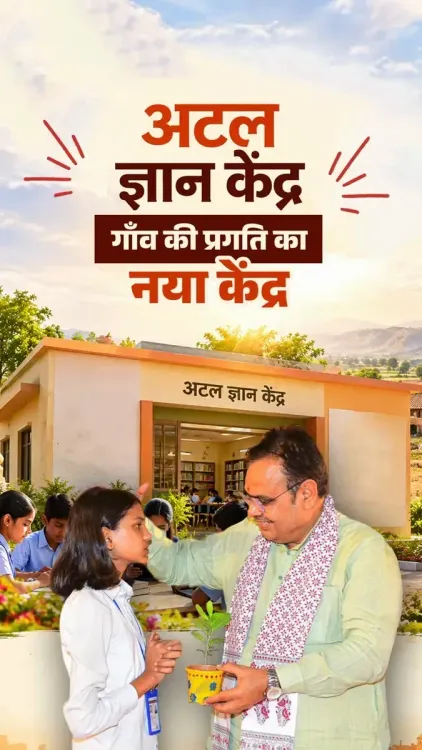
Rajasthan Chief Minister Bhajan Lal Sharma announced the rollout of Atal Gyan Kendras in every panchayat, aiming to give rural youth access to competitive exam preparation resources at their doorstep, closing a long-standing rural-urban education gap.
Key Takeaways
Atal Gyan Kendras are being established in every panchayat in Rajasthan to provide competitive exam study facilities for rural youth.
CM Bhajan Lal Sharma announced the initiative on 20 October 2026 , framing it as doorstep delivery of essential services.
The scheme aligns with the BJP's 2023 Rajasthan election commitments on decentralized education and rural skill access.
The centers aim to eliminate the need for students to travel to urban coaching hubs for preparation for exams like RPSC, REET , and central recruitment tests.
Exact implementation timelines, funding details, and the number of panchayats covered remain unspecified in the announcement.
Rajasthan has over 11,000 gram panchayats , making full coverage a significant logistical and budgetary undertaking.
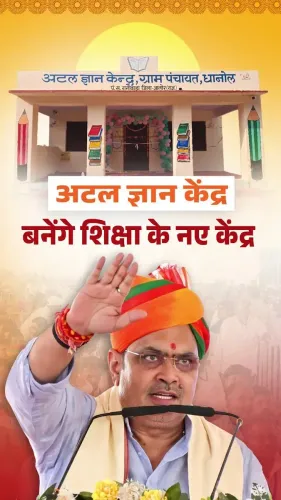
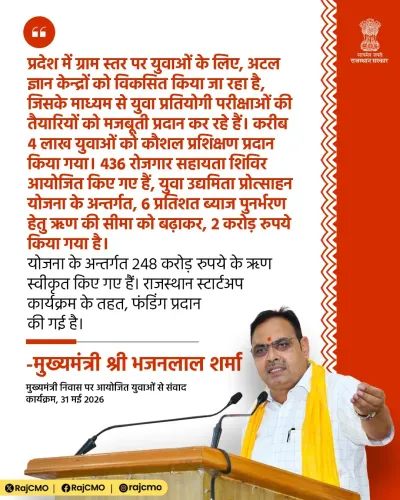
Rajasthan's rural youth now have a government promise with an address: every panchayat in the state. Rajasthan Chief Minister Bhajan Lal Sharma announced on Tuesday, 20 October 2026 that Atal Gyan Kendras are being established in each panchayat across the state, bringing competitive exam preparation resources directly to village doorsteps.
One center per panchayat — the ambition behind Atal Gyan Kendra
Posting in Hindi on X, CM Sharma framed the initiative squarely around access: 'आमजन को हर आवश्यक सुविधा का लाभ उसके द्वार पर ही सुलभ हो' — 'every essential facility should be available at the common person's own doorstep, so they do not have to wander even for small needs.' The Atal Gyan Kendras are designed to deliver exactly that for one of rural India's most persistent gaps: a place to study seriously for civil services, state recruitment, and other competitive exams without travelling to a district town or urban coaching hub.
The scheme carries a deliberate political lineage. The BJP's 2023 Rajasthan election campaign pledged decentralized education and skill access for rural communities — promises now being operationalized through this panchayat-level infrastructure push. Naming the centers after former Prime Minister Atal Bihari Vajpayee also places the initiative within a broader BJP tradition of invoking that legacy for grassroots welfare schemes.
Why rural Rajasthan needs this — and what the gaps still are
The rural-urban divide in competitive exam preparation is one of India's most documented education inequalities. Students in Rajasthan's villages often face a stark choice: commute hours to Jaipur, Jodhpur, or Kota for coaching, or prepare in isolation without structured study facilities. State-level schemes that embed libraries, study rooms, and digital resources inside panchayat buildings attempt to collapse that geography — putting the same preparation environment a town student takes for granted within walking distance of a village student.
The critical details — how many centers are already operational, what the per-center infrastructure budget is, how staffing will work, and the total number of Rajasthan's roughly 11,000-plus gram panchayats to be covered — have not been officially specified in the announcement. Those numbers will determine whether this becomes a structural shift or a headline promise. Rollout timelines, state budget allocations, and actual operationalization data will be the real scorecard.
The larger pattern: states racing to decentralize exam prep
Rajasthan is not alone in this push. Across India, state governments have launched reading rooms, digital kiosks, and study centers at the block and panchayat level, recognizing that urban coaching economies systematically exclude rural talent from government jobs. CM Sharma's announcement fits that national pattern — but the scale of 'every panchayat' is an ambitious benchmark that sets a clear, testable target the government has now put on record.
If the rollout matches the rhetoric, thousands of young Rajasthanis preparing for exams like the RPSC, REET, and central recruitment boards could gain structured study infrastructure without a single rupee spent on city accommodation. That is a consequential equity bet — and one the state government has now staked its rural education credibility on.
Point of View
Scalable scheme — one visible enough to generate political credit but specific enough to invite accountability. For the BJP in Rajasthan, decentralizing exam-prep infrastructure into panchayats serves a dual purpose: it addresses a genuine rural equity gap while simultaneously building a patronage narrative for the party's core rural base. The true test will come when independent assessments measure how many centers are actually functional versus announced. In an era where state governments routinely launch schemes whose on-ground footprint is thin, the 'every panchayat' benchmark CM Sharma has set is either a bold governance commitment or a politically convenient aspiration — the difference will show up in budget lines and field reports over the next twelve to eighteen months.
NationPress
20 Oct 2026
Frequently Asked Questions
What is Atal Gyan Kendra in Rajasthan?
Atal Gyan Kendra is a scheme by the Rajasthan government to set up study centers in every gram panchayat, providing rural youth with resources and facilities to prepare for competitive examinations without having to travel to urban areas.
Who announced Atal Gyan Kendra?
Rajasthan Chief Minister Bhajan Lal Sharma announced the Atal Gyan Kendra initiative, stating that centers are being established in each panchayat across the state.
What exams will Atal Gyan Kendra help students prepare for?
The centers are intended to help rural youth prepare for competitive exams including state-level tests like RPSC and REET, as well as central government recruitment examinations.
How many panchayats will get an Atal Gyan Kendra in Rajasthan?
The government has announced centers for every panchayat in Rajasthan, which has over 11,000 gram panchayats. However, exact timelines and the number of centers already operational have not been officially specified.
Why is Rajasthan setting up study centers in panchayats?
The initiative addresses the rural-urban gap in competitive exam preparation. Rural students in Rajasthan often lack structured study facilities locally and must travel to cities like Jaipur or Kota for coaching, creating a significant financial and logistical barrier.