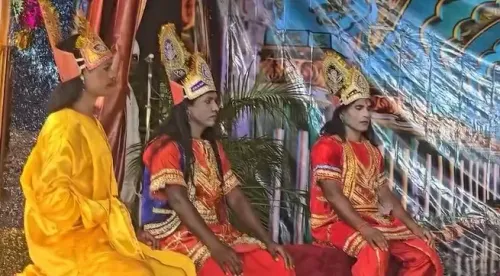
Dussehra without effigies: MP village worships Ravana as its guardian deity
Synopsis
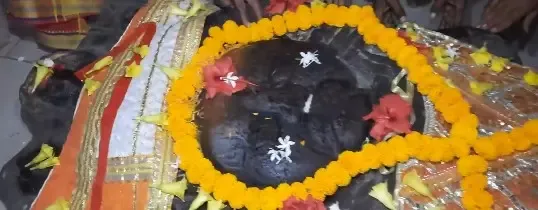
While India burns Ravana's effigies on Dussehra, one Madhya Pradesh village does the opposite — it worships him. Ravan village in Vidisha houses an ancient 12-foot reclining idol of Ravana, offers him the first wedding invitation, and replaces effigy burning with a community feast that draws former residents home from across the country every year.
Key Takeaways
Ravan village in Nateran tehsil, Vidisha, Madhya Pradesh worships Ravana — called 'Ravan Baba' — as its presiding deity and does not burn his effigy on Dussehra.
The village temple houses a 12-foot reclining idol of Ravana , believed by locals to date to the Parmar era .
Dussehra here is marked by Ramayana recitations , devotional singing, and a community bhandara , drawing devotees from Vidisha, Bhopal, and nearby areas.
Villagers offer Ravan Baba the first wedding invitation and seek his blessings before every auspicious occasion, including vehicle purchases.
Local legend holds that Ravana subdued a powerful demon at the site, explaining both the idol's resting posture and the village's name.
In Ravan village of Nateran tehsil, Vidisha district, Madhya Pradesh, Dussehra looks nothing like the rest of India. While towns and cities across the country mark the festival by setting towering effigies of Ravana ablaze on 19 October 2026, this settlement of a few hundred households quietly gathers at an ancient temple to offer prayers to the very figure others burn — Ravana, venerated here as 'Ravan Baba', the presiding deity and protector of the community.
A Temple Older Than Memory
The temple at the heart of the village is believed by locals to date back to the Parmar era, making it potentially centuries old. Inside stands a 12-foot idol of Ravana in a distinctive reclining posture — an image strikingly different from the ten-headed, weapon-bearing depictions common elsewhere. Daily prayers and aarti are conducted here throughout the year, not just during Dussehra.
Priest Pandit Naresh Tiwari explained the community's relationship with the deity: 'Our village, named Ravan, has an idol of Ravan Maharaj established. Ravan Baba Maharaj presides here, and our entire village resides under his protection. All our tasks are accomplished through him.'
According to Tiwari, no auspicious occasion in the village begins without first seeking Ravan Baba's blessings — an omission believed to invite obstacles in whatever undertaking follows.
How Dussehra Is Celebrated Here
Rather than lighting an effigy, villagers mark the festival with Ramayana recitations, devotional singing, and a large community feast known as the bhandara. Devotees travel from as far as Vidisha, Bhopal, and neighbouring areas to attend. The annual Dussehra bhandara holds such deep significance that former residents who have relocated to other cities reportedly make it a point to return specifically for the occasion.
Rajesh Dhakad, a representative of the village head, said that even villagers now settled elsewhere consider the bhandara unmissable. 'Many people come with their wishes, and their wishes have been fulfilled here in the past. So, wherever they might be, they definitely come here on the day of Dussehra,' he said.
The Legend Behind the Reclining Idol
Local folklore offers an explanation for both the idol's unusual posture and the village's name. According to oral tradition passed down through generations, a powerful demon once sought to challenge Ravana. Ravan Baba is said to have arrived at the site and shattered the demon's pride — after which he assumed a resting posture, symbolising victory and calm dominion over the land.
Dhakad noted that the village's association with Ravana is ancient, though no precise founding date can be confirmed. 'There is no specific date, but "Ravan" is an ancient name. Because the idol of Ravan Baba is here, the village is identified by his name,' he said.
Ravana in Weddings and Daily Rituals
The reverence extends well beyond festival days. Villagers present the first wedding invitation to Ravan Baba before distributing it to anyone else. During pre-wedding ceremonies, the first offering of oil is made at the temple. The tradition covers major personal milestones — including the purchase of new vehicles — where Ravan Baba's blessings are sought before proceeding.
Local resident Pandit Govind Narayan Tiwari summed up the community's belief: 'We worship Ravan Maharaj as a deity, and everyone else does too, because Ravan Maharaj is indeed a god. Here, Ravan Baba is worshipped first during every auspicious event.'
A Counter-Narrative Within the Ramayana Tradition
The village's practice reflects a strand of folk religiosity that sits alongside — rather than in opposition to — mainstream Ramayana tradition. Notably, similar Ravana worship exists in scattered pockets across India, including parts of Rajasthan, Uttar Pradesh, and Sri Lanka, where communities trace lineage or local legend to the King of Lanka. What makes Ravan village distinct is the institutional continuity: an active temple with daily rituals, an embedded festival calendar, and a village identity built entirely around the figure most of India symbolically burns every Dussehra. As younger residents continue the practice and return each year for the bhandara, the tradition shows no sign of fading.
Point of View
Yet it rarely enters mainstream coverage except as a seasonal novelty. What deserves closer attention is the sociological resilience of the tradition: the bhandara brings diaspora villagers back annually, signalling that the community's identity is actively reproduced, not merely inherited. In an era when religious uniformity is increasingly projected as the national norm, villages like this one quietly complicate that narrative.
NationPress
19 Oct 2026
Frequently Asked Questions
Which village in Madhya Pradesh worships Ravana instead of burning his effigy on Dussehra?
It is Ravan village, located in Nateran tehsil of Vidisha district, Madhya Pradesh. The village houses an ancient temple with a 12-foot reclining idol of Ravana, known locally as 'Ravan Baba', who is venerated as the community's presiding deity and protector.
How old is the Ravan Baba temple in Vidisha's Ravan village?
The temple is believed by locals to date back to the Parmar era, suggesting it could be several centuries old. No precise founding date is confirmed, but the association with Ravana is described by residents as an ancient and unbroken tradition.
How do villagers celebrate Dussehra in Ravan village?
Instead of burning an effigy, villagers hold Ramayana recitations, devotional singing sessions, and a large community feast called the bhandara. Devotees travel from Vidisha, Bhopal, and neighbouring areas to attend, and former residents reportedly return specifically for the annual occasion.
Why is Ravana depicted in a reclining posture in this temple?
According to local folklore, Ravana came to the site and subdued a powerful demon who sought to challenge him, after which he assumed a resting posture symbolising calm victory. The legend has been passed down through generations and explains both the idol's distinctive pose and the village's name.
In what daily rituals does Ravan Baba feature for villagers?
Villagers seek Ravan Baba's blessings before every auspicious occasion — including weddings, pre-wedding rituals, Bhagwat Kirtans, and new vehicle purchases. The first wedding invitation is presented to the deity, and the first offering of oil during pre-wedding ceremonies is made at the temple.