PM Modi shares Sanskrit verse on Lord Rama from Valmiki Ramayana
Synopsis
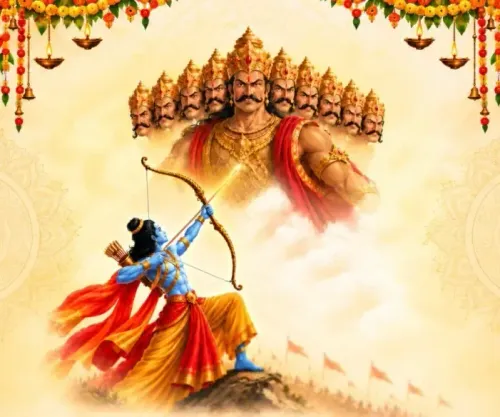
Prime Minister Narendra Modi shared a celebrated Sanskrit couplet from the Valmiki Ramayana on 20 October 2026, describing Lord Rama as the embodiment of dharma and the king of all worlds — part of his recurring invocation of India's classical literary heritage on social media.
Key Takeaways
Prime Minister Narendra Modi posted a Sanskrit verse from the Valmiki Ramayana on 20 October 2026 .
The couplet describes Lord Rama as dharma embodied ( vigrahavān dharma ), a man of truth and valour, and king of all worlds.
The verse compares Rama's supremacy among humans to that of Indra (Maghavān) among the gods.
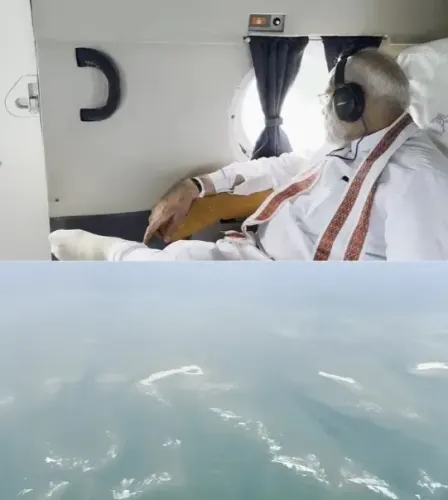
The post was accompanied by a video , the contents of which were not independently verified at publication.
Modi has shared Sanskrit verses from classical texts on multiple occasions, reflecting a recurring emphasis on India's ancient literary heritage.
A single Sanskrit couplet — ancient, precise, and luminous — arrived on Prime Minister Narendra Modi's feed on Tuesday, 20 October 2026, drawing from the Valmiki Ramayana to describe Lord Rama as the living form of dharma itself.
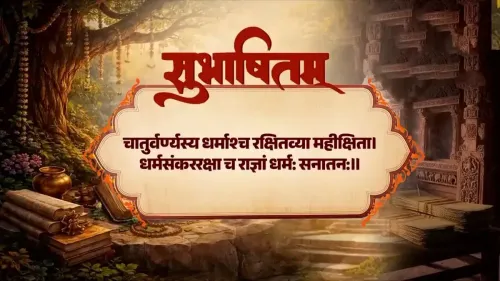
The verse reads: 'रामो विग्रहवान् धर्मस्साधुस्सत्यपराक्रमः। राजा सर्वस्य लोकस्य देवानां मघवानिव॥' — translating as: 'Rama is dharma embodied, a man of virtue and true valour; the king of all the worlds, as Indra is to the gods.' The couplet is among the most celebrated in the Valmiki Ramayana, distilling in two lines what the epic takes thousands of verses to unfold.
A verse that defines an ideal king
The Sanskrit original carries extraordinary compression. The word vigrahavān — 'one in whom dharma has taken bodily form' — is not a metaphor but an ontological claim: righteousness and Rama are inseparable. Satyaparākramaḥ pairs truth with courage, suggesting that valour without integrity is incomplete. The closing simile — Rama among men as Indra (Maghavān) among the gods — places him at the apex of both human and cosmic order.Modi's recurring invocation of classical heritage
This is not an isolated post. Prime Minister Modi has shared Sanskrit verses from the Ramayana and other classical texts on social media on multiple occasions, weaving the language and imagery of ancient Indian literature into the contemporary public square. The practice sits within a broader cultural emphasis his communications have consistently carried — positioning India's Sanskrit literary tradition as living, not archival. The post is accompanied by a video, the contents of which could not be independently verified at the time of publication. For hundreds of millions of Hindu devotees, the verse needs no occasion to justify it. Rama is not a historical figure awaiting a calendar date — he is a constant moral reference point, and these lines from Valmiki have been recited across generations in temples, homes, and classrooms across the subcontinent. A two-thousand-year-old verse, shared in seconds, to an audience of millions — that is the specific alchemy Prime Minister Modi reached for on Tuesday morning.Point of View
' he reinforces a civilisational idiom that his political communications have long cultivated. The choice of classical Sanskrit rather than a vernacular paraphrase is deliberate: it signals erudition and rootedness simultaneously. Over time, these posts collectively constitute a soft-power argument — that the Indian state's highest office is in active, respectful conversation with its oldest literary tradition.
NationPress
20 Oct 2026
Frequently Asked Questions
What Sanskrit verse did PM Modi post on 20 October 2026?
PM Modi posted the couplet 'Ramo vigrahavān dharmas sādhus satyaparākramaḥ / Rājā sarvasya lokasya devānāṃ maghavāniva' from the Valmiki Ramayana, meaning Rama is dharma in human form, a man of virtue and true valour, king of all worlds as Indra is to the gods.
What does 'Ramo vigrahavān dharma' mean?
The phrase means 'Rama is dharma that has taken bodily form' — asserting that righteousness and Lord Rama are not merely associated but identical in essence, a foundational claim of the Valmiki Ramayana.
Why does PM Modi post Sanskrit verses on social media?
Prime Minister Modi has on multiple occasions shared Sanskrit verses from classical texts including the Ramayana, as part of a consistent emphasis on India's ancient literary and philosophical heritage in his public communications.
Which text is the verse 'Ramo vigrahavān dharmah' from?
The verse is from the Valmiki Ramayana, one of the two great Sanskrit epics of ancient India, and is among the most quoted lines in the text for its concise definition of Rama's character.
Who is Maghavān in the Ramayana verse shared by Modi?
Maghavān is an epithet for Indra, the king of the gods in Hindu tradition. The verse uses the comparison to convey that Rama's supremacy among humans mirrors Indra's supremacy among the gods.