MP CM Yadav: 18,500 police posts to be filled, Indore innovations to go statewide
Synopsis
Chief Minister Dr. Mohan Yadav has announced 18,500 new police recruitments in Madhya Pradesh and directed that Indore's duty-tracking app and CSR-funded motorcycle fleet be scaled statewide, signalling a broad push to modernise the state's law-and-order machinery.
Key Takeaways
18,500 police posts have been approved for recruitment in Madhya Pradesh, one of the state's largest recent police hiring decisions.
A new mobile app providing information on police personnel's duty assignments has been launched in Indore to improve transparency and operational accountability.
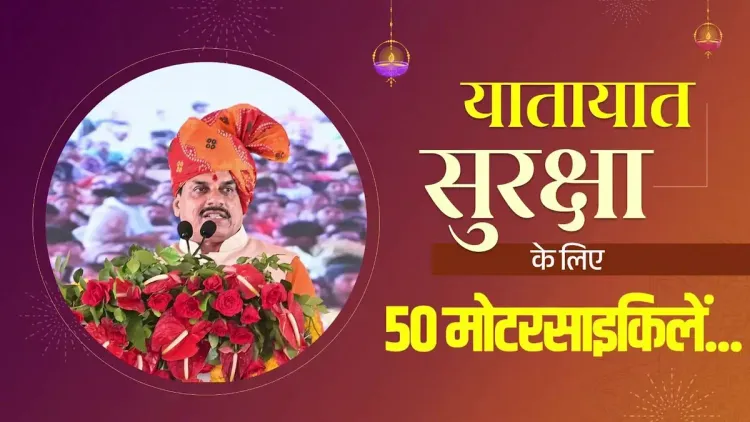
50 motorcycles procured through CSR funding have been handed over to Indore's traffic police for road-accident response and traffic management.
Mohan Yadav stated the Indore innovations will be extended to the state level based on need, putting them on a formal policy track.
The move aligns with India's broader trend of city-level police-tech pilots being converted into statewide programmes after political leadership endorsement.
A duty-tracking app for police personnel and 50 CSR-funded motorcycles handed over to Indore's traffic force — these are not just local experiments. On Tuesday, 20 October 2026, the Chief Minister's Office of Madhya Pradesh quoted Chief Minister Dr. Mohan Yadav declaring that Indore's law-and-order innovations are 'praiseworthy' and will be scaled to the entire state as required — and he backed that commitment with a concrete number: 18,500 new police recruitments have been approved.
What Indore is piloting — and why it matters
Two specific tools are at the centre of CM Yadav's announcement. First, a mobile application that gives citizens and supervisors real-time information about police personnel's duty assignments — a transparency and accountability tool aimed at tightening operational discipline. Second, 50 motorcycles procured through Corporate Social Responsibility (CSR) funds, deployed for traffic management and rapid response to road accidents on Indore's increasingly congested roads.
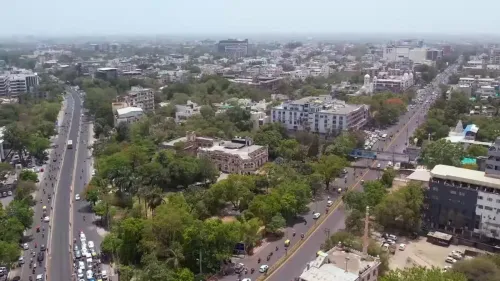
Indore, Madhya Pradesh's largest city and a consistent top-performer in national urban rankings, has become the state's de-facto laboratory for governance innovation. The CM's framing — 'aavashyakta ke anusaar pradesh star par bhi laagu kiya jaayega' (will be implemented at the state level as needed) — signals that Indore's pilots are now explicitly on the policy conveyor belt toward all 55 districts of the state.
The 18,500 recruitment decision — the real weight of the announcement
The headlining number is the jobs decision. Madhya Pradesh Police has long carried a significant vacancy burden; filling 18,500 posts would represent one of the largest single recruitment drives in the force's recent history. The CM positioned this not as routine staffing but as a structural commitment: 'Our government is committed to empowering the police force.'
The timing matters. Recruitment at this scale, combined with technology tools like the duty-tracking app, points to a two-pronged strategy — more boots on the ground, and better visibility over how those boots are deployed. For a state of Madhya Pradesh's size — over 85 million people spread across a land area larger than Germany — the ratio of police to population has historically been a pressure point.
CSR funding and the national pattern behind the motorcycles
The use of CSR funds to equip traffic police is increasingly common across Indian states, but Madhya Pradesh's explicit move to formalise and replicate the model is notable. Several states have run similar pilots — equipment donated by industry, managed by the police department, supervised by district administration — but the conversion rate from pilot to policy has been uneven. Dr. Yadav's direct endorsement from the CM's chair sharply raises the probability of a statewide rollout here.
The central government's Modernisation of Police Forces scheme has provided a long-running financial backbone for state-level equipment and technology upgrades since the early 2000s. Indore's CSR-motorcycle model could complement — or potentially reduce dependence on — that central channel.
What to watch as this moves from Indore to the state
The two things worth tracking closely: whether an official government order formally extends the Indore app and motorcycle model to other districts, and the pace of the 18,500-post recruitment process — including the timeline for advertisements, examinations, and inductions. In MP's political calendar, a large police recruitment drive also carries its own resonance with the youth vote.
Indore has shown what is possible. The question now is how fast the state machinery can industrialise it — and whether the app's accountability architecture survives the translation from one well-governed city to 55 diverse districts.
Point of View
And a technology-and-CSR story that positions his administration as reform-minded rather than merely transactional. The explicit decision to scale Indore's model statewide is significant — it transforms a local success story into a governance blueprint, raising accountability expectations for every district collector and superintendent of police in MP. Taken together with the central government's Modernisation of Police Forces framework, the state appears to be layering its own ambition on top of an existing federal scaffold. The real test will come in execution: large recruitment announcements in Indian states have historically faced delays in examination cycles and induction timelines, and the duty-tracking app's effectiveness will depend entirely on whether its accountability architecture survives the leap from one high-performing city to the rest of the state.
NationPress
20 Oct 2026
Frequently Asked Questions
How many police posts are being recruited in Madhya Pradesh in 2026?
Chief Minister Dr. Mohan Yadav has announced that 18,500 posts in the Madhya Pradesh Police department have been approved for recruitment, as stated in his official communication on 20 October 2026 .
What is the Indore police duty tracking app?
The app is a newly launched tool in Indore that makes information about police personnel's duty assignments available digitally, aimed at improving operational transparency and accountability within the force. The specific name of the app has not been officially disclosed in public records.
Where did the 50 motorcycles for Indore police come from?
The 50 motorcycles were procured through Corporate Social Responsibility (CSR) funds and handed over to Indore's traffic police for deployment in traffic management and reducing road accidents. The identity of the CSR donor has not been officially confirmed in public records.
Will the Indore police app be rolled out across all of Madhya Pradesh?
CM Dr. Mohan Yadav has stated that the innovations trialled in Indore — including the duty-tracking app and the CSR-motorcycle model — will be implemented at the state level as required, though a formal government order detailing timelines has not yet been issued.
What is the Modernisation of Police Forces scheme?
The Modernisation of Police Forces is a central government scheme that has provided financial support to state police forces for equipment upgrades, technology tools, and infrastructure since the early 2000s. States like Madhya Pradesh can use this funding alongside CSR contributions to modernise their forces.