CM Rekha Gupta shares RSS chief Bhagwat's drug-abuse warning
Synopsis
On RSS Foundation Day 2026, Delhi Chief Minister Rekha Gupta shared Sarsanghchalak Dr Mohan Bhagwat's warning that narcotic drugs are a grave national problem, calling on government, administration, and society to act urgently — reinforcing the centre's Nasha Mukt Bharat Abhiyan agenda.
Key Takeaways
Delhi CM Rekha Gupta shared the statement on RSS Foundation Day, 20 October 2026 .
RSS Sarsanghchalak Dr Mohan Bhagwat described narcotic drugs as 'a grave national problem' requiring coordinated action from government, administration, and society.
The RSS, founded in 1925 , uses its nationwide shakha network for grassroots social-awareness outreach, giving such statements operational weight.
The central government's Nasha Mukt Bharat Abhiyan , launched in August 2020 , provides the existing policy framework for de-addiction and awareness drives.
Delhi, as a major urban transit hub, faces acute drug-supply pressures, making the CM's amplification of the message locally significant.
Bhagwat's framing names three distinct co-responsible actors — government, administration, and society — signalling that enforcement alone is seen as insufficient.
Drug abuse does not wait for policy calendars — and on RSS Foundation Day, Tuesday, 20 October 2026, Delhi Chief Minister Rekha Gupta put that urgency front and centre by amplifying a stark call to action from the highest authority in the Rashtriya Swayamsevak Sangh.
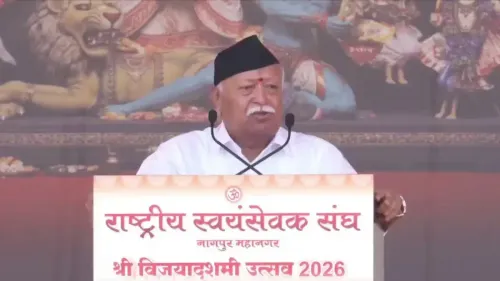
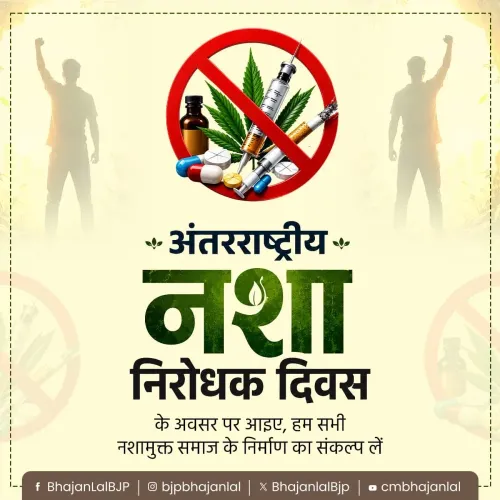
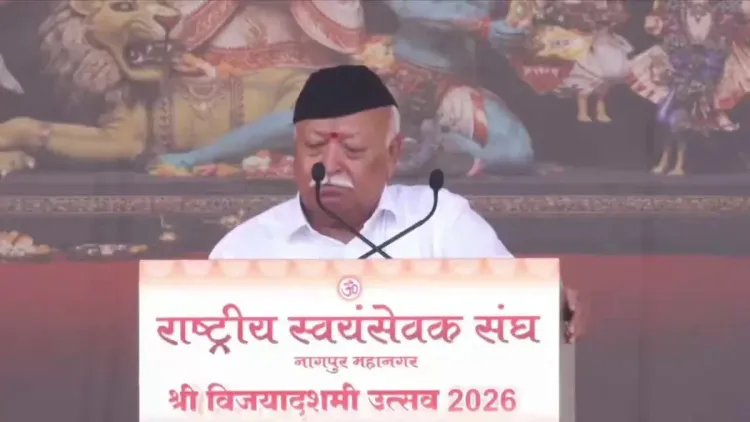
CM Gupta shared a pointed statement attributed to RSS Sarsanghchalak Dr Mohan Bhagwat: 'Nasheeli dawaaen ek gambhir rashtriya samasya hai' — 'Narcotic drugs are a grave national problem, and the government, administration, and society must pay attention in time and begin measures to deal with it.' The post was made in the context of RSS Foundation Day, the annual commemoration of the organisation's founding on 27 September 1925.
Bhagwat's voice on a recurring national wound
Dr Mohan Bhagwat, who has led the RSS since 2019, has periodically raised substance abuse as a civilisational threat in his public addresses. Foundation Day gatherings, attended by senior swayamsevaks across the country, are among the most prominent platforms for the Sarsanghchalak's pronouncements — making this statement a signal that the organisation intends to press the issue actively.
The RSS's vast network of shakhas (daily drill-and-discipline assemblies) reaches deep into neighbourhoods where state welfare infrastructure is thin, giving the organisation both the moral standing and the street-level reach to translate such declarations into grassroots awareness work.
The policy framework already in place — and its gaps
The central government launched the Nasha Mukt Bharat Abhiyan in August 2020 under the Ministry of Social Justice and Empowerment, targeting awareness campaigns, community outreach, and the expansion of rehabilitation facilities. The programme operates under the broader architecture of the Narcotic Drugs and Psychotropic Substances (NDPS) Act, 1985, which governs enforcement at both central and state levels.
Yet the gap between announced ambition and ground reality remains stark: de-addiction centre capacity is uneven across states, and youth in border districts and urban pockets remain acutely vulnerable. Bhagwat's framing — naming government, administration, and society as three distinct, co-responsible actors — implicitly acknowledges that enforcement alone cannot close that gap.
Delhi's own fight at the forefront
For CM Rekha Gupta, sharing this statement carries immediate local resonance. Delhi, as a dense urban transit hub, faces acute drug-supply challenges; her administration has cited de-addiction and anti-drug enforcement as priorities. By amplifying the Sarsanghchalak's words on Foundation Day, Gupta aligns the BJP-led Delhi government's agenda with the RSS's broader social-reform messaging — and signals that the capital intends to press state-level implementation harder.
What to watch: state-level coordination reports on de-addiction centre expansion and any fresh guidelines from the Ministry of Social Justice and Empowerment in the months ahead.
A national problem named clearly, a three-way responsibility assigned — the real test now is whether the machinery of government, civil society, and community networks will move fast enough to match the urgency of the call.
Point of View
CM Gupta does double work: she aligns the BJP-led Delhi government's social agenda with the RSS's grassroots reform priorities, and she frames drug policy as a moral-civic emergency rather than a mere law-enforcement brief. The Nasha Mukt Bharat Abhiyan gives the Centre a ready vehicle to respond, but uneven de-addiction infrastructure at the state level means political will must now translate into budgetary and administrative follow-through. Bhagwat's three-actor framing — government, administration, society — is a deliberate pressure-point, nudging both the state apparatus and civil organisations to own their share of the problem rather than pass it up the chain.
NationPress
20 Oct 2026
Frequently Asked Questions
What did RSS chief Mohan Bhagwat say about drugs on Foundation Day 2026?
Dr Mohan Bhagwat stated that narcotic drugs are a grave national problem and called on the government, administration, and society to pay attention and begin remedial measures without delay.
What is RSS Foundation Day and when is it observed?
RSS Foundation Day marks the founding of the Rashtriya Swayamsevak Sangh on 27 September 1925 . It is observed annually with gatherings of swayamsevaks and addresses by senior organisational leaders including the Sarsanghchalak.
What is Nasha Mukt Bharat Abhiyan?
Nasha Mukt Bharat Abhiyan is a central government initiative launched in August 2020 by the Ministry of Social Justice and Empowerment to combat drug abuse through awareness campaigns, community outreach, and the expansion of rehabilitation and de-addiction facilities across India.
Why did Delhi CM Rekha Gupta share Bhagwat's statement on drugs?
CM Gupta shared the statement on RSS Foundation Day to underscore the drug-abuse challenge facing Delhi and to align her administration's anti-drug priorities with the RSS's social-welfare agenda.
What law governs drug enforcement in India?
Drug enforcement in India is primarily governed by the Narcotic Drugs and Psychotropic Substances (NDPS) Act, 1985 , which applies at both the central and state levels and provides the legal framework for prohibition, prosecution, and rehabilitation.