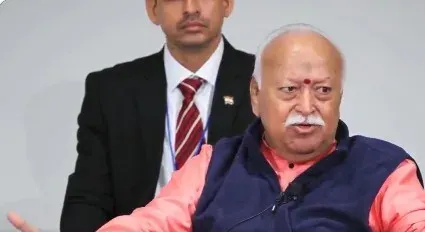
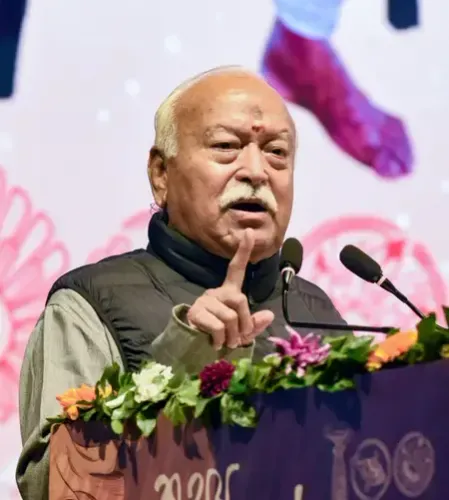
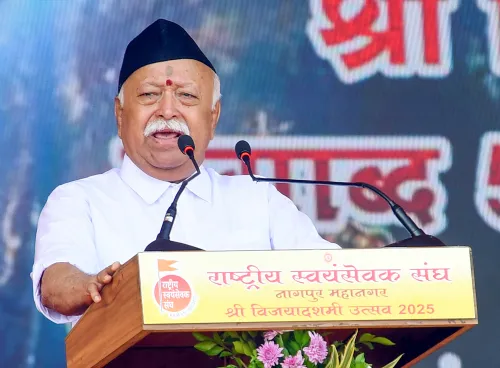
RSS chief Mohan Bhagwat: World looks to India for answers to global crises
Synopsis
After touring New York, Toronto, and London, RSS Sarsanghchalak Mohan Bhagwat told a Mumbai gathering that the world's deepening crises — from environmental damage to collapsing social cohesion — are driving unprecedented global expectations from India. His address framed India's civilisational values, particularly the principle of universal well-being, as the template the world needs right now.
Key Takeaways
Mohan Bhagwat , RSS Sarsanghchalak, addressed a gathering in Mumbai on 2 October 2026 after visits to New York , Toronto , and London .
He said global crises stem from individual pursuits clashing with collective welfare, and from development models that neglect environmental sustainability.
Bhagwat cited India's tradition of Sarve Bhavantu Sukhinah — universal well-being — as a guiding framework for the world.
He defined Dharma as a broader code of humanity and brotherhood, warning that a weakened moral foundation leads to national decline.
Bhagwat argued India must remain strong, morally grounded, and culturally rooted to guide global peace and well-being.
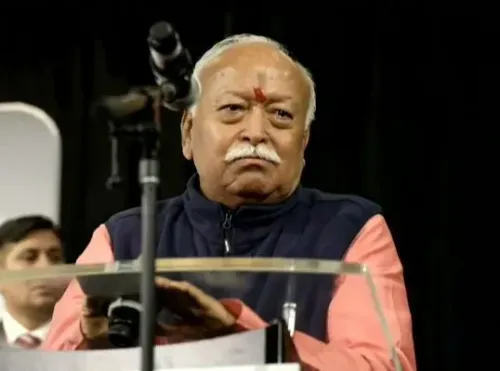
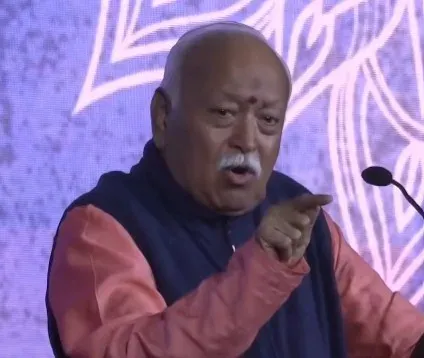
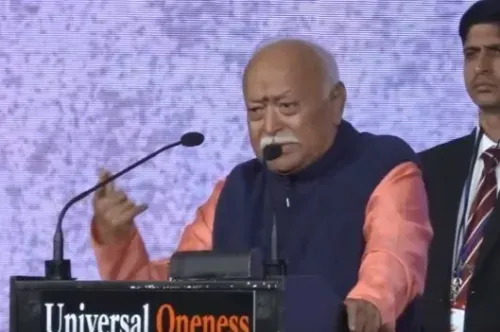
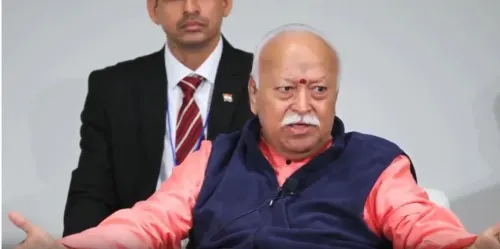
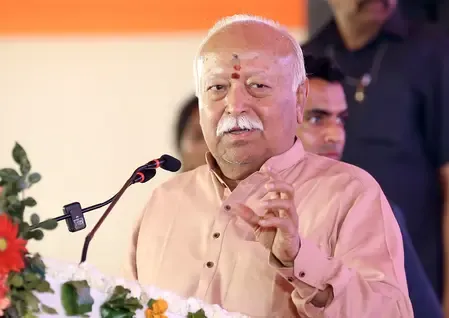
Rashtriya Swayamsevak Sangh (RSS) Sarsanghchalak Mohan Bhagwat on Friday, 2 October 2026, said the world is looking to India more than ever to chart a balanced, harmonious path through deepening global crises. Addressing a gathering in Mumbai after completing visits to international cities including New York, Toronto, and London, Bhagwat argued that the root of current global turbulence lies in individual pursuits clashing with collective welfare, conflicting allegiances, and development models that disregard environmental sustainability.
The Global Dilemma India Must Address
Bhagwat observed that contemporary civilisation is caught in severe contradictions — between personal freedom and communal harmony, between economic growth and ecological preservation. He called for a model where individual happiness does not come at the cost of others, and where material progress is pursued without sacrificing the planet's health. Drawing on ancient Indian philosophy, he noted that while the world appears divided on the surface, all of existence is fundamentally interconnected — harm done to one part of society or the environment ultimately reverberates through the whole.
India's Historical Ethos as a Global Template
Invoking India's civilisational record, Bhagwat said the country has historically neither imposed its ideology on others, nor invaded foreign lands, nor enforced religious conversions. He cited the Sanskrit invocation Sarve Bhavantu Sukhinah — 'May all beings be happy' — as emblematic of an Indian tradition rooted in universal well-being rather than narrow self-interest. Bhagwat argued that India's national character was shaped not by conquest or royal decree, but by self-sacrificing saints, monks, and thinkers who traversed the subcontinent unifying society around enduring human values.
Dharma as a Code of Humanity, Not Just Religion
Bhagwat broadened the concept of Dharma beyond ritualistic religion, defining it as a universal code of humanity and brotherhood. He warned that when a nation's moral foundation weakens, the nation itself declines — and a weakened nation, in turn, places those very moral values at greater risk. He said preserving both moral integrity and national strength requires a sustained, collective societal commitment rather than reliance on any single institution or leader.
India's Responsibility on the World Stage
Concluding his address, Bhagwat reiterated that for India to fulfil what he described as its duty of guiding the world toward peace and well-being, the country must remain strong, morally grounded, and culturally rooted. The remarks come amid a broader RSS emphasis on India's so-called 'Vishwaguru' or world-teacher role — a theme that has gained prominence in public discourse ahead of several international engagements. Notably, Bhagwat's recent tour of global cities suggests the RSS is actively projecting this message beyond India's borders.
Point of View
But articulating it after a tour of Western capitals signals a deliberate outreach beyond the RSS's domestic base. What remains untested is whether India's internal social contradictions — communal tensions, inequality, environmental stress — can coexist credibly with this universal-harmony narrative. The message resonates on the global stage only if the domestic record holds up to scrutiny.
NationPress
2 Oct 2026
Frequently Asked Questions
What did Mohan Bhagwat say about India's role in the world?
Bhagwat said global expectations from India are higher than ever, arguing that India's civilisational values — rooted in universal well-being and non-imposition — offer a balanced path through the world's deepening crises. He made the remarks in Mumbai on 2 October 2026 after visiting New York, Toronto, and London.
Where did Mohan Bhagwat speak and what was the occasion?
Bhagwat addressed a gathering in Mumbai following his visits to international cities including New York, Toronto, and London. The address was delivered on 2 October 2026 and focused on India's potential contribution to resolving global challenges.
What does Bhagwat mean by Dharma in this context?
Bhagwat defined Dharma not as ritualistic religion but as a universal code of humanity and brotherhood. He warned that a weakened moral foundation endangers national strength, and a weak nation in turn puts moral values at risk.
What is the significance of Bhagwat's recent international visits?
Bhagwat's tour of New York, Toronto, and London suggests the RSS is actively projecting India's civilisational message to international audiences. The visits signal an intent to engage global discourse beyond the organisation's traditional domestic focus.
What is the 'Sarve Bhavantu Sukhinah' principle Bhagwat referenced?
'Sarve Bhavantu Sukhinah' is a Sanskrit invocation meaning 'May all beings be happy.' Bhagwat cited it as emblematic of India's tradition of seeking universal well-being rather than narrow national or ideological self-interest.