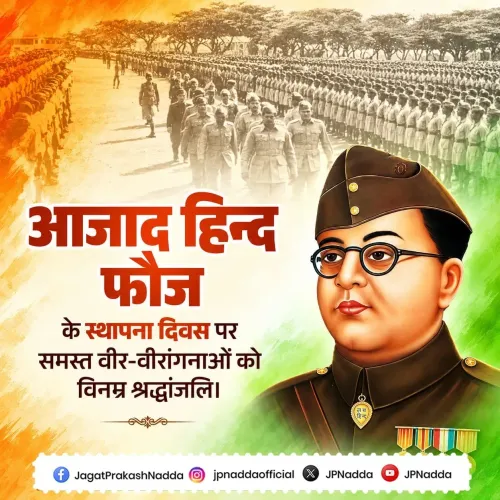
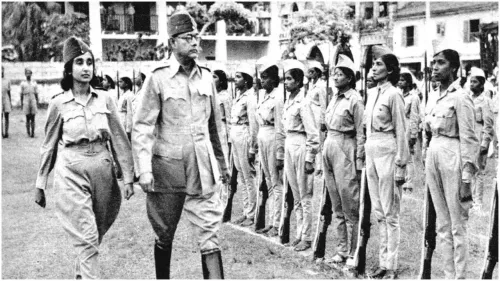
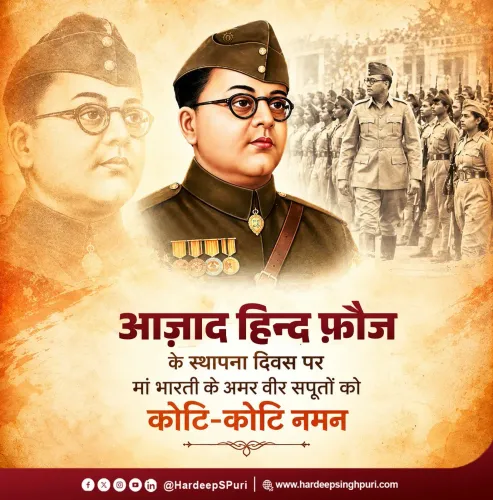
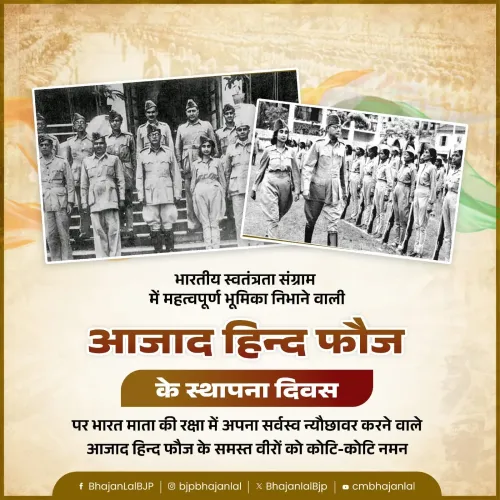
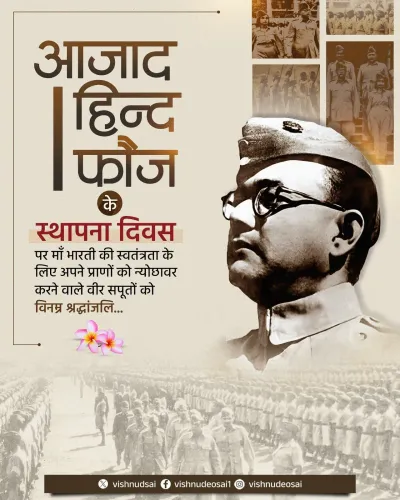
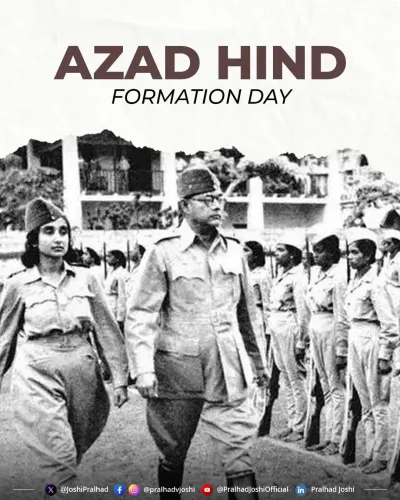
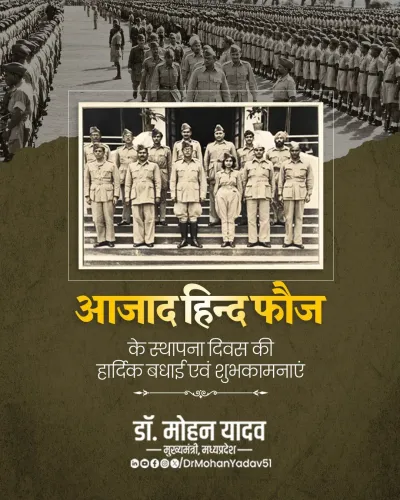
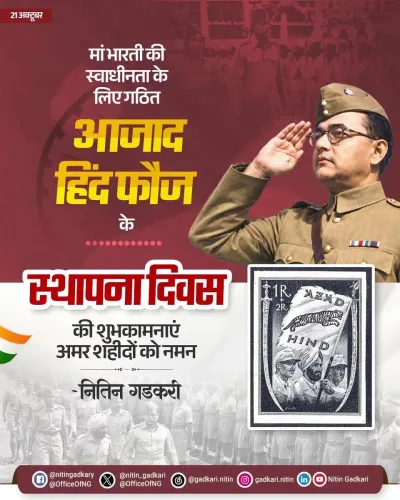
Rajnath Singh salutes Netaji, Azad Hind Fauj on founding day
Synopsis
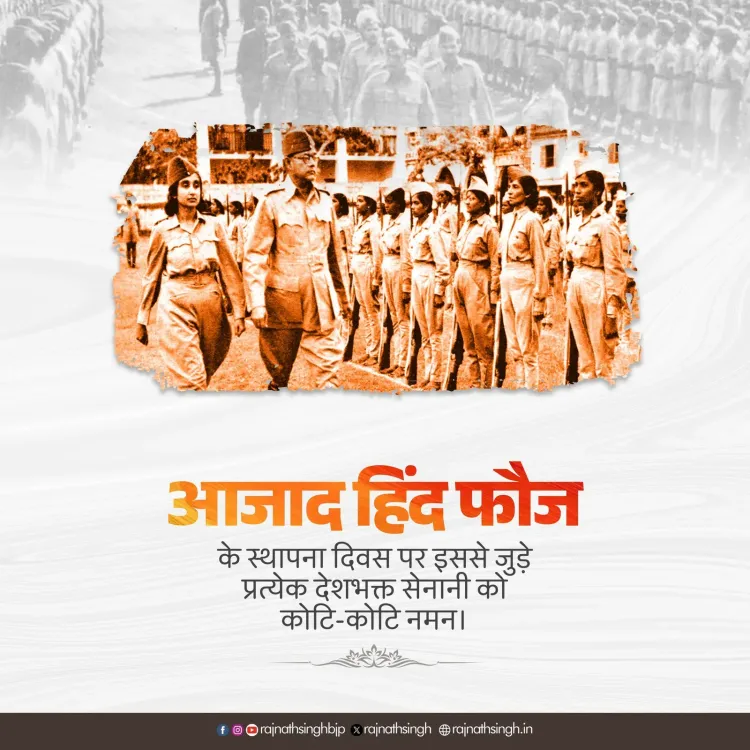
Union Defence Minister Rajnath Singh on 21 October 2026 paid solemn tribute to Netaji Subhash Chandra Bose and the Azad Hind Fauj on their founding anniversary, calling their supreme sacrifice and courage an eternal inspiration for generations of Indians.
Key Takeaways
Rajnath Singh paid tribute to Netaji Subhash Chandra Bose and the Azad Hind Fauj on their founding anniversary on 21 October 2026 .
Singh described their contribution as 'supreme sacrifice, indomitable courage, and unwavering devotion to the nation.' The Azad Hind Fauj (Indian National Army) was reorganised by Bose during World War II to wage an armed campaign for India's independence.
In October 1943 , Bose declared the Provisional Government of Free India , giving the INA international political standing.
Annual tributes by Indian ministers are an established tradition that recognises the armed independence movement alongside the non-violent mainstream struggle.
On the founding anniversary of the Azad Hind Fauj, Union Defence Minister Rajnath Singh paid solemn tribute on Wednesday, 21 October 2026 to Netaji Subhash Chandra Bose and every soldier of the Indian National Army who gave their lives to end British colonial rule — a sacrifice, he wrote, that would inspire generations of Indians to come.
Posting in Hindi on X, Singh offered his reverent salute — 'saadar naman' [respectful homage] — to Netaji and the brave fighters of the Azad Hind Fauj. He wrote that their 'supreme sacrifice, indomitable courage, and unwavering devotion to the nation' would forever inspire coming generations toward 'national service and a sense of duty.'
The army that dared to fight an empire
The Azad Hind Fauj — formally the Indian National Army — was reorganised by Netaji Subhash Chandra Bose during World War II to wage an armed campaign against British rule from Southeast Asia. Where the mainstream independence movement relied on non-violent civil disobedience, the INA represented a parallel, military thread of the freedom struggle — one that challenged the empire on the battlefield and captured the imagination of Indians across the subcontinent.
In October 1943, Bose declared the formation of the Arzi Hukumat-e-Azad Hind, the Provisional Government of Free India, giving the INA both a political identity and international standing. That act transformed a fighting force into a symbol of sovereign aspiration — a moment Indian leaders have commemorated every year since.
A tradition of official recognition
Singh's tribute is part of a long-established practice of formal acknowledgment by Indian governments. Senior ministers and the Prime Minister routinely mark anniversaries tied to the independence struggle, ensuring that the armed wing of the nationalist movement receives standing alongside its non-violent counterpart in the national memory.
The Azad Hind Fauj occupies a particularly resonant place in this tradition: its soldiers — drawn from Indian prisoners of war and diaspora communities across Southeast Asia — embodied a multinational, multiethnic commitment to a free India. Their story is woven into the institutional memory of the Indian Armed Forces, the service Singh now leads as Defence Minister.
For a Defence Minister, the tribute carries an added layer of meaning: it places today's professional military in direct moral lineage with the men and women who bore arms for independence — a connection no annual observance lets the country forget.
Point of View
Invoking the INA's military legacy on its founding anniversary draws a direct symbolic line between colonial-era sacrifice and the modern Indian Armed Forces. The annual cadence of such statements reflects a broader pattern of competitive commemoration, where political leaders from across the spectrum claim custodianship of nationalist icons. As India's defence posture grows more assertive regionally, the INA's imagery of determined armed resistance to foreign domination holds enduring resonance.
NationPress
21 Oct 2026
Frequently Asked Questions
Why is 21 October significant for the Azad Hind Fauj?
21 October is observed as the founding anniversary of the Azad Hind Fauj and the Provisional Government of Free India, which Netaji Subhash Chandra Bose declared in 1943 to give India's armed independence movement international standing.
What did Rajnath Singh say about Netaji Bose on 21 October 2026?
Union Defence Minister Rajnath Singh paid tribute in Hindi, honouring Netaji and all INA soldiers for their supreme sacrifice, indomitable courage, and unwavering national devotion, saying these qualities would inspire generations toward service and duty.
What was the Azad Hind Fauj?
The Azad Hind Fauj, also known as the Indian National Army (INA), was a military force reorganised by Netaji Subhash Chandra Bose during World War II to fight British colonial rule, drawing recruits from Indian prisoners of war and diaspora communities in Southeast Asia.
Who was Subhash Chandra Bose?
Subhash Chandra Bose, known as Netaji, was a prominent Indian independence leader who led the armed wing of the freedom movement, reorganising the Indian National Army and forming the Provisional Government of Free India in 1943.
Does India officially recognise the Indian National Army?
Yes. Indian leaders across governments have annually commemorated the INA and Netaji, recognising the armed independence movement as an integral part of the national freedom struggle alongside the non-violent mainstream movement.