CM Vishnu Deo Sai Pays Tribute on Azad Hind Fauj Foundation Day
Synopsis
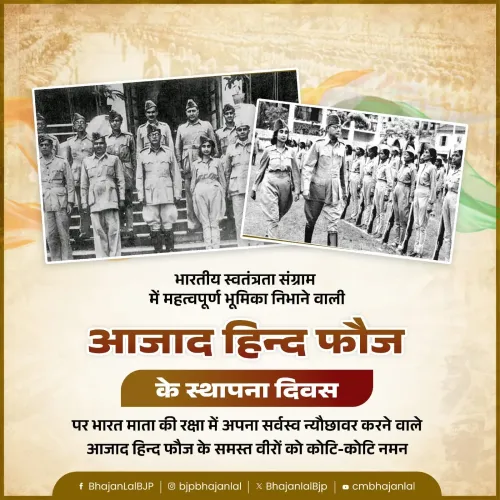
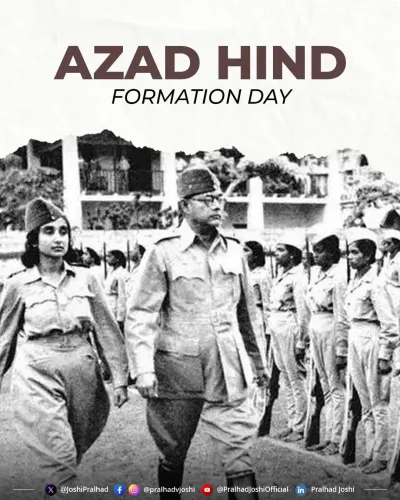
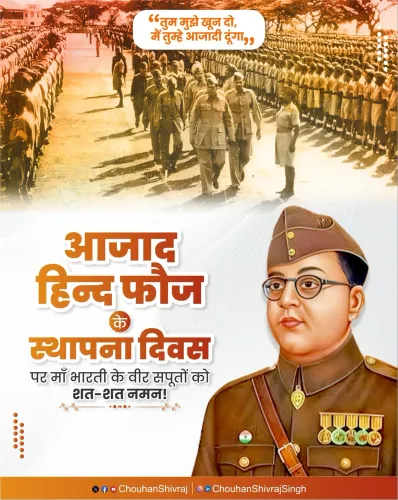
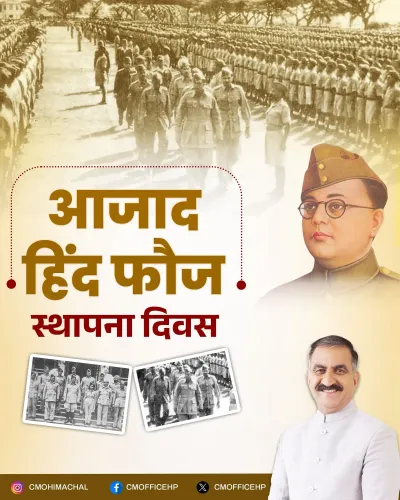
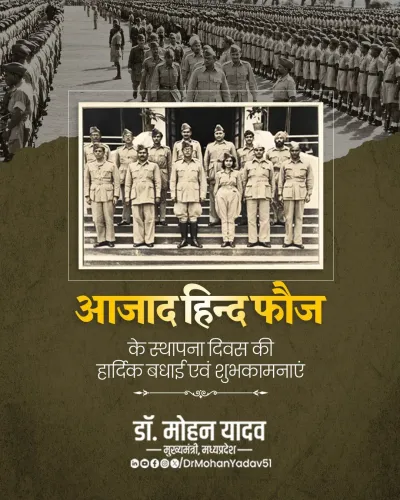
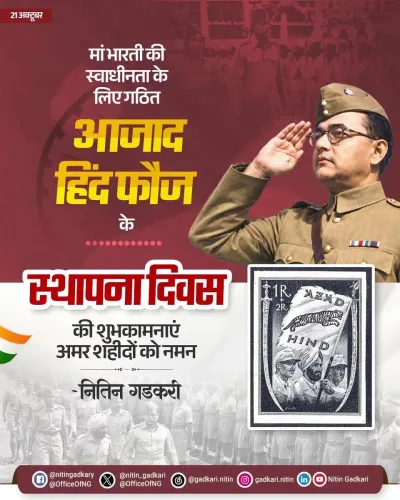
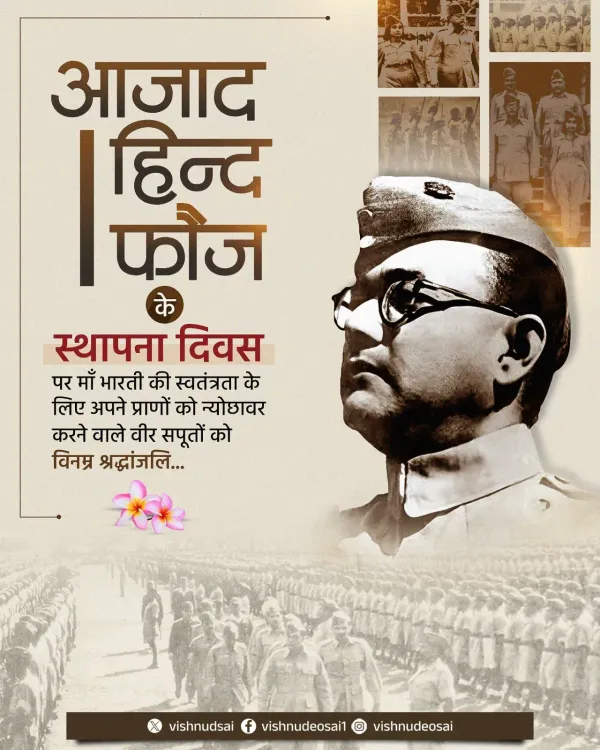
On the 83rd foundation day of the Azad Hind Fauj, Chhattisgarh Chief Minister Vishnu Deo Sai paid solemn tribute to Netaji Subhas Chandra Bose and the soldiers of the Indian National Army, honouring their courage and supreme sacrifice for India's independence.
Key Takeaways
21 October 2026 marks the 83rd foundation day of the Azad Hind Fauj's Provisional Government of Free India, proclaimed by Netaji Subhas Chandra Bose in Singapore in 1943 .
Chhattisgarh Chief Minister Vishnu Deo Sai offered tribute on X , saluting the INA soldiers' 'indomitable courage, sacrifice, and patriotism.' The Azad Hind Fauj drew soldiers from Indian prisoners of war and the Indian diaspora across Southeast Asia during World War II .
BJP-governed states periodically issue such tributes as part of a broader effort to foreground the armed-resistance strand of India's independence movement.
CM Sai closed his tribute with the iconic nationalist call Jai Hind! — the battle cry associated with Netaji's movement.
Eighty-three years after Netaji Subhas Chandra Bose proclaimed the Provisional Government of Azad Hind in Singapore, Chhattisgarh Chief Minister Vishnu Deo Sai marked the occasion on 21 October 2026 with a heartfelt tribute to the soldiers of the Azad Hind Fauj — the Indian National Army that dared to take the fight for freedom to the battlefield.
Posting in Hindi on X, CM Sai offered his homage to the 'veer saput' (brave sons of the motherland) who, under Netaji's command, gave everything to the cause of Indian independence. 'The example of indomitable courage, sacrifice, and patriotism set by the soldiers of the Azad Hind Fauj under the leadership of Netaji Subhas Chandra Bose will always inspire the countrymen to serve the nation,' he wrote, closing with the iconic rallying cry: Jai Hind!
The moment that defined October 21, 1943
On 21 October 1943, Subhas Chandra Bose stood in Singapore's Cathay Building and formally announced the Provisional Government of Free India — Azad Hind Sarkar — transforming a military force into a sovereign political declaration. The Azad Hind Fauj, drawing its ranks from Indian prisoners of war and the Indian diaspora across Southeast Asia, became the armed expression of that government. It was among the most audacious acts of the independence movement: a government-in-exile with its own currency, its own courts, its own army — fighting British imperial power on a second front while the mainstream movement engaged in civil disobedience at home.
BJP's consistent reclamation of the armed-resistance narrative
CM Sai's tribute is part of a deliberate, recurring pattern from BJP-governed states. By foregrounding the INA's martial nationalism alongside — and sometimes above — the civil-disobedience tradition, BJP leaders emphasise a strand of the independence movement that, for decades, received less institutional celebration. Netaji Bose and the INA have become emblematic of this reclamation: a hero whose legacy cuts across ideological lines, giving such tributes broad popular resonance.
For Chhattisgarh, a state whose tribal and rural communities have deep traditions of resistance and sacrifice, the messaging carries particular weight — connecting a national historical moment to the state's own spirit of rashtrabhakti (patriotism).
Eighty-three years on, the soldiers of the Azad Hind Fauj remain a living argument about what it truly costs to build a free nation — and official India keeps returning to that argument, one October 21st at a time.
Point of View
' the messaging implicitly frames national service as a living obligation, not merely a historical memory. For a state like Chhattisgarh — with its deep traditions of local resistance — such symbolism resonates beyond the ceremonial. The annual recurrence of these tributes signals a long-term effort to institutionalise Netaji's legacy as a pillar of BJP's patriotic identity.
NationPress
21 Oct 2026
Frequently Asked Questions
Why is 21 October celebrated as Azad Hind Fauj foundation day?
On 21 October 1943 , Netaji Subhas Chandra Bose formally proclaimed the Provisional Government of Free India (Azad Hind Sarkar) in Singapore , giving the Indian National Army a full political and governmental structure. This date is observed annually as the INA's foundation day.
Who was Subhas Chandra Bose and what was the Azad Hind Fauj?
Subhas Chandra Bose was a prominent Indian nationalist leader who led the Azad Hind Fauj (Indian National Army), a military force composed of Indian prisoners of war and overseas Indians in Southeast Asia, which fought British forces during World War II in pursuit of Indian independence.
What did Chhattisgarh CM Vishnu Deo Sai say about Azad Hind Fauj Day?
CM Vishnu Deo Sai paid tribute to the INA soldiers on 21 October 2026 , stating that the 'indomitable courage, sacrifice, and patriotism' shown by the Azad Hind Fauj under Netaji's leadership will always inspire Indians to serve the nation.
Why do BJP leaders frequently pay tribute to Netaji Subhas Chandra Bose?
BJP-governed states consistently mark anniversaries linked to Netaji Bose and the INA as part of a broader effort to highlight the armed-resistance strand of India's independence movement — one that received less institutional emphasis under earlier governments dominated by the Congress tradition.
Where was the Provisional Government of Azad Hind proclaimed?
The Provisional Government of Free India was proclaimed by Subhas Chandra Bose in Singapore on 21 October 1943 , formalising the political identity of the Azad Hind Fauj as a government-in-exile.