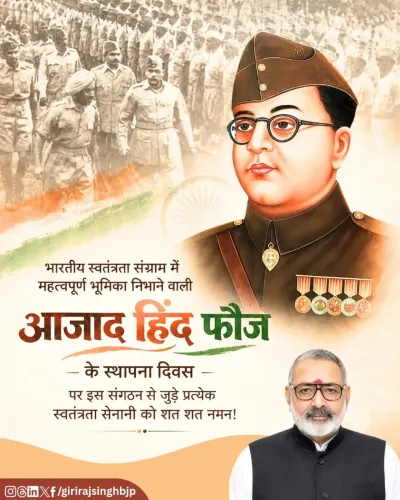
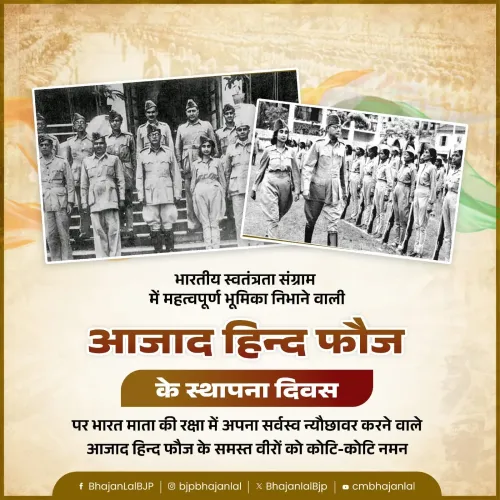
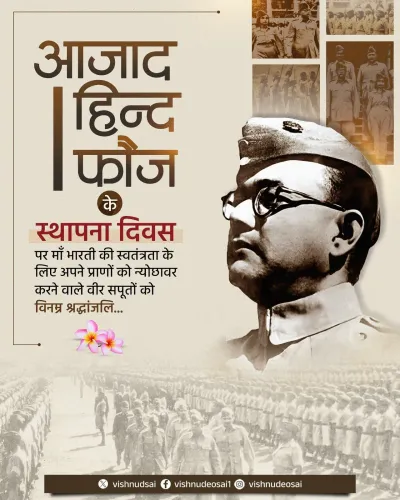
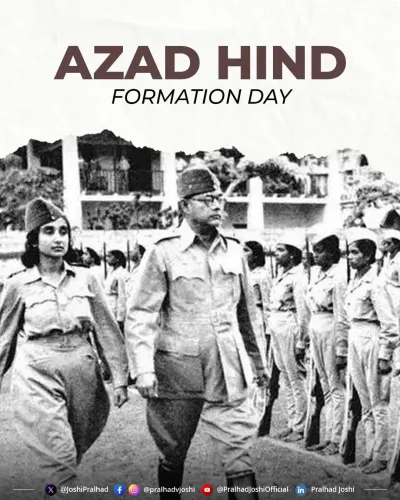
Rijiju pays tribute to Azad Hind Fauj on Foundation Day
Synopsis
Union Minister Kiren Rijiju marked the Azad Hind Fauj Foundation Day on October 21, 2026, saluting the immortal martyrs and honouring Netaji Subhas Chandra Bose's armed resistance as an unparalleled inspiration for national service.
Key Takeaways
Union Minister Kiren Rijiju posted a tribute on October 21, 2026 — the Foundation Day of the Azad Hind Fauj .
He offered a reverential salute to the immortal martyrs and wished all citizens on the occasion.
The Azad Hind Fauj was reconstituted under Netaji Subhas Chandra Bose in 1943 to fight British colonial rule during World War II.
Bose also established the Provisional Government of Free India , asserting Indian sovereign authority before independence.
The government has institutionalised Netaji's legacy through Parakram Diwas on 23 January and the installation of Bose's statue at India Gate .
Rijiju described the INA's sacrifice as a lasting inspiration for all Indians to serve the nation.
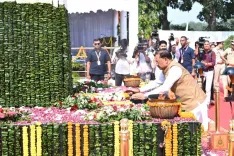
On the Foundation Day of the Azad Hind Fauj, Union Parliamentary Affairs and Minority Affairs Minister Kiren Rijiju bowed to the immortal martyrs of India's most daring armed resistance against colonial rule — soldiers who picked up weapons when petitions alone could not win freedom.
Posting in Hindi on Wednesday, October 21, 2026, Rijiju conveyed warm wishes to all on the occasion and offered his reverential salute to the fallen heroes, writing: 'अमर शहीदों को मेरा सादर नमन' ('my respectful salute to the immortal martyrs'). He described the Azad Hind Fauj's indomitable courage and sacrifice under Netaji Subhas Chandra Bose as an unparalleled example of patriotism that played a vital role in India's freedom struggle.
The army Netaji built — and what it stood for
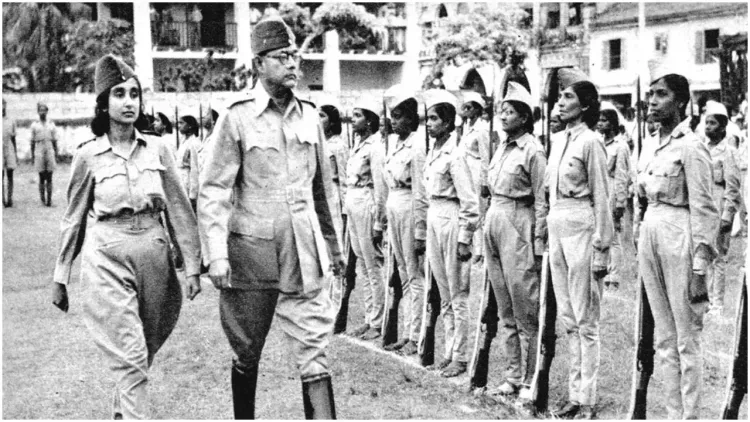
The Azad Hind Fauj, formally reconstituted under Subhas Chandra Bose in 1943, was no peripheral footnote to India's independence movement. Bose reorganised the Indian National Army from prisoners of war and Indian civilians in Southeast Asia, forged an alliance with Axis powers, and launched a military campaign aimed directly at liberating Indian soil from British rule. The INA advanced into northeastern India, reaching Kohima and Imphal before being turned back — but the psychological blow to the idea of British invincibility was irreversible.
Bose simultaneously established the Provisional Government of Free India — Arzi Hukumat-e-Azad Hind — asserting sovereign Indian authority even before independence arrived. The movement drew soldiers from across India's communities, and its women's regiment, the Rani of Jhansi Regiment, broke another barrier entirely. The INA trials that followed the war, far from suppressing the memory of its soldiers, ignited nationwide outrage and accelerated the final chapter of British rule.
A tribute that fits a long tradition — and a sharper political moment
Indian leaders across party lines have routinely marked INA anniversaries with public statements, weaving the armed struggle into a broader nationalist narrative alongside the non-violent movement. The current government has placed particular emphasis on Netaji's legacy — including the rechristening of the Rajpath to Kartavya Path and the installation of Bose's statue at India Gate in New Delhi. Parakram Diwas, observed on 23 January — Netaji's birth anniversary — has since been institutionalised as a national day of commemoration.
Rijiju, himself from Arunachal Pradesh — a state on the very frontier the INA sought to cross — closed with a line that carried its own weight: that the soldiers' struggle and sacrifice will 'forever inspire all fellow countrymen to walk the path of service to the nation.' A reminder, on a quiet October morning, that some debts are never fully repaid.
Point of View
Sustained effort by the current government to centre the armed and militant strands of India's freedom struggle alongside the Gandhian tradition — a project that includes Parakram Diwas, the India Gate statue, and Kartavya Path. For a minister from Arunachal Pradesh, honouring an army that marched toward that very frontier carries an additional regional resonance. These annual statements are more than ritual: they steadily reinforce a nationalist historiography in which sacrifice through arms is granted equal, if not elevated, moral standing. The consistency across governments, however, also suggests the INA's legacy has achieved something rare in Indian politics — genuine cross-partisan reverence.
NationPress
21 Oct 2026
Frequently Asked Questions
When was the Azad Hind Fauj founded?
The Azad Hind Fauj, or Indian National Army, was formally reconstituted under Netaji Subhas Chandra Bose in 1943 in Southeast Asia to fight British colonial rule during World War II.
What is the significance of October 21 for the Azad Hind Fauj?
October 21 is observed as the Foundation Day of the Azad Hind Fauj, marking the day Subhas Chandra Bose established the Provisional Government of Free India — Arzi Hukumat-e-Azad Hind — in 1943.
Who was Subhas Chandra Bose and what did he do?
Subhas Chandra Bose was a prominent Indian nationalist leader who organised the Indian National Army and the Provisional Government of Free India to mount an armed resistance against British rule, advancing into northeastern India before the campaign was halted.
What did Kiren Rijiju say on Azad Hind Fauj Foundation Day 2026?
Minister Kiren Rijiju offered warm wishes to all on the Foundation Day and paid a reverential salute to the immortal martyrs, describing the INA's courage and sacrifice under Netaji as an unparalleled example of patriotism and a lasting inspiration for national service.
What is Parakram Diwas and how is it related to Netaji?
Parakram Diwas is a national day of commemoration observed on January 23 — Netaji Subhas Chandra Bose's birth anniversary — institutionalised by the current government to honour his legacy and spirit of courage.