Indus Waters Treaty abeyance backed by global experts at UNHRC sidelines
Synopsis
At a conference on the sidelines of the UN Human Rights Council in Geneva, international experts lined up to back India's suspension of the Indus Waters Treaty — reframing a bilateral water dispute as a legitimate sovereign response to terrorism and a long-overdue human rights reckoning for communities in Pakistan's Sindh. The diplomatic shift signals India is actively building a multilateral legal case for keeping the 1960 treaty in abeyance.
Key Takeaways
International experts at a UNHRC sidelines conference in Geneva on 17 September 2026 backed India's decision to place the Indus Waters Treaty in abeyance.
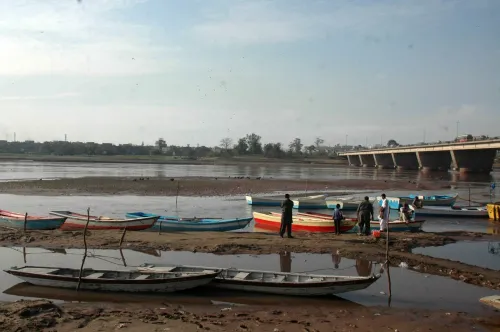
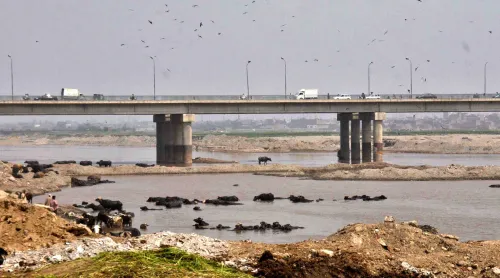
Siegfried O Wolf of the South Asia Democratic Forum called the IWT a structurally imbalanced treaty with an 80:20 water split favouring Pakistan and described Pakistani legal challenges to Indian projects as 'tactical legal warfare.' Human rights activist Arif Aajakia argued that Pakistan's military has denied water rights to Sindh , where the Indus has reportedly been reduced to a trickle at Kotri .
A Delhi-based NGO formally told the 63rd UNHRC session that the 1960 treaty must be reviewed in light of climate change, glacier retreat, and population growth.
India placed the IWT in abeyance following the Pahalgam terror attack , conditioning its restoration on Pakistan 'credibly and irrevocably' ending cross-border terrorism support.
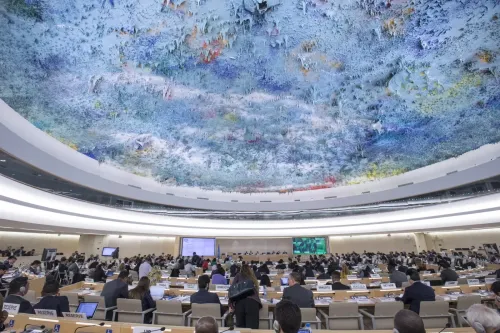
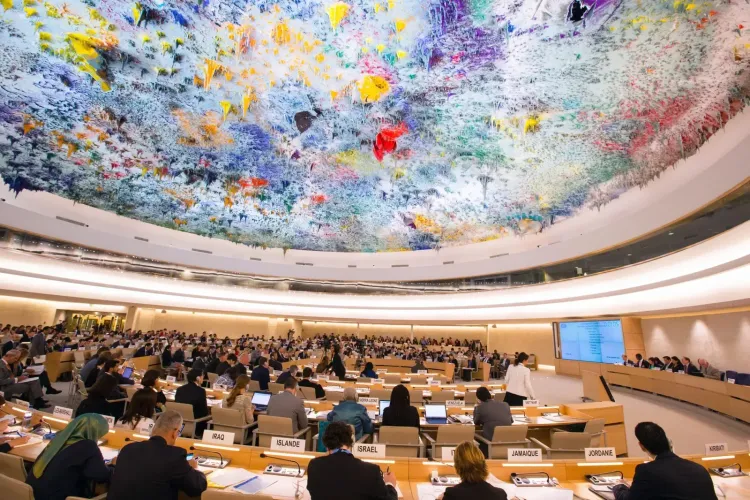
Several international experts on 17 September 2026 made a strong case for keeping the Indus Waters Treaty (IWT) in abeyance at a conference held on the sidelines of the 63rd session of the UN Human Rights Council (UNHRC) in Geneva, arguing that India's decision constitutes a legitimate exercise of sovereign rights under international law in response to decades of cross-border terrorism.
Key Positions at the Geneva Conference
Siegfried O Wolf, Director of Research at the South Asia Democratic Forum in Brussels, said India was fully within its rights to seek a review of the 1960 treaty, asserting that Pakistan's conduct had 'undermined the object, purpose and spirit of the agreement.' He characterised the IWT as a voluntary Indian concession built on a structural imbalance — an 80:20 split in water allocation favouring Pakistan — compounded by India's financial contribution to the Indus Development Fund and what he described as 'tactical legal warfare' through repeated challenges to Indian infrastructure projects including Baglihar, Kishenganga, and Ratle.
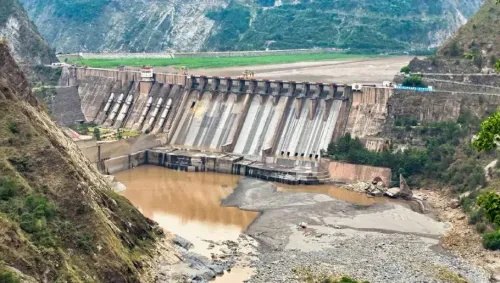
Wolf dismissed claims that India is blocking river flows as an 'engineering myth,' noting that Indian projects on the western rivers are non-consumptive and return water downstream after generating power. He argued that Islamabad's campaign is aimed at delaying India's development, discrediting it internationally, and distracting from a water crisis that is, in his assessment, 'entirely self-inflicted' — rooted in Punjab's dominance, feudal landholding, urban bias, and decaying canal infrastructure.
Human Rights Dimension: The Sindh Argument
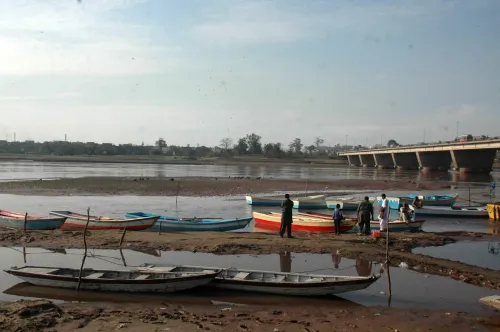
London-based human rights activist Arif Aajakia framed water access as a fundamental human right that Pakistan's military establishment has denied to Sindh, where the Indus has reportedly been reduced to a trickle at Kotri due to upstream canal diversions. He cited a series of major terror attacks — including the 2001 Parliament attack, the 2008 Mumbai attacks, Pulwama, and the Pahalgam killings — in arguing that India's suspension of the 65-year-old treaty was justified.
Indian NGO Statement at the UNHRC
The developments in Geneva follow a formal oral statement delivered by a Delhi-based NGO at the 63rd UNHRC session under Item 3 of the Interactive Dialogue with the Special Rapporteur on the human rights to safe drinking water and sanitation. The NGO argued that the IWT, though historically significant, was signed over six decades ago and that the region's water-security landscape has since been fundamentally altered by population growth, climate change, glacier retreat, groundwater depletion, and increasingly erratic river flows.
The statement held that international water treaties must be implemented in ways that strengthen — not constrain — states' ability to fulfil their human-rights obligations. It described a review of the treaty as 'an imperative,' while affirming that human rights and international cooperation are complementary and that transboundary water governance must place 'people, dignity and fundamental rights at the centre.'
Background: India's Decision to Suspend IWT
The Indus Waters Treaty was originally signed on 19 September 1960 by India and Pakistan, governing the utilisation of the six rivers of the Indus system. Following the Pahalgam terror attack, India placed the treaty in abeyance, stating it would remain suspended until Pakistan 'credibly and irrevocably' abjures support for cross-border terrorism. India maintains that Pakistan's bad faith conduct over decades has fundamentally altered the treaty's operative premise.
What Comes Next
The Geneva conference marks a broadening of the debate beyond bilateral water-sharing into the domain of international human rights law — a framing that India and its supporters appear to be actively cultivating at multilateral forums. Whether the UNHRC process generates formal resolutions or recommendations remains to be seen, but the diplomatic groundwork laid this week could shape how the IWT suspension is perceived in international legal arenas going forward.
Point of View
New Delhi is pre-emptively reframing any future UNHRC scrutiny on the IWT — making it about Pakistan's denial of water to Sindh as much as India's abeyance. The 80:20 water split statistic, if it gains traction in international legal discourse, could be a durable asset. What mainstream coverage underplays is that this is less about the treaty's technical merits and more about who controls the narrative in international forums — and right now, India appears to be playing that game with unusual sophistication.
NationPress
17 Sept 2026
Frequently Asked Questions
Why has India placed the Indus Waters Treaty in abeyance?
India placed the Indus Waters Treaty in abeyance following the Pahalgam terror attack, stating the suspension will continue until Pakistan credibly and irrevocably ends its support for cross-border terrorism. India argues that Pakistan's decades of bad faith have fundamentally undermined the treaty's operative premise.
What is the Indus Waters Treaty?
The Indus Waters Treaty is a bilateral water-sharing agreement signed between India and Pakistan on 19 September 1960, governing the use of the six rivers of the Indus system. Under its original terms, India received the three eastern rivers while Pakistan was allocated the three western rivers, with an 80:20 split in overall water volume favouring Pakistan.
What did international experts argue at the Geneva conference?
Speakers at the UNHRC sidelines conference on 17 September argued that India's suspension of the IWT is a legitimate sovereign response to terrorism and that Pakistan's legal challenges to Indian infrastructure projects constitute tactical obstruction. They also contended that Pakistan's own water crisis — particularly in Sindh — stems from domestic mismanagement, not Indian actions.
What role did the Delhi-based NGO play at the UNHRC session?
The Delhi-based NGO delivered a formal oral statement at the 63rd UNHRC session calling for a review of the Indus Waters Treaty, citing changed water-security conditions including climate change, glacier retreat, and population growth since the treaty was signed in 1960. It argued that treaty implementation must not prevent states from fulfilling their human-rights obligations to their own populations.
How does India's abeyance of the IWT affect Pakistan?
India maintains that its projects on western rivers are non-consumptive and return water downstream, meaning there is no immediate cutoff of flows. However, the abeyance removes India's treaty-based obligations to share data, allow inspections, and cooperate on dispute resolution — potentially complicating Pakistan's long-term water planning and infrastructure project approvals.