India at UN: Terrorism must be included in crimes against humanity pact
Synopsis
India has made a pointed push at the UN General Assembly's Sixth Committee to have terrorism formally covered under the proposed 2028 international convention on crimes against humanity — while insisting that national sovereignty and domestic jurisdiction must remain paramount. It is a dual demand that reflects New Delhi's long-held frustration with the gap in global anti-terror legal frameworks.
Key Takeaways
India called on 13 October 2026 for terrorism to be included in the proposed international convention on crimes against humanity at the UN General Assembly's Sixth Committee .
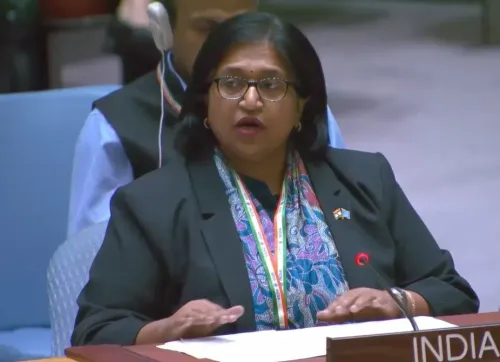
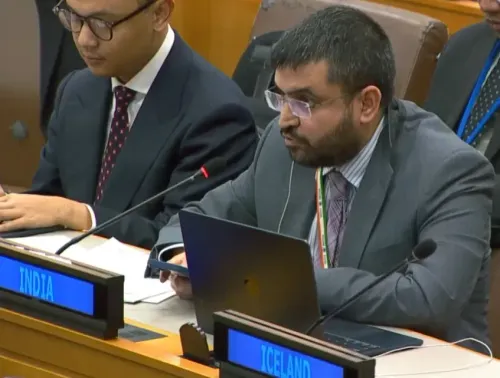
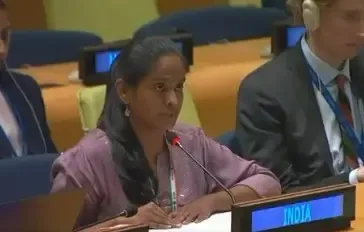
R Mythili , counsellor at India's UN Mission , said terrorist acts meeting the requisite threshold should be 'appropriately reflected' in the convention's framework.
India insisted inclusion must not simply 'transpose existing legal regimes' into the new convention, signalling a preference for a tailored approach.
New Delhi emphasised that nations must retain primacy of jurisdiction and that the convention must respect national sovereignty and non-interference principles.
The UN General Assembly has mandated a conference in 2028 to adopt a legally binding crimes-against-humanity convention, with the first preparatory session held in January .
India has called for terrorism to be explicitly covered under a proposed international convention on crimes against humanity, arguing that terrorist acts meeting the requisite legal threshold should be recognised within the new framework. The position was articulated at the United Nations General Assembly's Sixth Committee in New York on 13 October 2026, as member states deliberated on a landmark convention slated for adoption at a dedicated conference in 2028.
India's Core Argument
R Mythili, a counsellor at India's Permanent Mission to the United Nations, told the Sixth Committee — the General Assembly's principal legal body — that atrocities committed by terrorists, where they meet the required threshold, should be 'appropriately reflected within the framework of crimes against humanity.' She was careful to add that this must be done 'in a manner consistent with the overall approach of the draft articles and without simply transposing existing legal regimes into a new convention,' reflecting India's nuanced position on the legal architecture.
The statement underscores India's longstanding effort to elevate terrorism to the highest tier of international criminality, a push that has gained renewed urgency amid continuing cross-border attacks and the perceived inadequacy of existing anti-terror legal instruments.
Sovereignty and National Jurisdiction
A significant part of India's submission centred on the primacy of national sovereignty. Mythili stressed that any measures aimed at preventing and punishing crimes against humanity 'must fully respect the sovereignty of nations and the principle of non-interference in the internal affairs of countries.' She added that nations bear the primary responsibility for protecting their populations from such crimes, in line with their own domestic legislation.
India also called for countries to retain 'primacy of jurisdiction,' factoring in the interests of justice, the rights of the accused, and the interests of victims — a formulation that pushes back against unchecked expansion of universal jurisdiction or supranational enforcement mechanisms.
Background: The 2028 Convention Process
The UN General Assembly passed a resolution in 2024 mandating a dedicated international conference in 2028 to negotiate and adopt a legally binding convention on the prevention and punishment of crimes against humanity. Two preparatory conferences are planned; the first was held in January to negotiate and draft the convention's articles. The Sixth Committee discussion on 13 October forms part of the ongoing intergovernmental consultations feeding into that process.
The convention, once adopted, would fill a significant gap in international humanitarian law: unlike genocide and war crimes, crimes against humanity currently lack a dedicated standalone international treaty, despite being codified in the Rome Statute of the International Criminal Court.
Why India's Position Matters
India has consistently argued at multilateral forums that terrorism is among the gravest threats to civilian life and state stability, yet it remains absent from the list of core international crimes in existing treaty frameworks. By pushing for its inclusion in the crimes-against-humanity convention, New Delhi is seeking to bridge this gap — while simultaneously insisting that national governments, not supranational bodies, retain lead jurisdiction over such cases.
Notably, India has often found itself at odds with permanent members of the UN Security Council on questions of accountability and sovereignty, making its articulation of both inclusion and jurisdictional primacy a careful diplomatic balancing act. As negotiations head toward the first full preparatory conference, India's stance is likely to find resonance among developing nations wary of external interference, even as it faces resistance from those who favour stronger supranational enforcement.
Point of View
But it comes bundled with a sovereignty caveat that could complicate negotiations. New Delhi wants terrorism elevated to the highest rung of international criminality — yet simultaneously argues that national courts, not supranational bodies, must handle cases. That tension is not unique to India; it reflects a broader fault line in international law between accountability and sovereignty. The more telling question is whether this position builds a coalition among developing nations, or whether it gets traded away as major powers shape the final text of the 2028 convention.
NationPress
13 Oct 2026
Frequently Asked Questions
What did India say about terrorism at the UN on 13 October 2026?
India urged the UN General Assembly's Sixth Committee to ensure that terrorist acts meeting the requisite threshold are covered under the proposed international convention on crimes against humanity. Speaking on behalf of India, counsellor R Mythili said such acts should be 'appropriately reflected within the framework of crimes against humanity,' while warning against simply transplanting existing anti-terror legal regimes into the new treaty.
What is the 2028 UN convention on crimes against humanity?
It is a proposed legally binding international treaty on the prevention and punishment of crimes against humanity, mandated by a UN General Assembly resolution passed in 2024. A dedicated international conference is scheduled for 2028 to negotiate and adopt the convention, with preparatory sessions — the first of which was held in January — feeding into the process.
Why does crimes against humanity currently lack a standalone UN treaty?
Unlike genocide and war crimes, which have their own dedicated international conventions, crimes against humanity are codified only in the Rome Statute of the International Criminal Court and are not covered by a standalone binding treaty. The 2028 convention is designed to fill that gap in international humanitarian law.
What is India's position on national sovereignty in the proposed convention?
India argued that nations must retain primacy of jurisdiction over crimes against humanity cases, taking into account the interests of justice, the rights of the accused, and the interests of victims. It also insisted that prevention and punishment measures must fully respect state sovereignty and the principle of non-interference in internal affairs.
Who represented India at the UN Sixth Committee meeting?
R Mythili, a counsellor at India's Permanent Mission to the United Nations, delivered India's statement at the General Assembly's Sixth Committee meeting on 13 October 2026 regarding the 2028 crimes against humanity convention.