India Advocates for UN’s Counter-Terrorism Strategy Amid Cross-Border Terror Threats
Synopsis
In a significant move, India reaffirms its commitment to the UN's counter-terrorism strategy, emphasizing collective international action against the ongoing threats posed by terrorism, especially in light of recent attacks in Pahalgam.
Key Takeaways
India emphasizes the importance of the GCTS for collective action against terrorism.
Recent attacks highlight the ongoing threat from cross-border terrorism.
India plans to actively engage in the upcoming review of GCTS.
Emerging technologies pose new challenges for counter-terrorism efforts.
International cooperation is essential in addressing the complexities of modern terrorism.
United Nations, March 5 (NationPress) As a nation impacted by terrorism, particularly the latest incident in Pahalgam, India has committed to advancing the UN’s counter-terrorism agenda in a unified effort against this global menace.
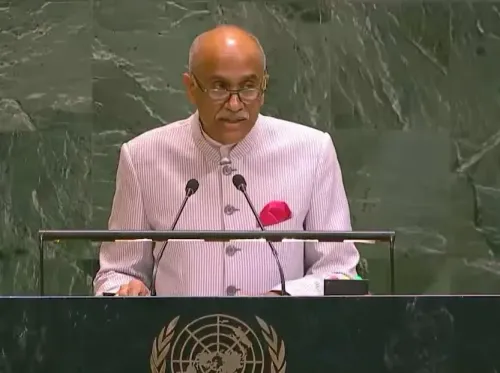
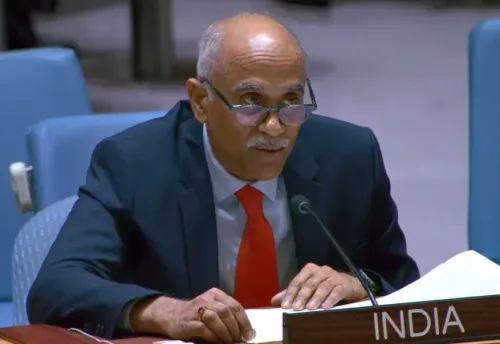
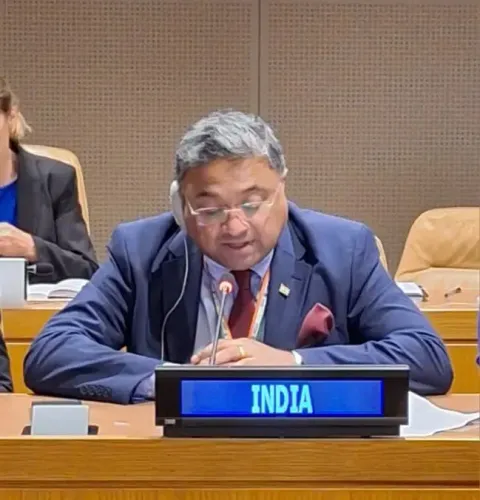
“We emphasize the significance of the Global Counter Terrorism Strategy (GCTS) as a vital tool for international collaboration,” stated Raghoo Puri, a first secretary at India's UN Mission, on Wednesday.
During the Annual Ambassadorial Level Briefing hosted by the Office of Counter-Terrorism, he remarked, “Terrorism poses an existential danger to world peace and security. It transcends borders, nationalities, and ethnicities, presenting a challenge that the global community must confront together.”
Established unanimously by the General Assembly in 2006, the GCTS serves as a joint framework for combating terrorism and has been reaffirmed through numerous Assembly resolutions.
As it approaches its 20th anniversary in July, it is slated for review.
“India will remain resolute and actively involved in the consultations for the 9th review of the GCTS,” assuring full cooperation “during negotiations of this crucial UN initiative,” Puri stated.
New Delhi will leverage its experience “as a nation that has endured cross-border terrorism for over three decades,” he added.
“India is profoundly aware of the socio-economic and human toll of terrorism, particularly regarding its victims,” he emphasized.
“Just last year, we suffered a brutal attack by The Resistance Front, a proxy of LeT (the Pakistan-based Lashkar-e-Taiba), a UN-designated terrorist organization in Pahalgam, Jammu and Kashmir, resulting in the tragic loss of 26 innocent tourists,” he recounted.
He declared, “We must unite against ISIS (Islamic State terror group) and Al Qaeda along with their affiliates.”
Puri highlighted that during India’s previous term on the Security Council, as the Chair of the Counter-Terrorism Committee in 2022, “India worked diligently to incorporate these principles into the UN’s counter-terrorism framework and the broader dialogue on terrorism.”
“With foresight, India advocated for the Delhi Declaration, which was unanimously adopted by the Council’s Counter-Terrorism Committee,” Puri noted.
This declaration serves as a proactive framework to counter the exploitation of emerging technologies by terrorists, such as drones, social media, and online fundraising.
Alexandre Zouev, the acting under-secretary-general for counter-terrorism, cautioned that terrorists “continue to adapt their strategies in response to counter-terrorism measures, resulting in a more complex and expansive threat landscape.”
The world faces significant risks as terrorists leverage technological advancements like drones, artificial intelligence, financial technologies, and even commercial satellite access, he stated.
“Their diverse financing methods and online exploitation are increasingly intricate to monitor and address,” Zouev added.
Point of View
It is essential to understand India's pivotal stance in the global fight against terrorism. The nation, having faced decades of cross-border terror, is now stepping up to reshape the counter-terrorism dialogue at the UN. India's experiences provide a unique perspective that could enhance international cooperation against this pressing issue.
NationPress
3 Oct 2026
Frequently Asked Questions
What prompted India's commitment to the UN's counter-terrorism strategy?
India's pledge comes in light of its recent experiences with terrorism, particularly the tragic attack in Pahalgam, highlighting the urgent need for a collective international response.
What is the Global Counter Terrorism Strategy (GCTS)?
The GCTS is a framework adopted by the UN General Assembly in 2006 aimed at enhancing international cooperation to combat terrorism globally.
How does India plan to contribute to the GCTS review?
India has assured its active involvement and full cooperation during the upcoming 9th review of the GCTS, drawing from its extensive experience as a victim of cross-border terrorism.
What are the recent developments in terrorism that concern India?
India is particularly concerned about the evolution of terrorist tactics, including the use of advanced technologies like drones and online financing methods.
Why is the Delhi Declaration significant?
The Delhi Declaration, adopted by the UN's Counter-Terrorism Committee, provides a framework for addressing the challenges posed by emerging technologies in the hands of terrorists.