Venezuela June earthquakes death toll rises to 6,438 as relief work continues
Synopsis
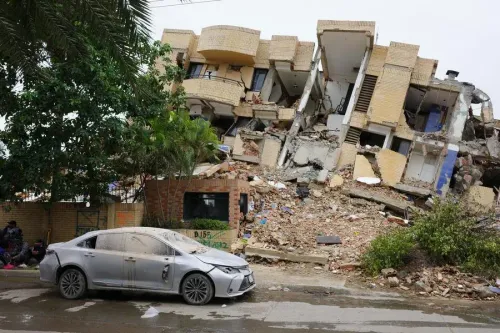
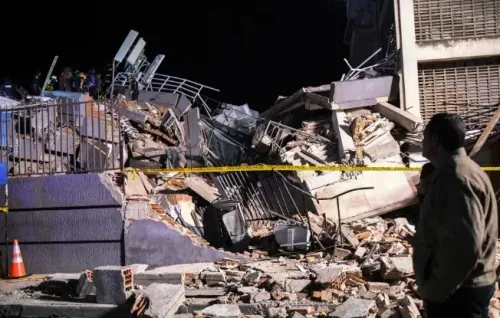
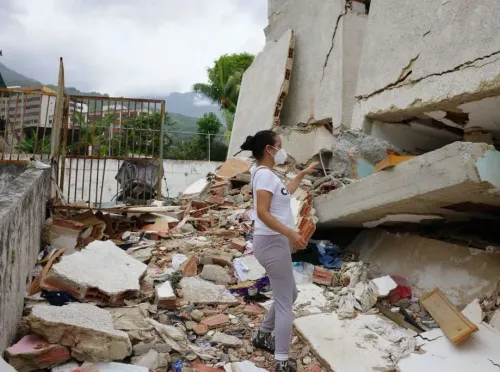
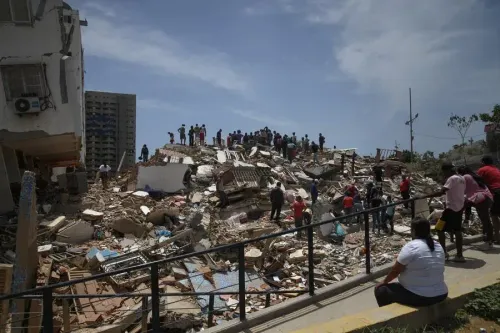
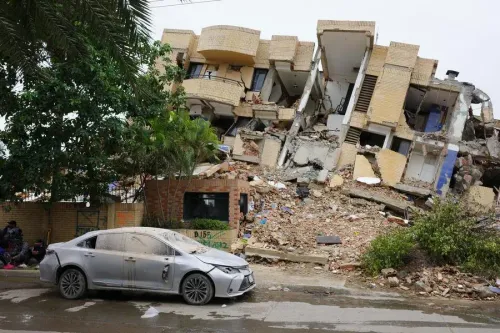
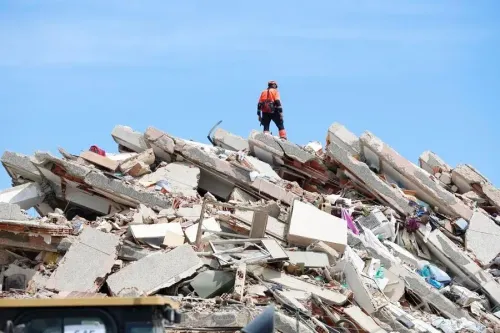
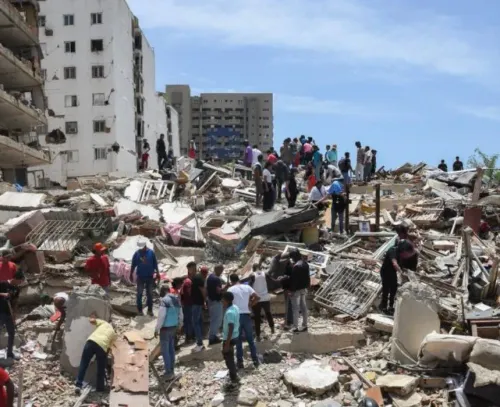
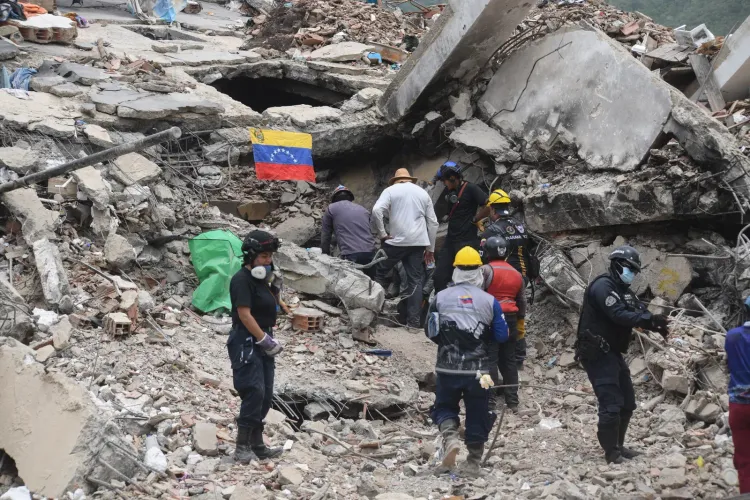
Nearly two months after twin magnitude 7.2 and 7.5 earthquakes struck Venezuela on 24 June, the official death toll has climbed to 6,438 — with over 10,000 buildings flagged as high-risk and tens of thousands still in shelters. The scale of destruction, combined with aid from 28 countries, marks this as one of the deadliest seismic disasters in Venezuelan history.
Key Takeaways
Venezuela's official earthquake death toll reached 6,438 as of 18 August , up 137 from the previous week.
59,109 buildings inspected; 10,696 classified high-risk and potentially facing demolition.
335 homes delivered to displaced families; 10,981 people remain in shelters in La Guaira alone.
The twin quakes — magnitude 7.2 and 7.5 — struck on 24 June with epicentres in Yaracuy and La Guaira .
Acting President Delcy Rodriguez acknowledged humanitarian aid from 28 countries , with over 2,000 tonnes of aid being distributed.
The Venezuelan government on Monday, 18 August raised the official death toll from the June 24 twin earthquakes to 6,438 — an increase of 137 from the previous week's count — as authorities continued large-scale building inspections and shelter deliveries across the affected states.
Latest Figures on Casualties and Inspections
According to the government's latest bulletin, 59,109 buildings have been inspected nationwide to assess habitability following the twin quakes. Of those, 34,680 were cleared as habitable, 13,733 were placed under restricted access, and 10,696 were classified as high-risk structures potentially facing demolition. Authorities have also delivered 335 homes to families displaced by the disaster, up from the 287 reported in an earlier update that had assessed 43,679 buildings.
The Traffic-Light System Guiding Recovery
Venezuela's authorities have deployed a colour-coded tagging system to manage building safety. Green tags denote habitable structures, yellow tags indicate restricted access, and red tags flag high-risk buildings that may be demolished. The system has been central to coordinating the displacement and resettlement of hundreds of thousands of residents across affected states.
Shelter Crisis Across States
The coastal state of La Guaira — where the two earthquakes caused the most severe damage — currently has 10,981 people living in shelters. The capital Caracas is housing 6,133 displaced residents, while the central state of Miranda has 1,323 people in temporary accommodation, according to earlier statements by Acting President Delcy Rodriguez.
What the Earthquakes Were
The magnitude 7.2 and magnitude 7.5 earthquakes struck Venezuela on 24 June, with epicentres in the western state of Yaracuy and the central state of La Guaira, respectively. The back-to-back tremors rank among the deadliest seismic events in Venezuela's recorded history.
International Aid and Government Response
Acting President Delcy Rodriguez has expressed gratitude to 28 countries that have provided humanitarian assistance to earthquake victims. After inspecting a collection centre in Caracas where more than 2,000 tonnes of international aid is being sorted for distribution, Rodriguez said, 'Venezuela never tires of thanking the countries, the peoples of the world, and the governments of the world that have offered a helping hand.' Aid is being channelled to temporary camps housing survivors of the June 24 earthquakes. The scale of international involvement underscores the severity of a disaster that has left tens of thousands without permanent shelter nearly two months after the initial strikes.
Point of View
438 — still climbing seven weeks after the event — signals that Venezuela's disaster response is operating under severe structural strain. The fact that nearly 11,000 buildings remain red-tagged while tens of thousands are sheltered in temporary camps raises urgent questions about the pace of permanent resettlement. Dependence on aid from 28 countries also exposes the limits of state capacity in a nation already under prolonged economic stress. The traffic-light inspection system is a rational tool, but its value depends entirely on the speed at which red-tagged structures are cleared and replaced — a timeline the government has not yet made public.
NationPress
2 Oct 2026
Frequently Asked Questions
What is the current death toll from the Venezuela earthquakes?
As of 18 August, the Venezuelan government has confirmed 6,438 deaths from the June 24 twin earthquakes, an increase of 137 from the previous week's official count.
Where did the Venezuela earthquakes strike?
The magnitude 7.2 earthquake had its epicentre in the western state of Yaracuy, while the magnitude 7.5 quake struck with its epicentre in the central coastal state of La Guaira. Both earthquakes occurred on 24 June.
How many buildings have been assessed and what do the results show?
Authorities have inspected 59,109 buildings. Of these, 34,680 were found habitable (green tag), 13,733 were placed under restricted access (yellow tag), and 10,696 were classified as high-risk (red tag), meaning they may face demolition.
How many people are still in shelters?
As of the latest available figures, 10,981 people remain in shelters in La Guaira, 6,133 in Caracas, and 1,323 in Miranda state — totalling over 18,000 displaced persons across three regions.
Which countries have provided aid to Venezuela?
Acting President Delcy Rodriguez has acknowledged humanitarian support from 28 countries. More than 2,000 tonnes of international aid is being sorted at a collection centre in Caracas for distribution to earthquake survivors.