Giriraj Singh champions Kutch Ajrakh craft, artisan market links
Synopsis
Union Textiles Minister Giriraj Singh has pledged to elevate Kutch's GI-tagged Ajrakh art and traditional handicrafts onto the global stage, while connecting local artisans and weavers to modern markets — reaffirming the ministry's heritage-and-livelihood policy agenda.
Key Takeaways
Union Textiles Minister Giriraj Singh publicly championed Kutch Ajrakh art and traditional handicrafts on 16 November 2026 .
The minister pledged to give Kutch's craft heritage 'a new identity' at the national and global level.
He emphasised connecting Kutch artisans and weavers directly to modern markets as a government priority.
Ajrakh received a Geographical Indication (GI) tag under Indian law in 2011 , offering legal protection to the craft.
The statement aligns with the Ministry of Textiles' broader agenda of market linkage, GI protection, and design upgradation for traditional crafts.
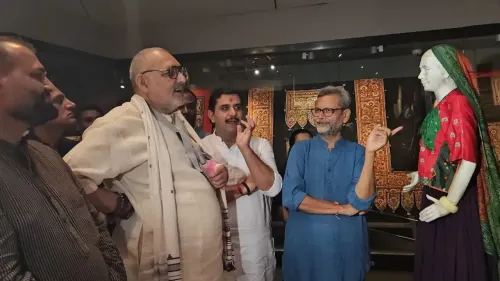
India's handloom heartland has a new champion in Delhi. Union Textiles Minister Giriraj Singh on Monday, 16 November 2026 reaffirmed the government's commitment to Kutch's Ajrakh art and its traditional handicrafts, pledging to bring these crafts global recognition and connect local artisans to modern markets.
Posting in Hindi, the Minister wrote: 'Kutch's Ajrakh art and traditional handicrafts are an important part of our rich cultural heritage. Giving this heritage a new identity across the country and the world, and connecting artisans to modern markets, is our priority. The skill of Kutch's craftsmen and weavers is our legacy — advancing it is our responsibility.'
Ajrakh: a living craft with a legal shield
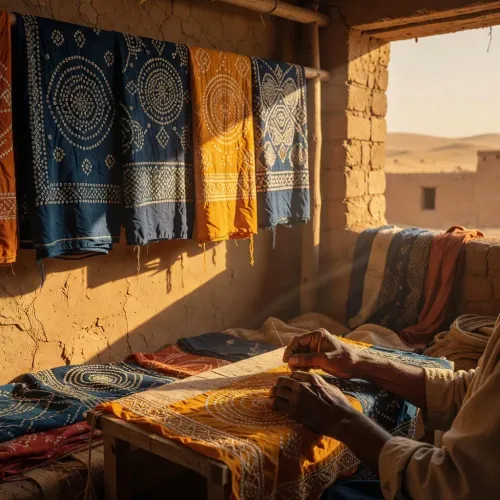
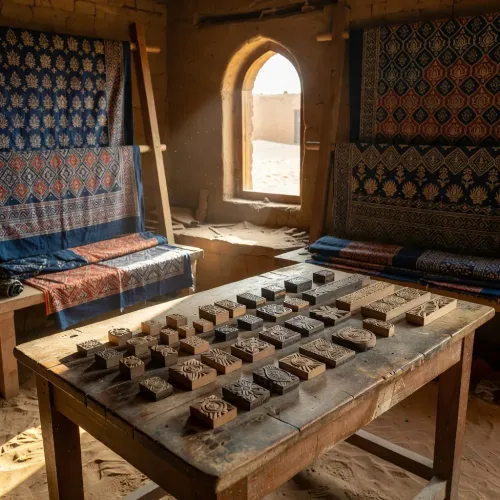
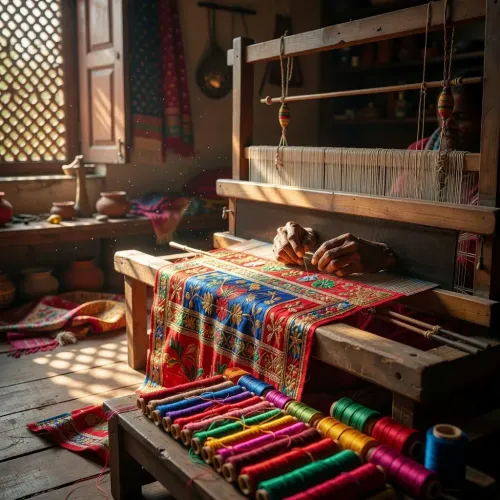
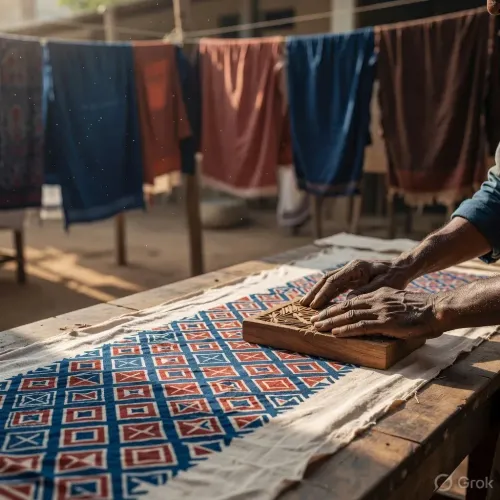
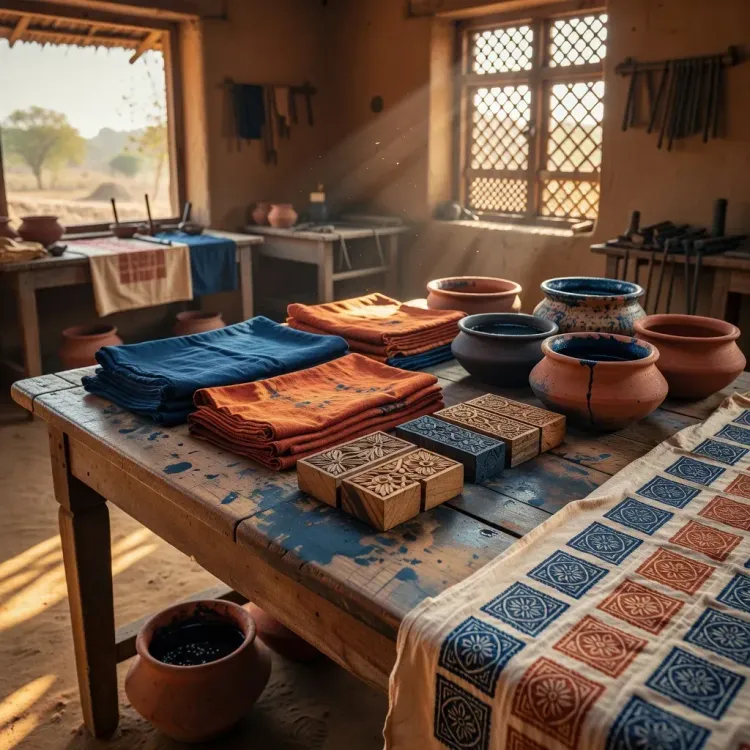
Kutch, the vast salt-marsh district in Gujarat, is home to one of India's most distinctive textile traditions. Ajrakh — a centuries-old resist block-printing technique using natural dyes — has been practised by master craftsmen across the region for generations. The craft received formal state recognition under the Geographical Indication (GI) Act in 2011, giving it legal protection against imitation and a certified identity in domestic and export markets.
That GI tag was an important first step. But a certification alone does not pay a weaver's rent. The gap between a heritage label and a living income is exactly the terrain the Ministry of Textiles is now signalling it wants to close.
Artisan incomes and the market-linkage challenge
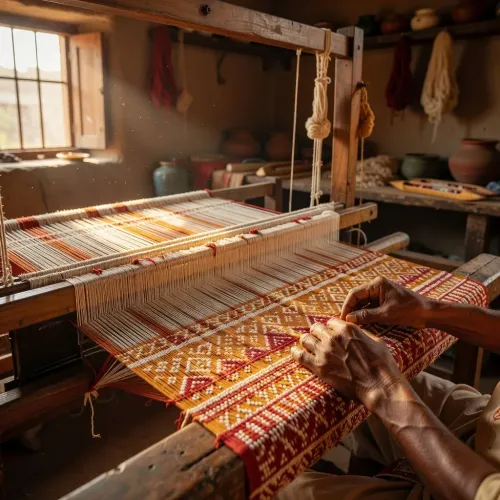
India's traditional crafts sector has long wrestled with a structural paradox: globally admired, locally underpaid. Successive textiles policies have tried to bridge this through design-upgradation programmes, e-commerce tie-ups, and participation at international trade fairs — with varying success. Kutch artisans and weavers, while celebrated in design and fashion circles worldwide, often remain insulated from the premium prices their work commands downstream.
Minister Singh's statement slots neatly into this long-standing policy arc — but the specificity of the mention matters. By naming Kutch Ajrakh directly, the Ministry signals that this craft cluster is on the radar for targeted intervention, whether through export promotion schemes, craft fairs, or digital marketplace linkages.
Gujarat's craft economy and the bigger textile picture
Kutch is not just a cultural story; it is an economic one. The district is home to dozens of distinct craft traditions — Ajrakh printing, Rogan art, Bandhani tie-dye, and embroidery clusters — each representing dense networks of artisan families. Connecting even one of these clusters more firmly to international buyers can shift livelihoods at scale.
India's textiles ministry has been pushing the dual agenda of virasat aur bazaar — heritage and market — as complementary, not competing goals. Singh's post reads as a public articulation of that philosophy, directed at one of India's most storied craft geographies.
The world already knows Kutch by its cloth. The question now is whether policy muscle will ensure the men and women who make that cloth know it too — in their earnings.
Point of View
Not just a sentiment — it places one of Gujarat's most iconic craft clusters on the ministry's active agenda ahead of potential budget or scheme announcements. The framing of artisan welfare as both a cultural duty and a market opportunity reflects a deliberate policy repositioning that has gathered pace under recent textiles ministers: heritage is no longer presented as a preservation cost but as an exportable asset. For the BJP, championing Gujarati craft clusters also carries a natural political resonance, connecting the central government's development narrative to a home-state constituency. Watch for follow-through in the form of international trade-fair participations or dedicated export-promotion allocations for GI-tagged handicrafts.
NationPress
16 Nov 2026
Frequently Asked Questions
What is Kutch Ajrakh?
Kutch Ajrakh is a centuries-old resist block-printing textile craft from the Kutch district of Gujarat, known for intricate geometric patterns made using natural dyes. It received a Geographical Indication (GI) tag under Indian law in 2011.
What did Giriraj Singh say about Kutch Ajrakh?
On 16 November 2026, Union Textiles Minister Giriraj Singh stated that Kutch's Ajrakh art and traditional handicrafts are a vital part of India's cultural heritage, and that connecting local artisans to modern markets and giving the craft global recognition is a government priority.
What is the GI tag for Kutch crafts?
Kutch Ajrakh received a Geographical Indication registration under India's GI Act in 2011, legally protecting the craft's authentic origin and helping distinguish it from imitations in domestic and international markets.
What does the Ministry of Textiles do for traditional artisans?
The Ministry of Textiles promotes traditional handloom and handicraft clusters through GI protection, design upgradation programmes, market linkages including e-commerce platforms, and participation at national and international trade fairs to improve artisan incomes.
Why is Kutch important for India's textile heritage?
Kutch, Gujarat is home to dozens of distinct craft traditions — including Ajrakh block printing, Rogan art, Bandhani tie-dye, and intricate embroidery — making it one of India's densest and most globally recognised artisan geographies.