UNGA votes 140-3 to urge adoption of India's terrorism convention after 31 years
Synopsis
For the first time in nearly two decades, the UN's counter-terrorism strategy was put to a vote — and it still passed 140-3, with the US breaking from consensus. India's 31-year-old terrorism convention remains unadopted, but the lopsided vote keeps New Delhi's diplomatic pressure alive and exposes deepening cracks in how the world defines — and fights — terrorism.
Key Takeaways
The UNGA passed the Ninth Review of the UN Global Counter-Terrorism Strategy on 2 July by 140 votes to 3 .
The resolution urges member states to adopt India's Comprehensive Convention on International Terrorism (CCIT) , first proposed by New Delhi in 1996 — 31 years ago .
The United States , Israel , and Argentina voted against; 49 countries abstained or were absent.
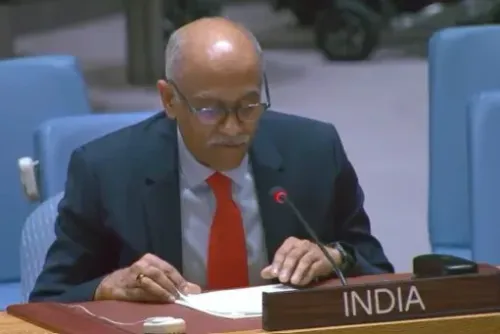
India's Permanent Representative P.
Harish called out 'double standards' and the protection of terrorists under the guise of 'freedom fighters.' This was the first GCTS review put to a formal vote since the strategy was launched in 2006 , after the US demanded a division.
The CCIT itself remains unadopted, requiring consensus that has so far proved unachievable.
The United Nations General Assembly (UNGA) on Wednesday, 2 July overwhelmingly backed a resolution urging member states to finalise the Comprehensive Convention on International Terrorism (CCIT) — a treaty framework first proposed by India more than 31 years ago that has yet to be adopted. The resolution, part of the Ninth Review of the UN Global Counter-Terrorism Strategy (GCTS), passed by 140 votes to 3, with the dissenting votes cast by the United States, Israel, and Argentina.
India's Push and the 31-Year Wait
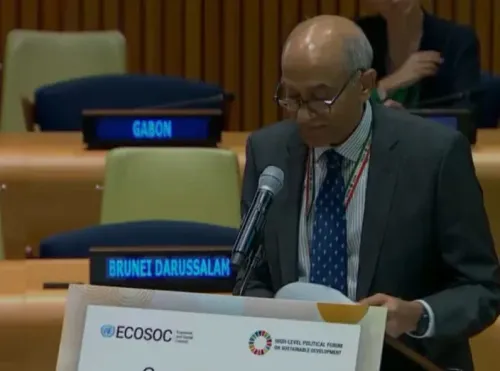
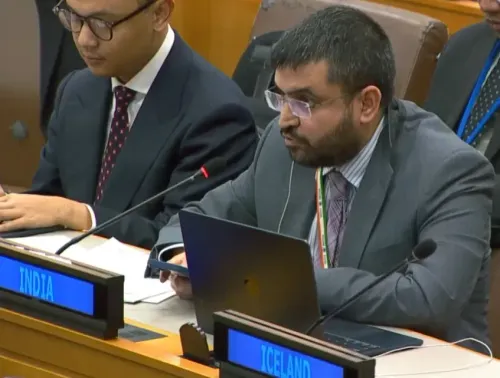
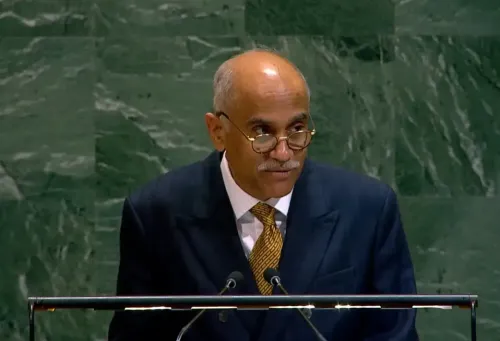
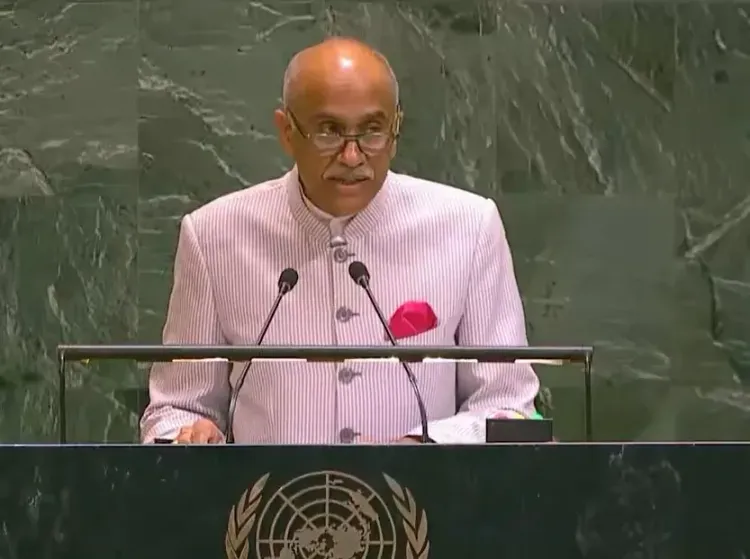
India's Permanent Representative P. Harish told the Assembly that the absence of a 'universally agreed legal framework' has fundamentally undermined the global fight against terrorism. He called on member states to demonstrate the political will needed to finally conclude the convention. The CCIT was first tabled by New Delhi in 1996, making this one of the longest-pending multilateral counter-terrorism instruments in UN history.
Harish underscored that effective international cooperation against terrorism is possible 'only if there are no double standards (and) only if there is no distinction between good or bad terrorists' — a pointed reference to nations that have historically shielded militant groups under the banner of resistance or liberation movements. Opposition to the CCIT has reportedly come from Pakistan and a number of other countries that critics say seek to distinguish between terrorists and so-called 'freedom fighters.'
Key Statements from India's Representative
'The international community must reject double standards in counter-terrorism,' Harish said. He further stated that 'there can be no justification for terrorism' and that it 'in all its forms and manifestations must be condemned unequivocally, irrespective of any grievance, political cause or strategic calculation.'
Harish also stressed the accountability dimension: 'There is an obligation to hold perpetrators, organisers, financiers and sponsors of terrorism accountable and bring them to justice,' adding that member states 'should ensure full cooperation in this regard.' He argued that the CCIT is 'essential to close normative gaps, strengthen prosecution and extradition, and deny terrorists and their sponsors access to safe havens, funds and arms.'
A Fractured Vote — and Why the US Broke Ranks
Since the GCTS was first approved by the General Assembly in 2006, its biennial reviews have consistently been adopted unanimously. This edition was the first to be put to a formal vote, at the insistence of the United States, which criticised the strategy document as 'bloated, outdated and lacking focus.' Only Israel and Argentina sided with Washington.
Notably, 49 countries abstained or absented themselves, effectively declining to take a position. Japan, which formally abstained, subsequently clarified that this was a technical error and that it supported the document.
India Raises Concern Over Selective Religious Bias
Harish also drew attention to what he described as the UN's narrow focus on Abrahamic faiths when addressing religiously motivated prejudice. 'As this is the United Nations, a multilateral forum of universal membership, our lens too should be universal,' he said.
'While we condemn all acts motivated by Islamophobia, Christianphobia and antisemitism, this august body must acknowledge that such phobias extend to other faiths as well,' he stated — a signal that India expects the UN's counter-prejudice framework to apply uniformly across all religious communities.
What Comes Next
Despite the strong vote in favour of the resolution, the CCIT itself remains unadopted, as it requires consensus among member states — a bar that has proven elusive for over three decades. The resolution's passage keeps diplomatic pressure alive, but structural disagreements over the definition of terrorism and the carve-outs sought by certain states continue to block a binding legal instrument. Whether the 140-vote mandate translates into renewed negotiating momentum at the Sixth Committee of the General Assembly remains to be seen.
Point of View
But the number obscures the real problem: the CCIT has been stalled for 31 years precisely because consensus — not a majority — is required to adopt it. The US walking away from a document it once helped shape is a significant signal of how fragmented the global counter-terrorism architecture has become. Meanwhile, Pakistan's long-standing resistance to the CCIT — rooted in protecting distinctions between 'terrorists' and 'freedom fighters' — continues to enjoy enough cover from abstentions to block a binding framework. India's push is principled, but without a credible enforcement pathway, another resolution risks being another entry in a long list of well-worded documents that change nothing on the ground.
NationPress
1 Oct 2026
Frequently Asked Questions
What is the Comprehensive Convention on International Terrorism (CCIT)?
The CCIT is a proposed international treaty first put forward by India in 1996 that aims to create a universal legal framework for defining, prosecuting, and extraditing terrorists. It has remained unadopted for 31 years due to disagreements among member states over the definition of terrorism and exemptions sought for certain militant groups.
What did the UNGA vote on 2 July decide?
The General Assembly passed the Ninth Review of the UN Global Counter-Terrorism Strategy by 140 votes to 3 on 2 July, with the resolution urging member states to make every effort to adopt the CCIT. The US, Israel, and Argentina voted against; 49 nations abstained or were absent.
Why did the United States vote against the UN counter-terrorism strategy?
The United States demanded a formal vote on the strategy — breaking from the tradition of unanimous adoption since 2006 — and criticised the document as 'bloated, outdated and lacking focus.' Only Israel and Argentina joined Washington in voting against it.
What are the main obstacles to adopting the CCIT?
The primary obstacle is disagreement over the definition of terrorism. Pakistan and some other countries have reportedly sought to exclude groups they consider 'freedom fighters' from the convention's scope, preventing the consensus required for adoption. India's representative P. Harish called this a 'double standard' that undermines global counter-terrorism cooperation.
What did India's UN representative say about religious bias at the UN?
Permanent Representative P. Harish argued that the UN's focus on combating Islamophobia, Christianphobia, and antisemitism should be extended to prejudice against all faiths, stating that the UN's 'lens too should be universal' given its universal membership.