UNGA President Baerbock: 'Small steps' taken on UNSC reform amid rising P5 tensions
Synopsis
UNGA President Annalena Baerbock visited New Delhi and delivered a frank assessment: after 17 years of debate, UNSC reform has produced only 'small steps'. With P5 members reportedly acting against the UN Charter and Africa still locked out of permanent membership, her acknowledgement of the veto initiative as progress underscores just how high the bar for meaningful reform remains.
Key Takeaways
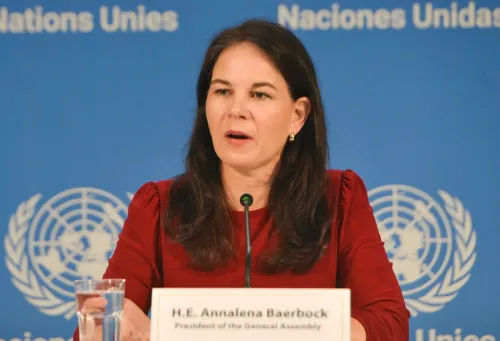
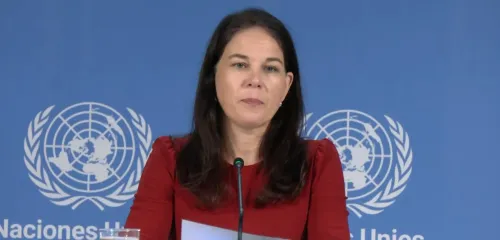
UNGA President Annalena Baerbock addressed a media briefing in New Delhi on 29 April 2025 , calling UNSC reform central to UN credibility.
Reform discussions have been ongoing for more than 17 years with no structural breakthrough; Baerbock has appointed two co-facilitators to lead the process.
The veto initiative — allowing blocked UNSC resolutions to be debated in the General Assembly — was cited as a concrete reform step.
The African Union , representing an entire continent, has no permanent seat on the Security Council — a gap Baerbock flagged as a key reform priority.
India has a reform proposal on the table and has long advocated for an expanded, more representative Security Council.
Baerbock is chairing the selection process for the next UN Secretary General , with four candidates already heard and further hearings planned.
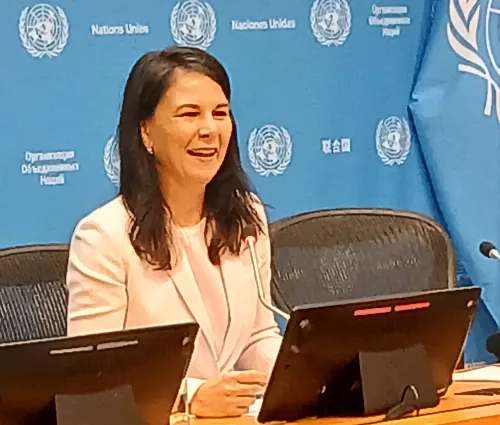
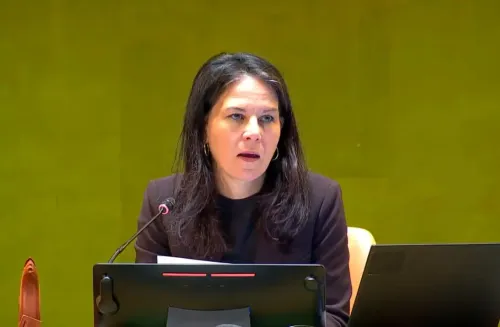
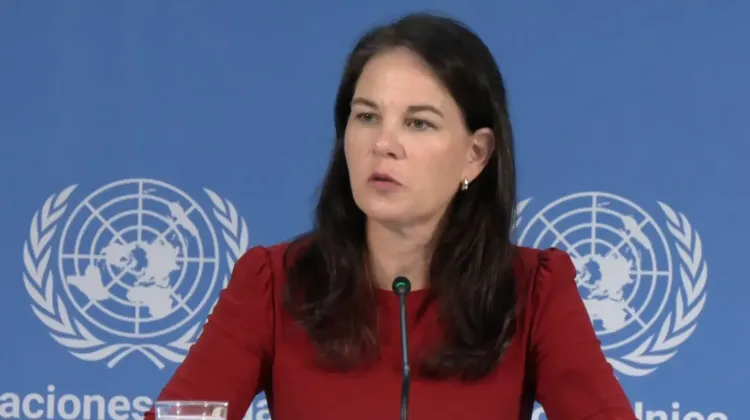
United Nations General Assembly (UNGA) President Annalena Baerbock on Tuesday, 29 April 2025, said that discussions on reforming the UN Security Council (UNSC) have intensified, but acknowledged that progress has amounted to only "small steps" so far. Addressing a media briefing in New Delhi, Baerbock noted that the credibility of the United Nations itself is tied to how seriously the world pursues UNSC reform.
A 17-Year Debate With No Breakthrough
Baerbock acknowledged the deep-rooted nature of the reform challenge. "This has been a debate going on for more than 17 years," she said, pointing to the Charter's provision granting five permanent members a special responsibility and the right to veto. She noted that she has appointed two co-facilitators to lead the reform process, with multiple proposals currently on the table — including one from India and several from the African Union.
The African Union's exclusion from permanent membership remains a particularly pointed grievance, given that the continent has no permanent representative on the 15-member Council. Baerbock highlighted this gap as a central element of the reform debate.
The Veto Initiative: A Concrete Step Forward
Among the tangible progress cited, Baerbock pointed to the veto initiative — a mechanism that routes blocked Security Council resolutions to the General Assembly for debate. "So, this reform step, that if the Security Council is being blocked, it comes to the General Assembly to debate it, is one also to strengthen the United Nations and its credibility," she said. The initiative was triggered following a veto against a resolution concerning the Strait of Hormuz.
Notably, Baerbock also stated that P5 members are currently acting against the UN Charter — a pointed remark that underscores the urgency driving reform conversations at the global level.
UN Secretary General Selection Process Under Way
Baerbock also addressed the ongoing selection process for the next UN Secretary General, which she is chairing in her capacity as UNGA President. She described the process as being conducted on a "transparent and neutral" basis, with each member state free to back candidates of their choosing.
"We had four candidates in the hearing last week, and the process will go on. The Security Council, which has a special role in it, will also hear the candidates. There will be an open town hall meeting with other candidates as well," she said, encouraging India to actively engage in the process. She emphasised that the next Secretary General would serve not just UN delegations, but "all people from around the world."
India's Long-Standing Push for UNSC Reform
India has consistently championed UNSC reform, arguing that the Council's current composition — frozen since 1945 — does not reflect contemporary geopolitical realities. The country is widely regarded as a leading candidate for a permanent seat in any expanded Council. India's reform pitch has gained traction through multilateral groupings such as the G4, which also includes Brazil, Germany, and Japan.
The UNSC currently comprises 15 members — five permanent members (China, France, Russia, the United Kingdom, and the United States) and 10 non-permanent members elected for two-year terms by the General Assembly. Current non-permanent members include Bahrain, Colombia, Congo, Greece, Denmark, Pakistan, Latvia, Liberia, Panama, and Somalia.
With reform co-facilitators now active and the veto initiative already in play, the coming months could determine whether the UN's long-stalled reform agenda moves from symbolic gestures to structural change.
Point of View
In effect, a structural deadlock. The P5's veto power is both the problem and the obstacle to its own solution — any meaningful reform requires the very members who benefit most from the status quo to vote against their own privilege. The veto initiative is a procedural workaround, not a power shift. India's case for a permanent seat is stronger than ever on demographic and economic grounds, yet the path runs through Beijing and Moscow — two capitals with little incentive to dilute their own influence. After 17 years of debate, the question is no longer whether the UNSC needs reform, but whether the UN has the political architecture to deliver it.
NationPress
19 Sept 2026
Frequently Asked Questions
What did UNGA President Annalena Baerbock say about UNSC reform?
Baerbock said that discussions on UNSC reform have increased and that the UN has taken 'small steps' forward, including the veto initiative. She made these remarks during a media briefing in New Delhi on 29 April 2025, noting that the reform debate has been ongoing for more than 17 years.
What is the veto initiative at the United Nations?
The veto initiative is a reform mechanism that allows the UN General Assembly to debate a resolution when it has been blocked by a veto in the Security Council. It was triggered following a veto against a resolution on the Strait of Hormuz and is seen as a step to strengthen UN credibility.
Why is the African Union's exclusion from the UNSC significant?
The African Union represents an entire continent but has no permanent seat on the Security Council, which many argue makes the Council unrepresentative of the modern world. Baerbock specifically highlighted this gap as a central element of the ongoing reform debate.
What is India's position on UNSC reform?
India has consistently called for UNSC reform, arguing that the Council's composition — unchanged since 1945 — does not reflect today's geopolitical realities. India has a reform proposal on the table and is widely seen as a leading candidate for a permanent seat in any expanded Council.
Who is overseeing the selection of the next UN Secretary General?
UNGA President Annalena Baerbock is chairing and convening the selection process in a transparent and neutral manner. Four candidates were heard the week before her New Delhi visit, with further hearings by the Security Council and an open town hall meeting still to come.