India's Counter-Terrorism Role Praised by UN Official in Key NY Meet
Synopsis
UN's Acting Counter-Terrorism chief Alexandre Zouev publicly praised India's longstanding role in global counter-terrorism at a high-level meeting with MEA Secretary Sibi George in New York — a diplomatic win that strengthens India's push for accountability against state-sponsored terror and its bid for greater UN influence.
Key Takeaways
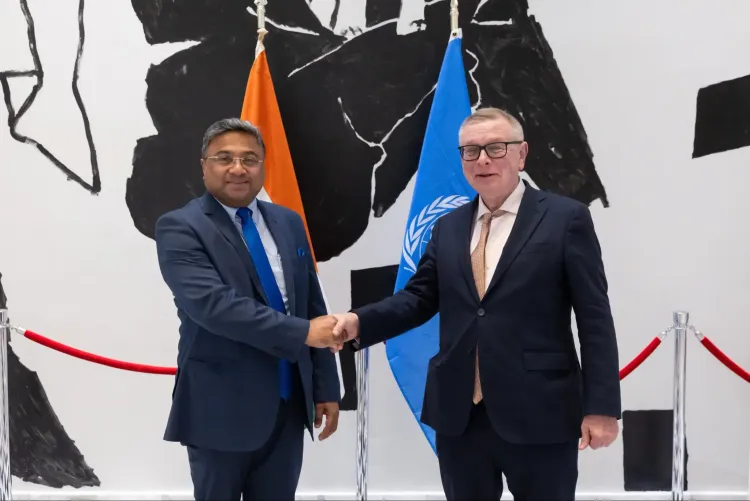
MEA Secretary (West) Sibi George met Alexandre Zouev , Acting Under-Secretary-General for Counter-Terrorism, in New York on April 24, 2025 .
Zouev publicly praised India's longstanding contributions to global counter-terrorism, including support to UNOCT and capacity-building programmes.
Both sides discussed preparations for UN Counter-Terrorism Week , scheduled from June 26 to July 2, 2026 .
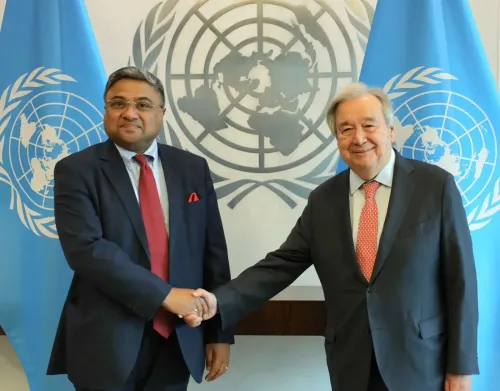
Sibi George also met UN Secretary-General António Guterres , reaffirming India's commitment to multilateralism and the India-UN Development Partnership Fund .
India is historically the largest troop-contributing nation to UN peacekeeping operations , a fact that featured prominently in George's meetings with senior UN officials.
The visit began with George paying tribute to the Mahatma Gandhi statue at the UN complex , symbolizing India's civilizational commitment to peace.
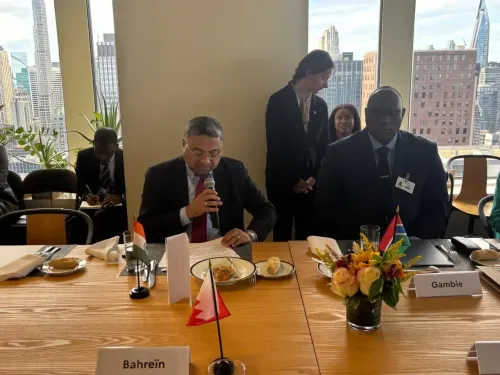
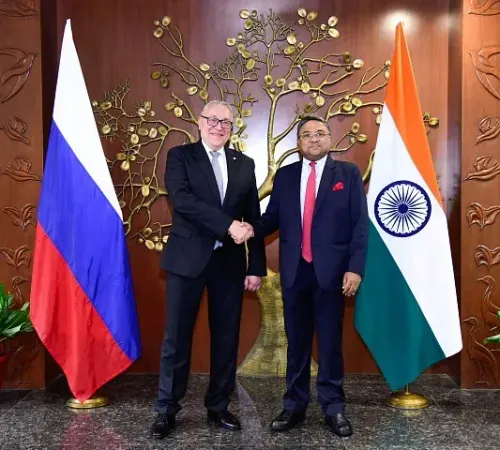
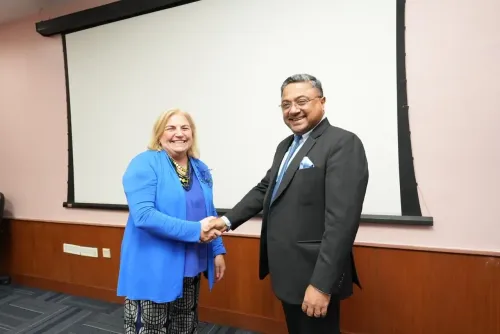
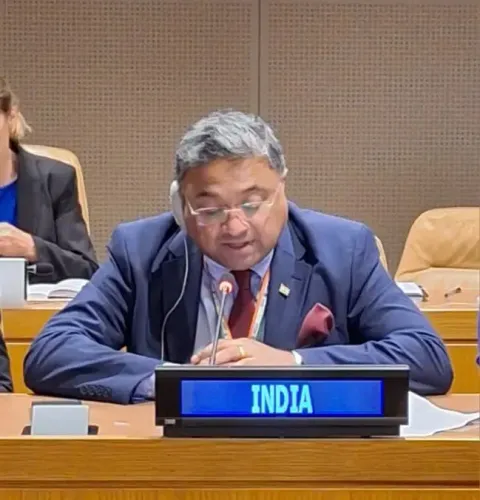
New York, April 24 — MEA Secretary (West) Sibi George held a high-level meeting with Alexandre Zouev, Acting Under-Secretary-General for Counter-Terrorism at the United Nations Office of Counter-Terrorism (UNOCT), reaffirming India's deepening role in global counter-terrorism architecture. The meeting, held on the sidelines of George's packed diplomatic visit to New York, underscored India's strategic positioning as a key partner in multilateral security frameworks.
India's Counter-Terrorism Cooperation Highlighted
Zouev commended India's longstanding and consistent contribution to global counter-terrorism efforts, specifically acknowledging New Delhi's financial and operational support to UNOCT and its active participation in capacity-building programmes worldwide. This recognition is significant — it comes at a time when terrorism financing, cross-border radicalization, and state-sponsored extremism are at the forefront of global security debates.
MEA spokesperson Randhir Jaiswal confirmed the meeting via the official X (formerly Twitter) handle of the Ministry, stating that both sides discussed India's strong cooperation with UNOCT in countering terrorism. UNOCT also posted on X, noting that the discussions covered strengthening bilateral cooperation and preparations for the upcoming Counter-Terrorism Week.
Counter-Terrorism Week 2026: India's Role in Focus
A key agenda item of the meeting was the preparation for Counter-Terrorism Week, scheduled from June 26 to July 2, 2026. This annual UN event brings together member states, civil society, and security experts to align strategies against evolving terrorist threats. India's active involvement in its planning signals New Delhi's intent to play a leadership role in shaping global counter-terror discourse.
This comes amid heightened global concern over the resurgence of extremist groups in South Asia and the Middle East, making India's institutional expertise and regional intelligence-sharing capabilities increasingly valuable to the UN system. Notably, India has been pushing for a Comprehensive Convention on International Terrorism (CCIT) at the UN for over two decades — a proposal that has repeatedly been blocked by geopolitical rivalries.
George's Broader Diplomatic Engagements at the UN
The meeting with Zouev was one of several high-profile interactions during Sibi George's visit to New York. He also met UN Secretary-General António Guterres, reiterating India's firm commitment to multilateralism at a time when global institutions face unprecedented stress from unilateralism and great-power competition.
During the Guterres meeting, George highlighted India's development partnerships with the Global South through flagship initiatives such as the India-UN Development Partnership Fund, which has supported over 75 projects across 57 developing countries since its inception. This positions India not just as a security partner but as a development leader within the UN ecosystem.
George also met Atul Khare, Under-Secretary-General for Operational Support, and Khaled Khiari, Assistant Secretary-General in the Departments of Political and Peacebuilding Affairs and Peace Operations, reaffirming India's steadfast commitment to UN peacekeeping operations — a domain where India has historically been the single largest troop-contributing nation.
India's Strategic Weight in UN Security Architecture
India's engagement with UNOCT is not merely symbolic. New Delhi has consistently backed UN Security Council resolutions on counter-terrorism, co-sponsored key resolutions, and contributed to the UN Trust Fund for Counter-Terrorism. This institutional investment gives India significant soft power leverage within multilateral security discussions.
Critically, this visit also carries a diplomatic subtext: India has long argued that certain UN member states provide safe havens to designated terrorist organizations. By deepening its institutional ties with UNOCT and being publicly praised by its leadership, India strengthens its moral authority in pushing for accountability mechanisms against state-sponsored terrorism — a pointed message directed at its neighborhood.
The visit began symbolically with George paying tribute to the statue of Mahatma Gandhi at the UN complex, a gesture that reinforced India's civilizational commitment to peace even as it sharpens its counter-terrorism diplomacy.
What Comes Next
As Counter-Terrorism Week (June 26 – July 2, 2026) approaches, India is expected to play a prominent role in agenda-setting and capacity-building workshops. New Delhi's growing institutional credibility within the UN system, combined with its push for UNSC permanent membership, makes these diplomatic engagements strategically consequential far beyond the headlines. Watch for India to leverage this goodwill in upcoming UNSC votes and in its ongoing campaign to designate cross-border terror groups.
Point of View
Being endorsed by UNOCT's acting chief strengthens its moral standing in global forums. What the mainstream narrative misses is the layered intent: every UN meeting Sibi George attended this week — from peacekeeping to counter-terrorism to Global South development — is a carefully orchestrated campaign to build India's case for a permanent UNSC seat. The real story is not one meeting; it is a coordinated diplomatic offensive.
NationPress
1 Oct 2026
Frequently Asked Questions
What did MEA Secretary Sibi George discuss with UN counter-terrorism official Alexandre Zouev?
MEA Secretary Sibi George met Alexandre Zouev, Acting Under-Secretary-General for Counter-Terrorism, to discuss India's cooperation with UNOCT and preparations for Counter-Terrorism Week (June 26–July 2, 2026). Zouev praised India's longstanding contributions to global counter-terrorism efforts and capacity-building programmes.
What is the UN Counter-Terrorism Week and when is it scheduled?
UN Counter-Terrorism Week is an annual event that brings together member states, civil society, and security experts to align global strategies against terrorism. The next edition is scheduled from June 26 to July 2, 2026.
Why is India's role in UN counter-terrorism significant?
India has been a consistent financial and operational supporter of UNOCT and has contributed to the UN Trust Fund for Counter-Terrorism. India has also been the largest troop-contributing nation to UN peacekeeping operations, giving it significant credibility in global security discussions.
Did Sibi George meet UN Secretary-General António Guterres during his New York visit?
Yes, Sibi George met UN Secretary-General António Guterres and reiterated India's strong commitment to multilateralism. They also discussed India's development initiatives for the Global South, including the India-UN Development Partnership Fund.
What is India's position on the Comprehensive Convention on International Terrorism (CCIT)?
India has been advocating for the adoption of the CCIT at the United Nations for over two decades, seeking a universal legal framework to combat terrorism. The proposal has faced repeated delays due to geopolitical disagreements among member states.