BRICS Counter-Terrorism Meet 2026: India pushes for resilient, future-ready CTWG
Synopsis
India used the 11th BRICS Counter Terrorism Working Group meeting — the first under its 2026 chairship — to push for a fundamentally stronger multilateral architecture against terror. MEA's Sibi George called out evolving funding networks, radicalisation, and tech-enabled terrorism as the bloc's defining security challenges, demanding an outcome-oriented CTWG rather than a declaratory one.
Key Takeaways
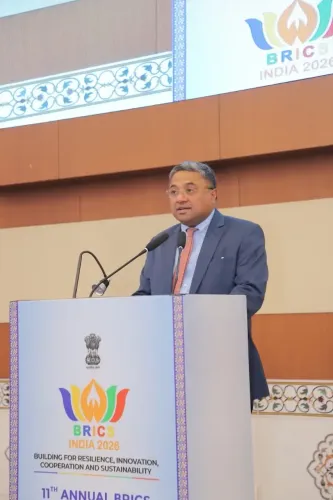
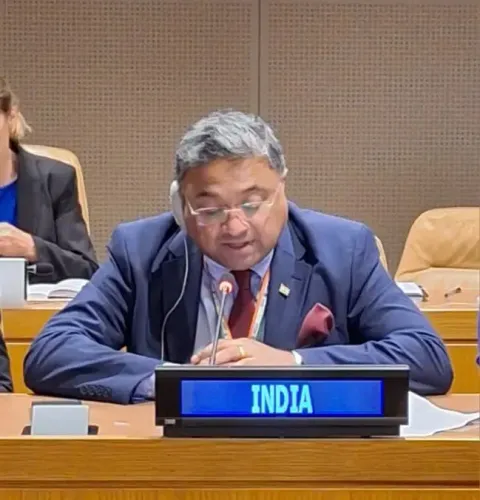
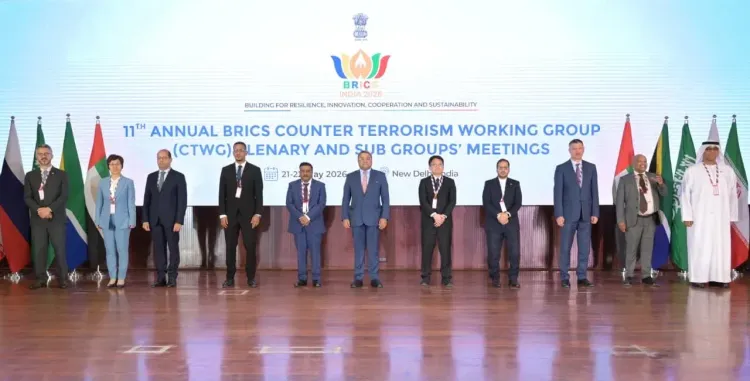
Sibi George , Secretary (West), MEA, delivered the keynote at the 11th BRICS CTWG Meeting in New Delhi on 21 May 2026 .
India called for zero tolerance against terrorism and a stronger, future-ready BRICS counter-terrorism framework .
Key threats flagged: terror financing evolution , radicalisation , and misuse of emerging technologies .
India holds the BRICS chair in 2026 under the theme 'Building for Resilience, Innovation, Cooperation and Sustainability' .
BRICS now includes Egypt, Ethiopia, Iran, Saudi Arabia, UAE (from January 2024), Indonesia (January 2025), and 10 Partner Countries added in 2025.
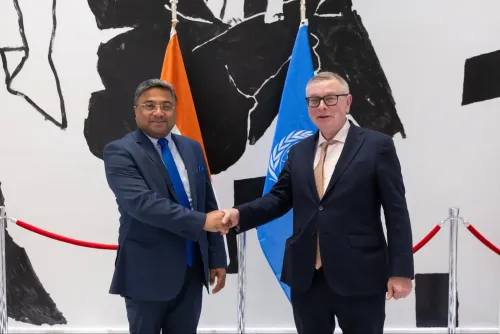
Sibi George, Secretary (West) at the Ministry of External Affairs (MEA), on Thursday, 21 May 2026, delivered the keynote address at the 11th Annual BRICS Counter Terrorism Working Group (CTWG) Meeting in New Delhi, pressing for a stronger, more adaptive multilateral framework to combat cross-border terrorism. George's address underscored India's zero-tolerance stance on terrorism in all its forms and called for unified BRICS action against evolving threats.
Key Concerns Raised by India
George highlighted three critical fault lines in the current global counter-terrorism architecture: the evolving terror funding ecosystem, the spread of radicalisation, and the exploitation of new and emerging technologies by terrorist networks. He stressed that tackling these challenges demands a robust, collaborative approach — one that is both comprehensive and sustained.
The senior diplomat called for strengthening existing global counter-terrorism structures through active international cooperation, urging BRICS nations to move beyond declaratory commitments toward concrete, outcome-oriented action.
Making BRICS CTWG Future-Ready
A central thrust of George's address was the need to make the BRICS CTWG more resilient, future-ready, innovative, inclusive and outcome-oriented. He also reaffirmed India's commitment to deepening counter-terrorism cooperation with BRICS member states in pursuit of a secure and terror-free world.
The statement was released by the MEA on X, signalling the government's intent to amplify its counter-terrorism diplomacy through multilateral platforms. Notably, India currently holds the BRICS chairship in 2026, guided by the theme 'Building for Resilience, Innovation, Cooperation and Sustainability' — a people-centric framework articulated by Prime Minister Narendra Modi at the 17th BRICS Summit in Rio de Janeiro in 2025.
BRICS: A Growing Bloc with Expanding Mandate
The grouping has expanded significantly since its origins. BRIC was formalised at the first meeting of BRIC Foreign Ministers on the sidelines of the United Nations General Assembly (UNGA) in New York in 2006, with the inaugural BRIC Summit convened in Yekaterinburg, Russia, in 2009. South Africa joined at the BRIC Foreign Ministers' meeting in 2010, attending the third BRICS Summit in 2011.
The bloc expanded further when Egypt, Ethiopia, Iran, Saudi Arabia and the UAE became full members from January 2024, followed by Indonesia in January 2025. An additional ten nations — Belarus, Bolivia, Kazakhstan, Cuba, Malaysia, Nigeria, Thailand, Uganda, Uzbekistan and Vietnam — joined as Partner Countries in 2025.
Why This Meeting Matters
The 11th CTWG meeting comes at a time when global terror networks are increasingly leveraging artificial intelligence, encrypted communications, and decentralised financing. For India — which has consistently faced cross-border terrorism — pushing for a strengthened BRICS counter-terrorism mechanism is both a strategic and diplomatic priority. This is the first such meeting held under India's 2026 BRICS chairship, lending it added political weight.
The outcomes of this working group are expected to feed into broader BRICS deliberations as India steers the bloc's agenda through the year.
Point of View
New Delhi has a rare window to institutionalise counter-terrorism standards across a bloc that now spans over a dozen nations with widely varying security postures. The call for an 'outcome-oriented' CTWG is a pointed critique of the group's historically declaratory record. The real challenge is that BRICS expansion has brought in members — including Iran — whose definitions of terrorism diverge sharply from India's. Getting consensus on cross-border terrorism, a category that directly implicates Pakistan, will test whether India can convert chairship into substantive policy wins or whether the communique remains aspirational.
NationPress
7 Oct 2026
Frequently Asked Questions
What is the BRICS Counter Terrorism Working Group (CTWG)?
The BRICS Counter Terrorism Working Group is a multilateral body within the BRICS framework dedicated to coordinating counter-terrorism efforts among member states. It addresses threats including terror financing, radicalisation, and the use of emerging technologies by terrorist networks.
What did India say at the 11th BRICS CTWG Meeting?
India's MEA Secretary (West) Sibi George called for a resilient, future-ready, and outcome-oriented BRICS CTWG at the meeting held in New Delhi on 21 May 2026. He stressed zero tolerance against terrorism and urged stronger international cooperation to tackle evolving threats.
Why is the 2026 BRICS CTWG meeting significant for India?
India holds the BRICS chairship in 2026, making this the first CTWG meeting under its presidency. It gives India an opportunity to shape the bloc's counter-terrorism agenda and push for concrete mechanisms rather than declaratory commitments.
How has BRICS expanded in recent years?
Egypt, Ethiopia, Iran, Saudi Arabia, and the UAE became full BRICS members from January 2024, followed by Indonesia in January 2025. Ten more nations — including Malaysia, Nigeria, and Vietnam — joined as Partner Countries in 2025, significantly broadening the bloc's reach.
What is India's 2026 BRICS chair theme?
India's 2026 BRICS chairship is guided by the theme 'Building for Resilience, Innovation, Cooperation and Sustainability,' a people-centric framework articulated by Prime Minister Narendra Modi at the 17th BRICS Summit in Rio de Janeiro in 2025.