UNSC must not legitimise terrorists through de-listing, India warns
Synopsis
India's top diplomat at the UN called out the Security Council's use as a tool to shield terrorists — in a thinly veiled attack on Pakistan's manoeuvring within the body. With key counter-terrorism committees leaderless for eight months and reform talks stalled, India is pushing hard for accountability at the world's most powerful multilateral forum.
Key Takeaways
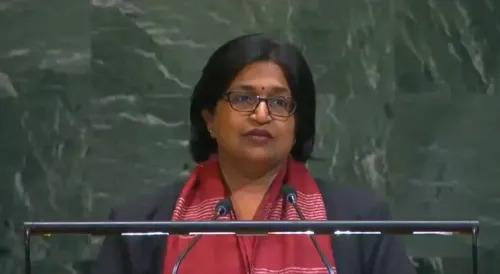
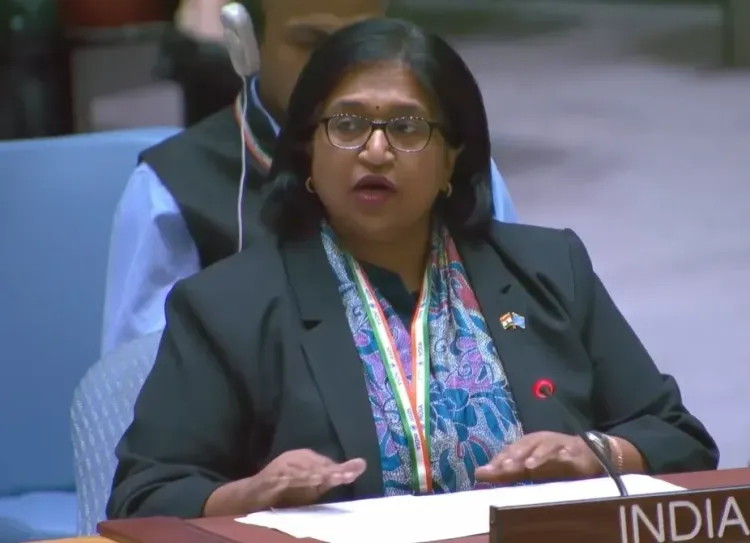
Yojna Patel , India's Charge d'Affaires at the UN, on Wednesday warned that the UNSC must not be used to de-list terrorists or list entities based on political motives.
Pakistan and China attempted this year to designate the Baloch Liberation Army and Majeed Brigade as UN-sanctioned terror groups; the bid was blocked by the US , France , and Britain .
The UNSC's sanctions and counter-terrorism subsidiary bodies have been without chairs for over 8 months , with Pakistan reportedly seeking to head the sanctions committee.
China had for years blocked the UN designation of Masood Azhar (Jaish-e-Mohammad) and Sajid Mir (Lashkar-e-Taiba) as global terrorists.
India renewed its call for UNSC reform through text-based negotiations with 'defined milestones and timelines,' including expansion of both permanent and non-permanent seats.
Japan 's Deputy Permanent Representative Mikanagi Tomohiro also expressed 'serious concern' over the delay in appointing committee chairs.
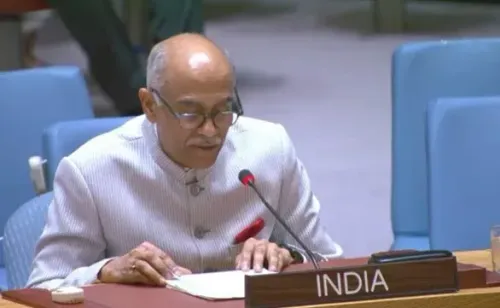
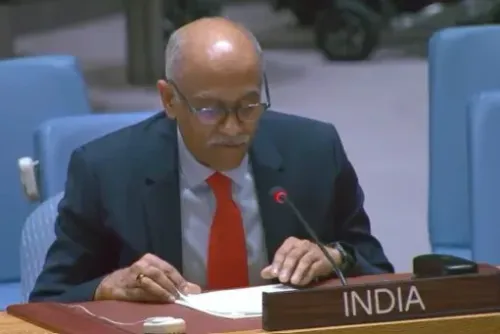
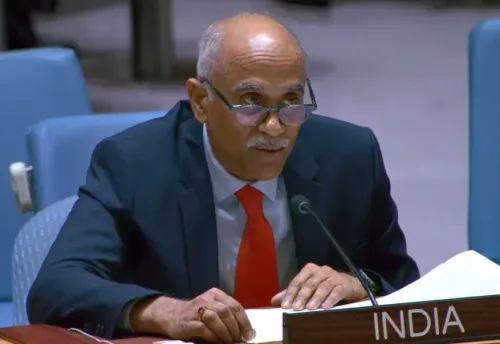
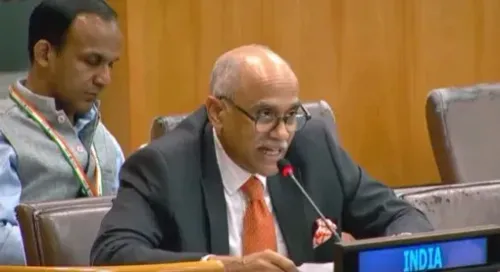
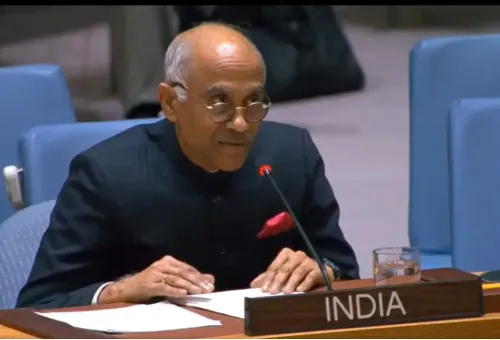
India on Wednesday issued a pointed warning at the United Nations Security Council (UNSC), calling for greater transparency in the listing and de-listing of terrorist organisations and stating that the Council must not be used to shield or legitimise terror groups for political ends. The remarks, delivered at the Council's Open Debate on Working Methods in New York, carried an implied rebuke of Pakistan's conduct within the Council.
India's Core Demand
Yojna Patel, Charge d'Affaires of India's Permanent Mission to the United Nations, said the Security Council's authority must not be 'instrumentalised to legitimise terrorists by attempting to de-list them or to list other entities as terrorist organisations based solely on political considerations, without any objective criteria or supporting documentation.'
Patel stressed that Security Council membership 'brings significant responsibilities' and 'must not become a platform to pursue narrow political interests.' She called for 'more transparency and objectivity' in the listing and de-listing process, which she described as currently 'shrouded in secrecy.'
The Pakistan-China Backdrop
The remarks come against a well-documented backdrop of political manoeuvring within the Council. Earlier this year, Pakistan and China attempted to have the Baloch Liberation Army and the Majeed Brigade designated as terrorist groups subject to UN sanctions — a bid that was blocked by the United States, France, and Britain.
Pakistan, currently an elected member of the Council, has also reportedly sought to have certain terror groups and individuals it is accused of sheltering removed from existing sanctions lists. For years, China used procedural blocks to delay the designation of Jaish-e-Mohammad chief Masood Azhar and Lashkar-e-Taiba leader Sajid Mir as global terrorists under UN sanctions.
Leaderless Committees and the Stalemate
A separate but related concern raised by Patel was the prolonged absence of chairs for the Council's subsidiary bodies — including the sanctions committee and the counterterrorism committee. Even after eight months, the Council has failed to appoint chairs, primarily because Pakistan is reportedly seeking to head the sanctions committee. Since the Council operates on consensus on such appointments, the deadlock has persisted.
'These bodies have not been able to deliver optimally in the recent past, primarily due to the delay in finalising the Chairs,' Patel said. She called on the Council to 'urgently address this issue and finalise the Chairs on priority,' and demanded a 'definitive and non-negotiable timeline' for doing so.
Japan's Deputy Permanent Representative Mikanagi Tomohiro echoed the concern, expressing 'serious concern' about the delay and urging that 'agreement be reached without further delay, through balanced, transparent, efficient and inclusive consultations.'
Call for UNSC Reform
Patel also used the platform to renew India's long-standing demand for structural reform of the Security Council, describing its current architecture as 'anachronistic' — a structure based on 'the outcome of one conflict 80 years ago' when it was shaped by the victors of World War II.
She called for expanding both the permanent and non-permanent memberships, to be pursued through 'text-based negotiations, with clearly defined milestones and timelines.' The existing reform process — the Intergovernmental Negotiations — has stalled, reportedly because a bloc of countries led by Italy and including Pakistan has used procedural moves to block the adoption of a negotiating text.
On peacekeeping, Patel argued that troop- and police-contributing countries — which extend well beyond the Council's membership — must be included in UNSC decision-making on mandates and resources, given that they are 'direct stakeholders' in those operations.
With the Council's counter-terrorism architecture effectively paralysed and reform negotiations deadlocked, India's intervention signals a sharper push for accountability at the UN — one that is likely to intensify as its own bid for permanent membership gains momentum.
Point of View
And China's history of procedural blocks on terror designations. What is striking is that India is now naming the structural dysfunction explicitly: a Council paralysed by consensus rules that a single obstructionist member can exploit. The eight-month chair vacancy in the sanctions committee is not a bureaucratic footnote — it is a live example of how geopolitical rivalry degrades multilateral counter-terrorism. India's push for reform and transparency is principled, but it will go nowhere without the P5's buy-in, which remains elusive.
NationPress
5 Oct 2026
Frequently Asked Questions
What did India say at the UNSC about terrorism and de-listing?
India's Charge d'Affaires Yojna Patel warned that the Security Council must not be used to de-list terrorist organisations or designate entities based on narrow political interests without objective criteria. She called for greater transparency and objectivity in the listing and de-listing process.
Why is Pakistan's role at the UNSC under scrutiny?
Pakistan, as an elected Council member, has reportedly sought to remove certain terror groups and individuals from UN sanctions lists. Earlier in 2025, Pakistan and China attempted to designate the Baloch Liberation Army and Majeed Brigade as sanctioned terror groups, a move blocked by the US, France, and Britain.
Why have UNSC subsidiary body chairs been vacant for eight months?
The Council has been unable to appoint chairs for key subsidiary bodies — including the sanctions and counter-terrorism committees — because Pakistan is reportedly seeking to lead the sanctions committee. Since appointments require consensus, no agreement has been reached, leaving the bodies without leadership for over eight months.
What is India's position on UNSC reform?
India has called for expanding both permanent and non-permanent memberships of the Security Council through text-based negotiations with clearly defined milestones and timelines. It has criticised the current structure as outdated, shaped by the post-World War II order of 80 years ago.
How did China block terror designations at the UN in the past?
China used procedural mechanisms within the Security Council for years to block the designation of Jaish-e-Mohammad chief Masood Azhar and Lashkar-e-Taiba leader Sajid Mir as global terrorists under UN sanctions, drawing repeated criticism from India and Western nations.