India pushes CCIT adoption at UN, cites Pahalgam attack killing 26 civilians
Synopsis
India has brought the 30-year-old deadlock over the Comprehensive Convention on International Terrorism back to the UN's table, using the Pahalgam massacre — 26 civilians killed, responsibility claimed by a Lashkar-e-Taiba proxy — as a live case for why a binding global anti-terror law can no longer wait. The move signals India's intent to prosecute its counter-terror diplomacy through legal, not just military, channels.
Key Takeaways
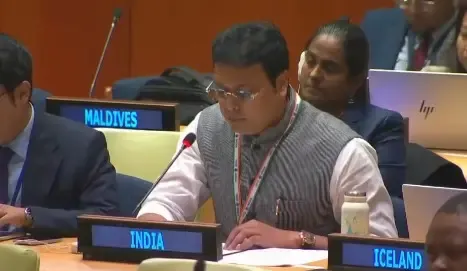
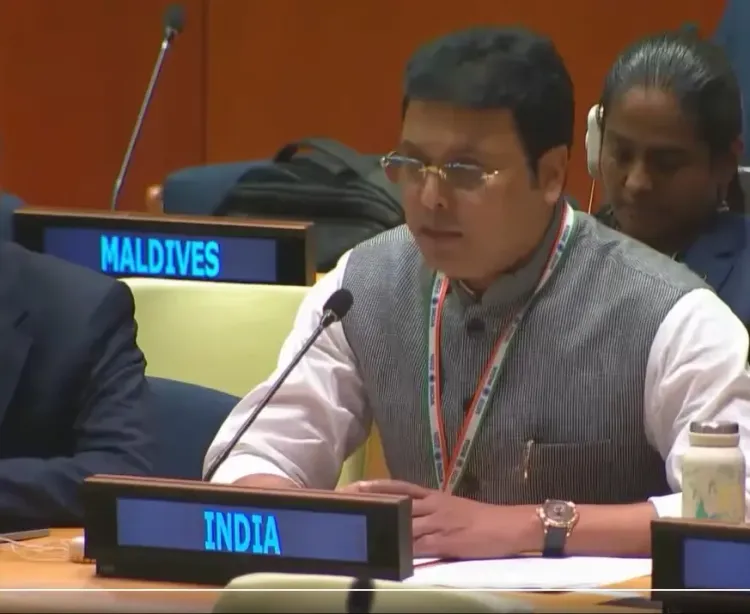
BJP MP Biplab Kumar Deb addressed the UN General Assembly's Sixth Committee on 7 October , urging early adoption of the CCIT .
The Pahalgam terrorist attack , which killed 26 civilians , was cited as a central example of cross-border terrorism requiring legal accountability.
The Resistance Front , a proxy of Pakistan-based Lashkar-e-Taiba , claimed responsibility for the Pahalgam attack.
The CCIT , proposed by India in 1996 , has been blocked for nearly 30 years over disputes about exempting so-called 'freedom fighters'.
India outlined six counter-terrorism priorities , including ending terrorist financing, combating misuse of emerging technologies, and placing victims at the centre of policy.
India on 7 October pressed for the early adoption of the long-stalled Comprehensive Convention on International Terrorism (CCIT) at the United Nations General Assembly, invoking the Pahalgam terrorist attack that killed 26 civilians as a stark example of why a binding global legal framework against terrorism is urgently needed.
India's Stand at the UN Sixth Committee
Biplab Kumar Deb, Bharatiya Janata Party (BJP) Member of Parliament, former Chief Minister of Tripura, and a member of India's delegation to the General Assembly, addressed the Sixth Committee — the body that handles international legal affairs. Deb called for the unambiguous accountability of all those involved in cross-border terrorism, stating it was essential to hold to account 'the perpetrators, organisers, financiers, and sponsors' of attacks such as the Pahalgam massacre.
Deb also strongly reiterated India's right to defend its citizens against cross-border terrorism. India has publicly accused Pakistan of being a state sponsor of cross-border terrorism, and following the Pahalgam attack, reportedly retaliated against terrorist bases operating on Pakistani territory.
What Is the CCIT and Why Has It Stalled
The Comprehensive Convention on International Terrorism was first proposed by India in 1996 and has remained blocked for nearly 30 years. A core point of contention is the refusal of certain countries to accept a universal definition of terrorism, with some insisting that 'freedom fighters' — those engaged in what they term liberation struggles — should be exempt from the convention's provisions.
Deb rejected this distinction outright, asserting that there can be no differentiation between 'good' and 'bad' terrorism and that no justification exists for targeting civilians. India's position is that the CCIT is essential to strengthening the international legal architecture against terrorism, and its continued absence leaves a critical gap in global counter-terror law.
The Pahalgam Attack and Its Claimed Perpetrators
The Resistance Front, widely identified as a proxy of the Pakistan-based Lashkar-e-Taiba, claimed responsibility for the Pahalgam attack in which 26 innocent civilians were killed. The attack has since become a key reference point in India's diplomatic and legal arguments at multilateral forums, with New Delhi pressing for international recognition of the cross-border dimensions of the assault.
India's Six Counter-Terrorism Priorities
Deb outlined six priorities that India is pursuing in global counter-terrorism discussions. These are: ending terrorist financing; deploying early adoption of the CCIT to strengthen the legal framework; addressing the misuse of emerging technologies for recruitment, radicalisation, propaganda, and operational planning; placing victims at the centre of policy; strengthening nationally owned capacity-building; and confronting terrorist ideology while dismantling terrorist infrastructure.
The emphasis on emerging technology is particularly notable, as terrorist groups increasingly exploit encrypted communications, social media algorithms, and cryptocurrency channels to evade traditional detection methods.
What Comes Next
India's push at the Sixth Committee is part of a sustained diplomatic offensive following the Pahalgam attack. With the CCIT still deadlocked, the immediate focus will be on whether sufficient consensus can be built among UN member states to break the three-decade impasse. Observers say the Pahalgam attack may provide fresh political momentum, but structural disagreements over the definition of terrorism remain unresolved.
Point of View
Not just a diplomatic gesture. By tabling the CCIT argument alongside a named, claimed attack with a clear state-link accusation, New Delhi is building a multilateral record that could serve both judicial and political purposes. The convention's 30-year stall reveals the real fracture line: countries that sponsor or tolerate proxy forces will never accept a definition of terrorism that criminalises their tools. India's six-priority framework is substantive, but the CCIT's fate will ultimately hinge on whether the US, the EU, and the Global South can be aligned against the holdouts — a coalition New Delhi has not yet fully assembled.
NationPress
7 Oct 2026
Frequently Asked Questions
What is the Comprehensive Convention on International Terrorism (CCIT)?
The CCIT is a proposed UN treaty that would create a single, binding legal framework against terrorism, covering prosecution, extradition, and denial of funding to terrorist groups. India first proposed it in 1996, but it has remained blocked for nearly 30 years due to disagreements over the definition of terrorism, particularly over whether 'freedom fighters' should be exempt.
Why did India cite the Pahalgam attack at the UN?
India cited the Pahalgam attack — in which 26 civilians were killed and which The Resistance Front, a proxy of Pakistan-based Lashkar-e-Taiba, claimed responsibility for — to illustrate the urgent need for a binding international legal mechanism to hold perpetrators, financiers, and state sponsors of cross-border terrorism accountable.
Who represented India at the UN Sixth Committee session?
BJP MP and former Tripura Chief Minister Biplab Kumar Deb represented India. He is a national general secretary of the BJP and a member of India's delegation to the UN General Assembly.
What are India's six counter-terrorism priorities outlined at the UN?
India's six priorities are: early adoption of the CCIT to strengthen the legal framework; ending terrorist financing; addressing the misuse of emerging technologies; placing victims at the centre of policy; strengthening nationally owned capacity-building; and confronting terrorist ideology while dismantling terrorist infrastructure.
Why has the CCIT remained blocked for 30 years?
The convention has stalled because certain countries refuse to accept a universal definition of terrorism, arguing that it should not apply to 'freedom fighters' engaged in liberation struggles. India and others reject this distinction, asserting that targeting civilians can never be justified regardless of the stated political motive.