BRICS Parliamentary Forum condemns Pahalgam attack, demands zero tolerance on cross-border terrorism
Synopsis
For the second time in weeks, BRICS has formally condemned the April 2025 Pahalgam attack — this time through a parliamentary-level Joint Declaration that demands zero tolerance for terrorism, targets cross-border safe havens, and calls for fast-tracking the UN’s long-stalled Comprehensive Convention on International Terrorism. India’s diplomatic push for multilateral backing is gaining clear traction.
Key Takeaways
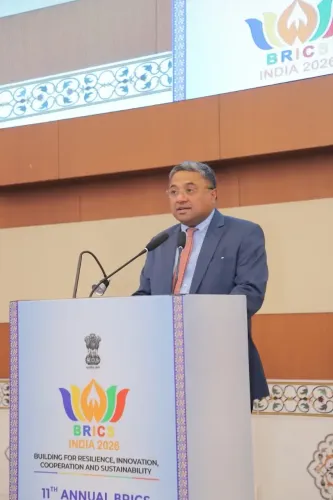
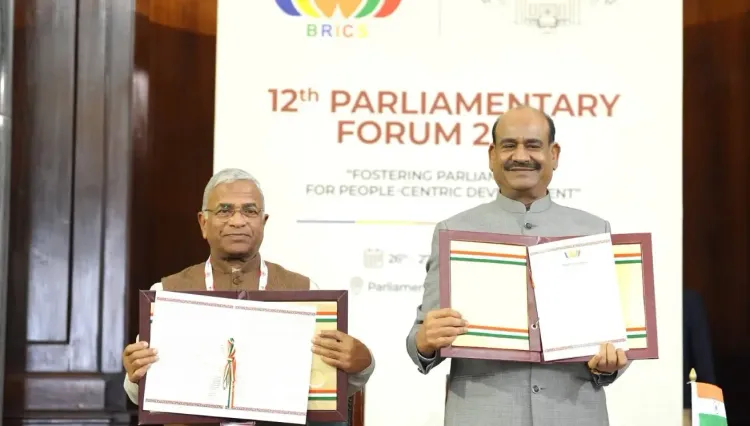
The 12th BRICS Parliamentary Forum in New Delhi concluded on 27 October 2026 with a Joint Declaration condemning the Pahalgam terrorist attack of 22 April 2025 .
26 people were killed in the Pahalgam attack; the declaration called it ‘criminal and unjustifiable.’ Members demanded zero tolerance for terrorism and explicitly rejected double standards in counter-terrorism efforts.
The forum backed the BRICS Counter-Terrorism Working Group (CTWG) and its five subgroups , and called for expeditious adoption of the UN Comprehensive Convention on International Terrorism .
This is the second consecutive BRICS-level condemnation of Pahalgam, following the 18th BRICS Summit’s ‘New Delhi Declaration 2026’ last month.
The declaration also condemned unilateral economic sanctions and called for restraint amid escalating tensions in West Asia .
The 12th BRICS Parliamentary Forum, held over two days in New Delhi, concluded on Tuesday, 27 October 2026 with member nations issuing a Joint Declaration that strongly condemned the 22 April 2025 terrorist attack in Pahalgam, Jammu and Kashmir, in which 26 people were killed and many more injured. The declaration reaffirmed BRICS members' collective commitment to combatting terrorism in all its forms, explicitly calling out cross-border movement of terrorists, terrorism financing, and safe havens.
What the Joint Declaration Said
The declaration adopted by BRICS parliamentary representatives pulled no punches. “We express strong condemnation of any acts of terrorism as criminal and unjustifiable, regardless of their motivation, whenever, wherever and by whomsoever committed. We condemn in the strongest terms the terrorist attack in Jammu and Kashmir on 22 April 2025, during which 26 people were killed and many more injured,” the document stated.
The declaration further stressed that terrorism must not be linked to any religion, nationality, civilisation, or ethnic group, and demanded that all individuals involved in terrorist activities and their support networks “be held accountable and brought to justice in accordance with relevant national and international law.” The forum urged member states to ensure “zero tolerance for terrorism” and explicitly “rejected double standards in countering terrorism” — language widely read as directed at states that distinguish between militant groups based on strategic interest.
Counter-Terrorism Cooperation and the UN Framework
Forum participants welcomed the activities of the BRICS Counter-Terrorism Working Group (CTWG) and its five subgroups, which operate under the BRICS Counter-Terrorism Strategy, the BRICS Counter-Terrorism Action Plan, and the CTWG Position Paper. Members called for deepening cooperation and urged the expeditious finalisation and adoption of the Comprehensive Convention on International Terrorism within the United Nations framework. They also called for concerted action against all UN-designated terrorist organisations and individuals.
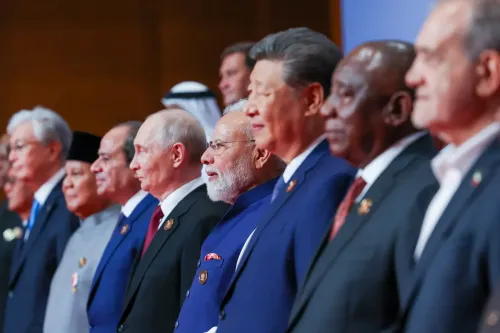
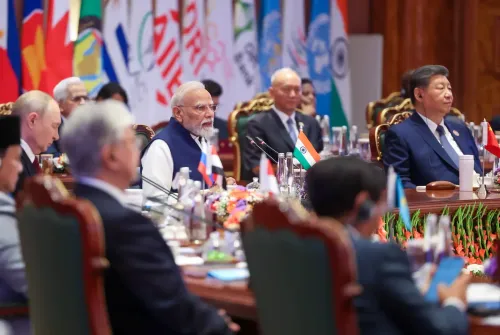
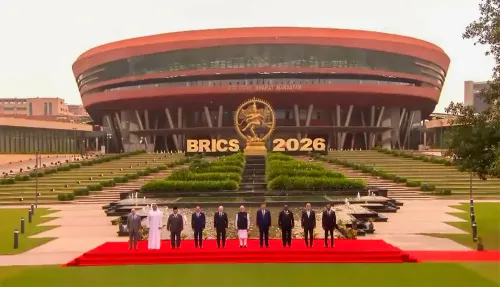
Notably, this is the second major multilateral declaration in as many months to condemn the Pahalgam attack. Last month, top BRICS leaders had gathered in New Delhi for the 18th BRICS Summit, where the ‘New Delhi Declaration 2026’ was adopted, which also condemned the attack and used strong language against cross-border terrorism financing and safe havens.
West Asia Concerns and Unilateral Sanctions
The forum also expressed “deep concern” over the continued escalation of tensions in West Asia, calling for maximum restraint and urging all parties to avoid actions that could further aggravate the situation. Members called for the protection of civilians and civilian infrastructure in line with the UN Charter, including respect for state sovereignty and territorial integrity.
On the economic front, the Joint Declaration condemned “the imposition of unilateral coercive measures that are contrary to international law,” including unilateral economic sanctions and secondary sanctions, citing their “far-reaching negative implications on human rights, including the right to development, health and food security.” The forum called for the elimination of such measures, which it said undermine international law and the UN Charter.
Significance for India
India has consistently sought multilateral backing for its position on cross-border terrorism following the Pahalgam attack, and securing two back-to-back BRICS-level condemnations — first at the leaders’ summit and now at the parliamentary forum — represents a diplomatic reinforcement of that posture. The forum’s call for an expedited UN Comprehensive Convention on International Terrorism also aligns with a longstanding Indian diplomatic priority at the United Nations.
With the CTWG framework deepening and multilateral consensus firming, the next test will be whether these declarations translate into concrete, verifiable counter-terrorism actions by all member states.
Point of View
Now at the parliamentary forum — signal that India has successfully institutionalised the issue within one of its most important multilateral platforms. But declarations are easier than enforcement: the BRICS grouping includes members with documented ties to groups that other members classify as terrorist organisations, making the ‘zero tolerance’ language diplomatically significant yet practically untested. The call to fast-track the UN Comprehensive Convention on International Terrorism, stalled for decades, is the real litmus test. If BRICS states can translate this parliamentary consensus into coordinated action at the UN, it would mark a genuine shift — not just a ritual condemnation.
NationPress
27 Oct 2026
Frequently Asked Questions
What did the BRICS Parliamentary Forum declare about the Pahalgam attack?
The 12th BRICS Parliamentary Forum, held in New Delhi, issued a Joint Declaration on 27 October 2026 that condemned the 22 April 2025 terrorist attack in Pahalgam, Jammu and Kashmir, in which 26 people were killed. The declaration called the attack ‘criminal and unjustifiable’ and reaffirmed BRICS members’ commitment to combatting terrorism in all its forms, including cross-border terrorism financing and safe havens.
What is the BRICS Counter-Terrorism Working Group?
The BRICS Counter-Terrorism Working Group (CTWG) is a multilateral body within the BRICS framework that coordinates counter-terrorism cooperation among member states. It operates under the BRICS Counter-Terrorism Strategy and Action Plan, and consists of five subgroups; the forum called for deepening its work and finalising the UN’s Comprehensive Convention on International Terrorism.
Has BRICS condemned the Pahalgam attack before?
Yes. The 18th BRICS Summit held in New Delhi last month adopted the ‘New Delhi Declaration 2026,’ which also condemned the Pahalgam attack and used strong language against cross-border terrorism. The 12th BRICS Parliamentary Forum’s declaration marks the second consecutive BRICS-level condemnation of the attack.
What did the BRICS forum say about unilateral sanctions?
The Joint Declaration condemned unilateral coercive measures, including economic and secondary sanctions, calling them contrary to international law. It warned that such measures have far-reaching negative implications on human rights, development, health, and food security, and called for their elimination.
What is the Comprehensive Convention on International Terrorism?
The Comprehensive Convention on International Terrorism is a proposed UN treaty that would provide a universal legal framework for prosecuting terrorism. It has been under negotiation at the United Nations for decades but remains unadopted due to disagreements among member states. BRICS members at the parliamentary forum called for its expeditious finalisation and adoption.