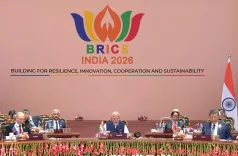
BRICS New Delhi Declaration 2026 addresses all India-raised issues, including Pahalgam attack

Synopsis
The 18th BRICS Summit's New Delhi Declaration delivered a rare multilateral condemnation of the Pahalgam terror attack and a 'zero tolerance' mandate against terrorism — precisely the outcomes India had sought. For New Delhi, getting a bloc that includes China and Russia to explicitly back its counterterrorism positions is a diplomatic achievement that goes well beyond symbolism.
Key Takeaways
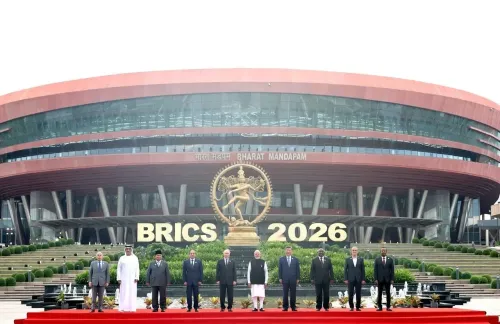
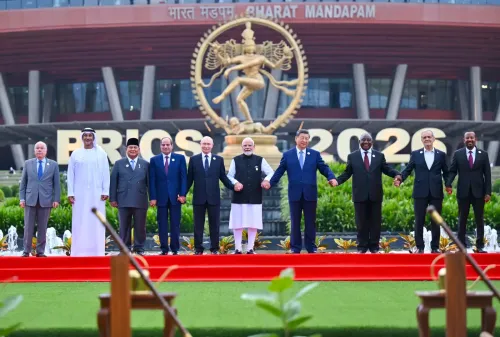
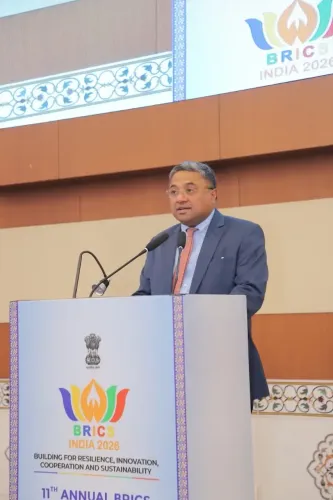
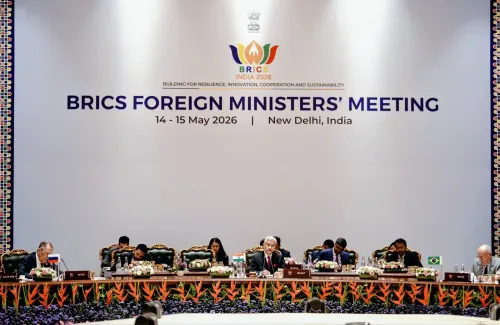
The New Delhi Declaration 2026 was adopted at the 18th BRICS Summit in New Delhi .
The declaration condemned the Pahalgam terror attack of 22 April 2025 , in which 26 tourists were killed in Jammu and Kashmir .
BRICS nations committed to 'zero tolerance' against terrorism, including cross-border movement of terrorists and terror financing.
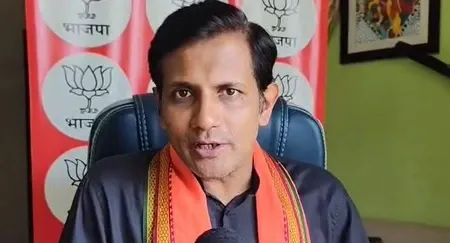
BJP MP Praveen Khandelwal confirmed the declaration addressed all key issues raised by India, including terrorism and terror financing.
PM Narendra Modi was credited with building consensus among participating nations on development and peace.
The declaration rejected 'double standards in countering terrorism,' a phrase widely seen as directed at state sponsors of cross-border militancy.
The 18th BRICS Summit concluded in New Delhi with the adoption of the New Delhi Declaration 2026, a joint document that incorporated all key issues raised by India — including terrorism, terror financing, and the condemnation of the Pahalgam terror attack of 22 April 2025, in which 26 tourists were killed. The declaration marks a significant diplomatic win for India on the international stage.
India's Priorities Reflected in the Declaration
BJP MP Praveen Khandelwal welcomed the summit's outcome, stating that the New Delhi Declaration addressed India's core concerns. 'The New Delhi Declaration adopted at the BRICS Summit included all the issues raised by India. The Pahalgam terror attack was strongly condemned, while a strong resolution on terror financing was also passed,' Khandelwal said.
The declaration explicitly condemned the Pahalgam attack 'in the strongest terms,' describing it as an act carried out on 22 April 2025 in which 26 people were killed and many more injured. The document reiterated the BRICS nations' collective resolve to combat terrorism 'in all its forms and manifestations, including the cross-border movement of terrorists, terrorism financing and safe havens.'
United Front Against Terrorism
Shiv Sena MLC Manisha Kayande highlighted the significance of BRICS nations presenting a unified front against terrorism. 'The representatives of various countries who attended the BRICS Summit have all raised their voices against terrorism and condemned the Pahalgam attack. This is an important development,' she said, adding that the collective condemnation demonstrated that participating nations did not support terrorism in any form.
The declaration further stated: 'We reiterate that terrorism should not be associated with any religion, nationality, civilization or ethnic group and that all those involved in terrorist activities and their support must be held accountable and brought to justice in accordance with relevant national and international law.'
Modi's Role in Building Consensus
BJP MP Janardan Singh Sigriwal described the summit as a success that delivered a strong message to the international community. He credited Prime Minister Narendra Modi with building consensus among participating countries, particularly on development and ending ongoing wars. 'Peace and harmony are essential for the development of countries, which can be achieved through mutual cooperation,' Sigriwal said.
Notably, the declaration's call for 'zero tolerance against terrorism' and rejection of 'double standards in countering terrorism' carries particular weight given India's longstanding position that cross-border terrorism — widely attributed to Pakistan-backed groups — must be addressed without equivocation by the global community.
Background: The Pahalgam Attack
The Pahalgam terror attack on 22 April 2025 in Jammu and Kashmir saw Pakistan-backed terrorists gun down 26 tourists after reportedly identifying their religion — one of the most brutal attacks on civilians in the region in recent years. India had subsequently pushed for the incident to be addressed at multilateral forums, making its inclusion in the BRICS declaration a notable diplomatic achievement.
What Comes Next
The New Delhi Declaration sets a collective framework for BRICS nations to intensify cooperation on counterterrorism mechanisms. Analysts will watch whether the declaration's language on terror financing translates into concrete multilateral action — particularly regarding mechanisms to track and choke cross-border funding networks. India's successful hosting of the summit also reinforces its growing centrality in shaping the agenda of the expanded BRICS grouping.
Point of View
But the harder test is what follows. A declaration is a text; accountability requires mechanism. BRICS includes China, which has historically shielded Pakistan-linked groups at the UN Security Council — making the 'zero tolerance' language both notable and, potentially, inconsistent with individual member behaviour. India's success in getting the language in is real; whether it changes calculus on the ground is a separate question that will unfold in the months ahead.
NationPress
13 Sept 2026
Frequently Asked Questions
What is the New Delhi Declaration 2026?
The New Delhi Declaration 2026 is the joint statement adopted by BRICS leaders at the 18th BRICS Summit held in New Delhi. It covers a wide range of issues including terrorism, terror financing, development cooperation, and global peace — and explicitly condemns the Pahalgam terror attack of 22 April 2025 in which 26 people were killed.
What did the BRICS Summit say about the Pahalgam terror attack?
The BRICS leaders condemned the Pahalgam attack 'in the strongest terms,' describing it as a terrorist act on 22 April 2025 in Jammu and Kashmir in which 26 people were killed and many more injured. The declaration reaffirmed the bloc's commitment to combating terrorism in all its forms, including cross-border terrorism and terror financing.
Why is India's position in the BRICS Declaration significant?
India had specifically pushed for terrorism and terror financing to be addressed at the summit. Getting the Pahalgam attack explicitly named in a multilateral declaration — signed by nations including China and Russia — is considered a notable diplomatic outcome. The declaration also calls for 'zero tolerance' against terrorism and rejects 'double standards' in countering it.
Who are the Indian leaders who responded to the BRICS Summit outcome?
BJP MP Praveen Khandelwal, Shiv Sena MLC Manisha Kayande, and BJP MP Janardan Singh Sigriwal all welcomed the summit's outcome. Khandelwal confirmed the declaration addressed all issues raised by India; Kayande highlighted the united stand against terrorism; Sigriwal credited PM Modi for building consensus among participating nations.
What happens after the New Delhi Declaration is adopted?
The declaration sets a multilateral framework for BRICS nations to deepen cooperation on counterterrorism, including mechanisms to combat terror financing and safe havens. Analysts will watch whether the commitments translate into concrete action — particularly on cross-border funding networks — and how individual member states align their bilateral behaviour with the declaration's language.