BRICS New Delhi Declaration: NDA hails Pahalgam condemnation as India's diplomatic win
Synopsis
The BRICS New Delhi Declaration handed India a rare diplomatic win — an explicit multi-nation condemnation of the Pahalgam terror attack and a zero-tolerance terrorism consensus, with NDA leaders framing it as a direct setback for Pakistan. With BRICS now claiming to outpace the US and Europe in combined GDP, the bloc's New Delhi chapter may mark a genuine shift in how the Global South projects collective power.
Key Takeaways
NDA leaders on 13 September 2026 hailed the BRICS New Delhi Declaration as a historic diplomatic victory for India .
The declaration includes an explicit condemnation of the Pahalgam terror attack and a zero-tolerance consensus on terrorism, described by BJP MP Janardan Singh Sigriwal as a 'major blow' to Pakistan.
Russian President Vladimir Putin stated that combined BRICS GDP now exceeds that of Europe and the United States .
BRICS nations reportedly account for roughly 40% of global GDP and 45–49% of the world's population, according to JD-U spokesperson Rajiv Ranjan .
BJP MP Praveen Khandelwal said the declaration creates new trade and industry opportunities for Indian MSMEs across member countries.
China is scheduled to host the next BRICS summit, with leaders stressing the need to sustain momentum on anti-terror and inequality goals.
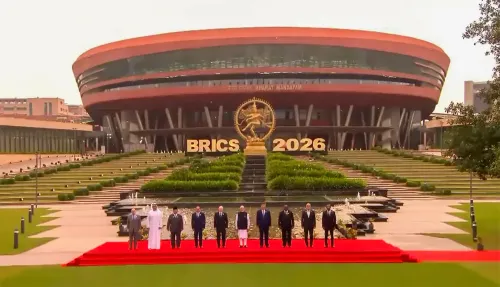
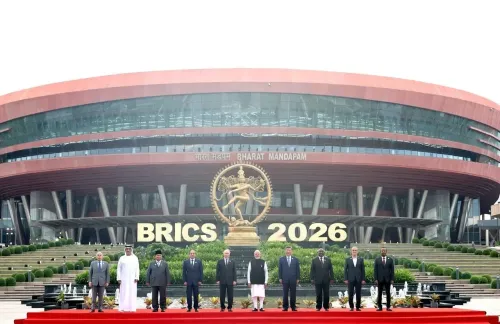
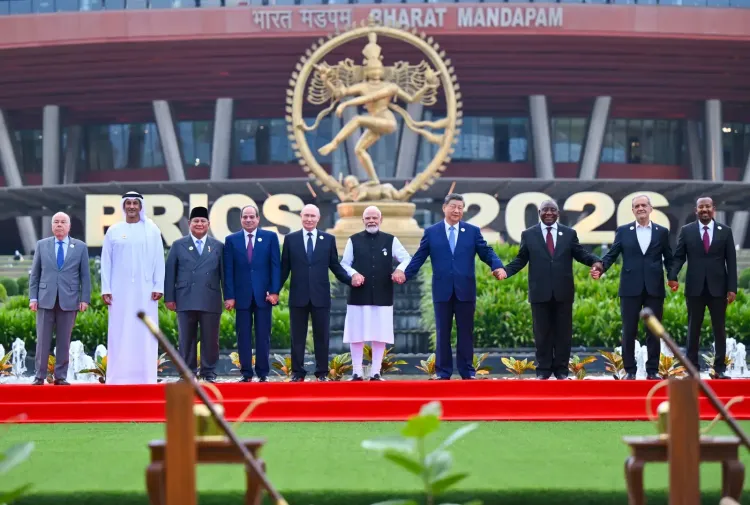
New Delhi, 13 September 2026 — National Democratic Alliance (NDA) leaders on Sunday declared the BRICS New Delhi Declaration a historic diplomatic victory for India, pointing specifically to the summit's strong condemnation of the Pahalgam terror attack and the grouping's consensus on a zero-tolerance approach to terrorism as landmark outcomes achieved under Prime Minister Narendra Modi's chairmanship.
Leaders Hail Summit Outcome
Bharatiya Janata Party (BJP) MP Ravi Shankar Prasad called the result a historic achievement and congratulated the Prime Minister. 'This is a historic success for the BRICS summit. I congratulate Prime Minister Narendra Modi. Under India's chairmanship, countries like China, Russia, Iran, UAE, South Africa, and Brazil have come together on an alternative and effective international platform,' Prasad said.
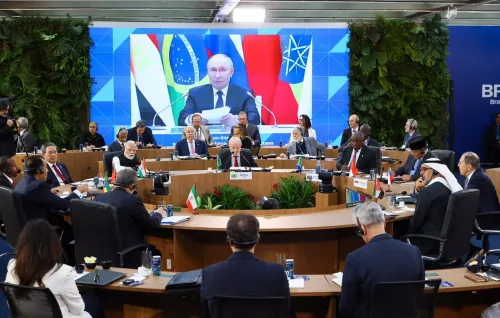
Prasad also noted that Russian President Vladimir Putin highlighted that the combined GDP of BRICS nations now exceeds that of Europe and the United States — a figure that underlines the bloc's growing economic weight. He described the Pahalgam condemnation as 'an important development.'
Terrorism Consensus Seen as Blow to Pakistan
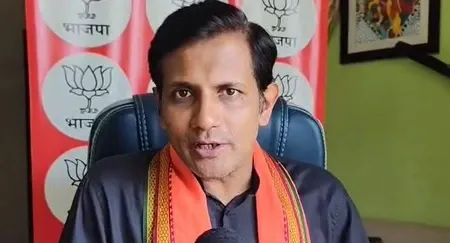
BJP MP Janardan Singh Sigriwal said the summit sent a strong message to the international community and praised Modi's role in building consensus on development and ending ongoing global conflicts. On the declaration's anti-terror provisions, Sigriwal was direct: 'This is a major blow to terrorism and also to those who support terrorists, especially Pakistan. A message of peace and harmony has been sent to the world.'
BJP MP Praveen Khandelwal said the New Delhi Declaration incorporated all the key issues India had raised — including terrorism, terror financing, and trade — and that it would open new avenues for Indian traders and MSMEs to conduct business across member countries. He added that a strong resolution on terror funding had also been passed at the summit.
Global South's Rising Role
Khandelwal underscored that developing nations were advancing rapidly in modernisation and digitalisation and could 'lead the world,' echoing remarks attributed to the Prime Minister. Janata Dal (United) national spokesperson Rajiv Ranjan said BRICS could become a pivotal platform for weaker and developing countries, noting that China is scheduled to host the next BRICS summit and that progress over the coming year could send a powerful message on reducing global inequality.
Ranjan also cited the bloc's demographic and economic heft: BRICS nations together reportedly account for roughly 40 per cent of global GDP and between 45 and 49 per cent of the world's population. He argued this makes the forum well-placed to address crises such as the ongoing conflict in West Asia, pointing to the participation of both UAE and Iran as a signal of BRICS's diplomatic reach.
India's Peace Posture on West Asia
BJP spokesperson Pratul Shahdeo, responding to Chinese President Xi Jinping's remarks on BRICS's peace-promotion role in West Asia, said India had consistently taken the initiative in that region. 'India has always been at the forefront. India took a significant initiative in the Iran-Israel war. Both are good friends of India... India always wants peace throughout the world, but our borders must also remain secure,' Shahdeo said.
What Comes Next
With the New Delhi Declaration now adopted, attention shifts to implementation — particularly the commitments on terror financing and trade facilitation for MSMEs. China's hosting of the next BRICS summit will test whether the zero-tolerance terrorism consensus holds beyond India's chairmanship, and whether the Global South coalition can translate diplomatic unity into concrete economic and security outcomes.
Point of View
But the real test is durability — China, which hosts the next summit, has historically resisted explicit language on cross-border terrorism, making it worth asking how much of this consensus was New Delhi-specific. The Pahalgam condemnation is symbolically significant, yet BRICS declarations carry no enforcement mechanism; Pakistan faces no tangible consequence beyond reputational pressure. Meanwhile, the GDP-parity claim, while arithmetically defensible when including all BRICS members, masks stark internal inequalities of power, interest, and geopolitical alignment within the bloc itself. India's diplomatic wins in multilateral settings have often evaporated in bilateral friction — the India-China border dynamic being the most obvious contradiction — and that tension will resurface the moment Beijing chairs the next summit.
NationPress
13 Sept 2026
Frequently Asked Questions
What is the BRICS New Delhi Declaration and why does it matter for India?
The BRICS New Delhi Declaration is the consensus document adopted at the 2026 BRICS Summit hosted by India under Prime Minister Narendra Modi's chairmanship. It is significant for India because it includes an explicit condemnation of the Pahalgam terror attack and commits member nations to a zero-tolerance approach on terrorism and terror financing — a position India has long sought in multilateral forums.
How did the BRICS declaration address the Pahalgam terror attack?
The declaration included a strong condemnation of the Pahalgam terror attack, which NDA leaders described as a major diplomatic achievement. BJP MP Janardan Singh Sigriwal called it a 'major blow' to countries that support terrorism, singling out Pakistan, and said it reflected consensus among all BRICS heads of state.
What did NDA leaders say about Pakistan and terrorism at the BRICS summit?
NDA leaders framed the anti-terror consensus as a direct setback for Pakistan, with BJP MP Janardan Singh Sigriwal stating it was a blow 'to those who support terrorists, especially Pakistan.' BJP MP Praveen Khandelwal added that a strong resolution on terror funding was also passed. These are political characterisations; the declaration itself does not name Pakistan.
What is the Global South's role according to leaders at the BRICS summit?
NDA leaders and allied spokespeople said BRICS could serve as a key platform for developing and weaker nations to shape global outcomes. JD-U spokesperson Rajiv Ranjan noted that BRICS countries account for roughly 40% of global GDP and 45–49% of the world's population, arguing the bloc is well-positioned to address global inequality and regional conflicts including in West Asia.
Where will the next BRICS summit be held?
China is scheduled to host the next BRICS summit. JD-U spokesperson Rajiv Ranjan said that sustaining momentum over the coming year could send a strong message to countries grappling with rising inequality, though he noted this would depend on translating the New Delhi Declaration's commitments into concrete outcomes.